
The Best Coming-of-Age Novels to Read in 2026
The coming-of-age novel survives because the material never exhausts: the moment a self forms by colliding with the world. The novels below are the ones that defined and then deepened the form — ranked and assessed for how truthfully each renders that collision rather than how famous it is. Start here for the form at its most honest.
The Best Coming-of-Age Novels Worth Reading

The Catcher in the Rye
The archetype every later book in the form answers to. Salinger's voice was so distinct it became a template and then a cliché, which is itself the measure of its reach. The reference point, for better and worse.
Verdict: The archetype. Read it to understand what every later book is answering.

To Kill a Mockingbird
Moral awakening seen through a child's eye, executed so cleanly it became the form's most-taught example. Scout's narration lets the reader understand more than she does — the engine of the whole genre.
Verdict: The cleanest execution of the child-narrator engine. Essential.

The Perks of Being a Wallflower
The modern adolescent benchmark. Chbosky's epistolary form gives the genre's interiority a contemporary voice that landed with a generation. The current reference point for the form.
Verdict: The modern benchmark. The contemporary entry point.

Discover Phillip Strang
Crime fiction spanning 18 series and 150+ novels across Britain, Australia and America.
Browse All Series · BlogDI Tremayne — Phillip Strang
The coming-of-age novel works because a character changes under pressure and you believe it. If that earned interior change is what you read for, the DI Tremayne series carries the same conviction in crime fiction — people shaped, not just plotted. For readers who stay for the person.

A Portrait of the Artist as a Young Man
The literary ceiling of the form. Joyce makes the prose itself mature as the character does, sentence structure growing up alongside Stephen. The genre's most ambitious technical achievement.
Verdict: The technical ceiling. The most ambitious book here.

Never Let Me Go
Coming-of-age as quiet devastation. Ishiguro runs the form's machinery — school, friendship, dawning understanding — toward a recognition that recolours everything before it. The form weaponised.
Verdict: The form weaponised. Read it knowing the recognition recolours everything.
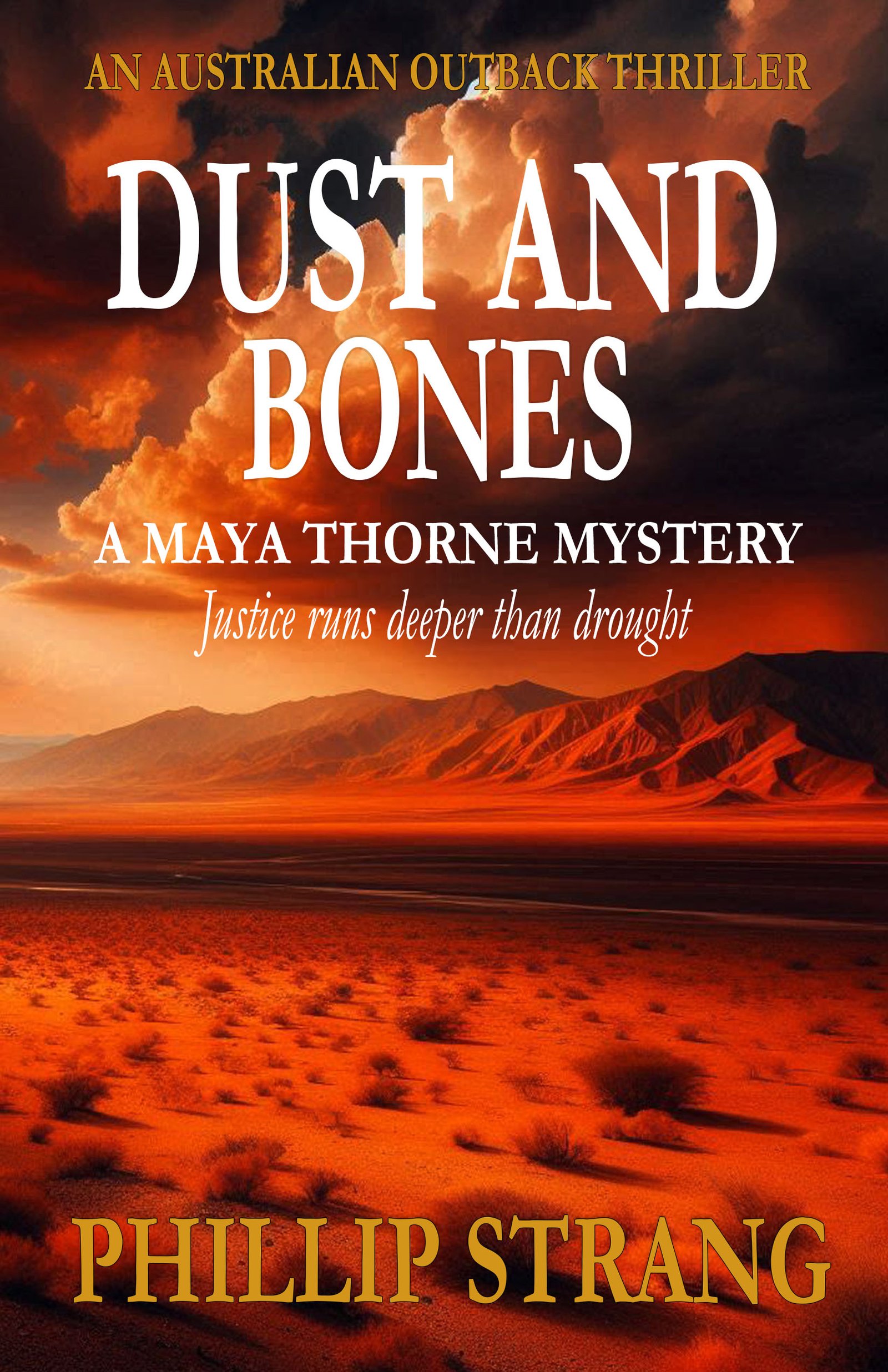
A MAYA THORNE MYSTERY
Get Dust and Bones Free
Justice runs deeper than drought.
Red dust. Shallow graves. A detective who hunts killers where the law runs thin and the nearest help is two hundred miles away.
You’ll also receive occasional new release emails. Unsubscribe anytime. No spam, ever.

The Bell Jar
Interior collapse rendered from inside. Plath makes the formation of a self and its breakdown the same process, and the clarity of the voice is what makes it unbearable. Essential and difficult.
Verdict: Essential and hard. The form rendered from inside the collapse.

Persepolis
The form done definitively in graphic memoir. Satrapi proves the coming-of-age story gains rather than loses in images, and that revolution and adolescence can be the same narrative. Genre-expanding.
Verdict: The genre-expanding one. Proof the form gains in images.
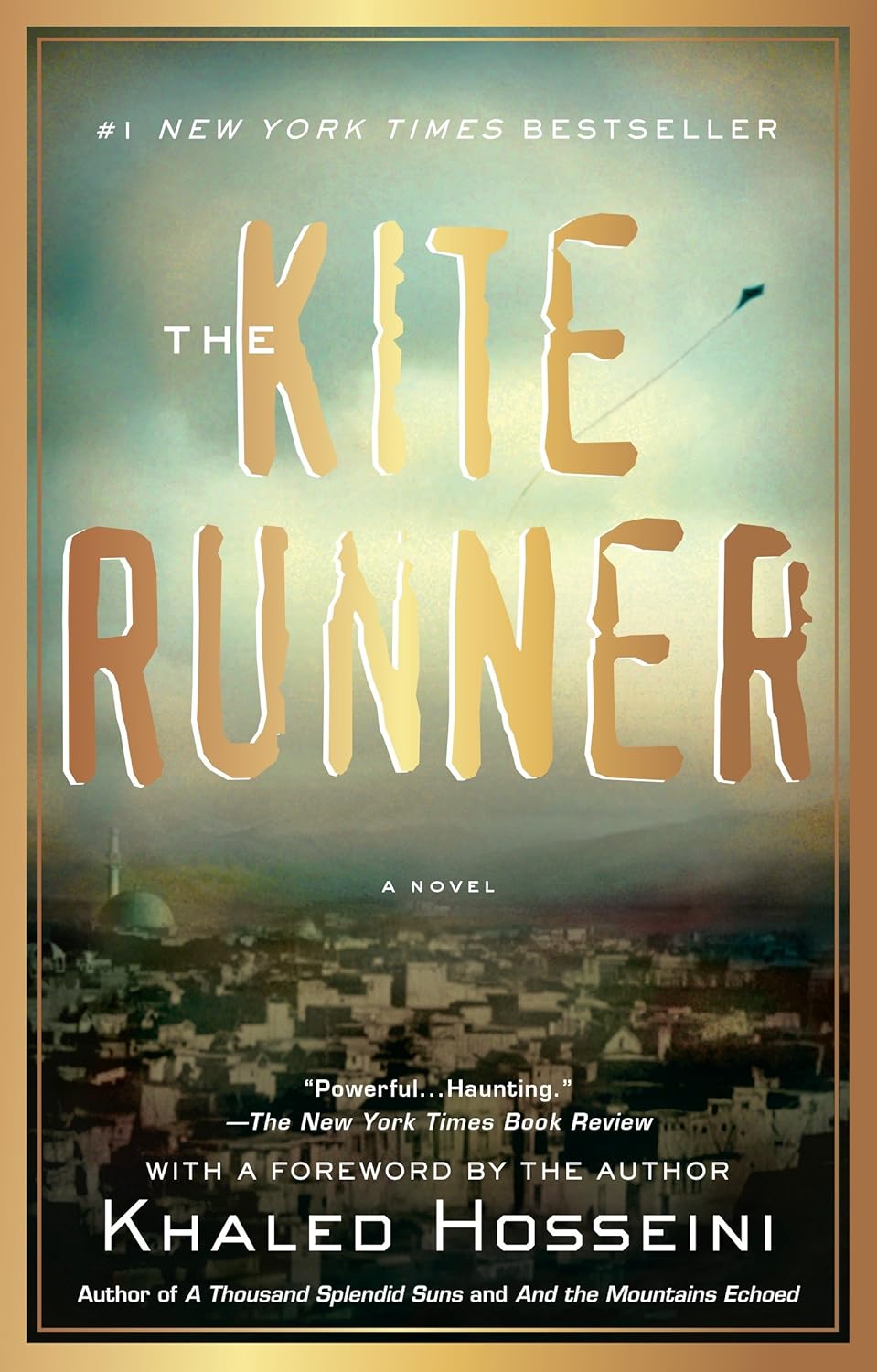
The Kite Runner
Guilt and growth tracked across a lifetime and a country's collapse. Hosseini extends the form past adolescence into the adult cost of a childhood failure. The form at full span.
Verdict: The form at full lifespan. Growth tracked past adolescence.

Norwegian Wood
The genre's atmospheric peak. Murakami renders melancholy youth with a restraint that makes loss feel ambient rather than plotted. Mood as the story.
Verdict: The atmospheric peak. For readers who want mood as the story.
The Reading Order
- The Catcher in the Rye — J.D. Salinger. The archetype.
- To Kill a Mockingbird — Harper Lee. The cleanest execution of the child-narrator engine.
- The Perks of Being a Wallflower — Stephen Chbosky. The modern benchmark.
- A Portrait of the Artist as a Young Man — James Joyce. The technical ceiling.
- Never Let Me Go — Kazuo Ishiguro. The form weaponised.
- The Bell Jar — Sylvia Plath. Essential and hard.
- Persepolis — Marjane Satrapi. The genre-expanding one.
- The Kite Runner — Khaled Hosseini. The form at full lifespan.
- Norwegian Wood — Haruki Murakami. The atmospheric peak.
Discover Phillip Strang
If this list leaves you wanting the next one, Phillip Strang writes across eighteen crime, mystery and thriller series — character-led, tightly plotted, and built for readers who finish one book reaching for the next.
A MAYA THORNE MYSTERY
Get Dust and Bones Free
Justice runs deeper than drought.
Red dust. Shallow graves. A detective who hunts killers where the law runs thin and the nearest help is two hundred miles away.
Send Me the BookYou'll also receive occasional new release emails. Unsubscribe anytime. No spam, ever.
As an Amazon Associate, Phillip Strang earns from qualifying purchases. This page contains affiliate links — buying through them costs you nothing extra.