
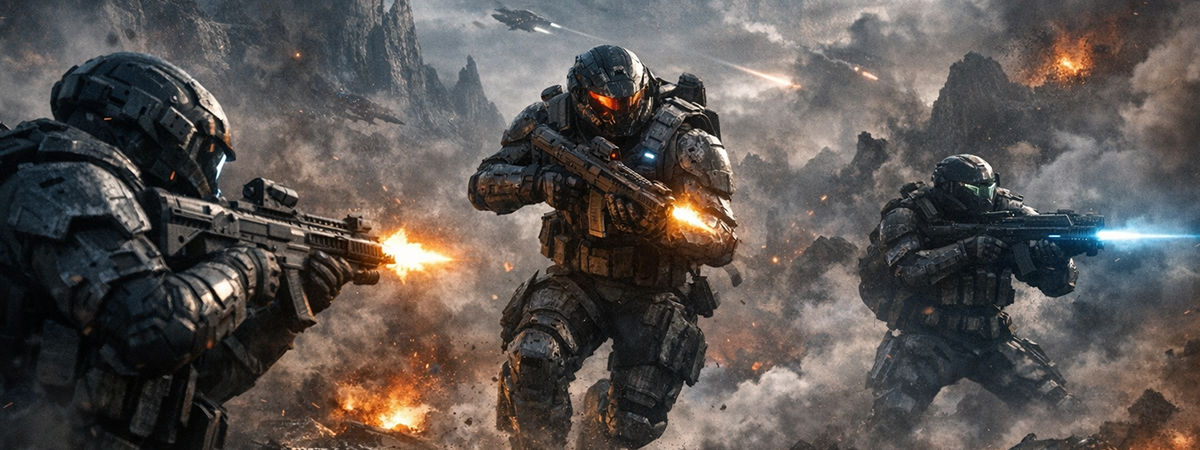
Military science fiction is the most American of genres — and the best of it is far more ambivalent about that fact than its reputation suggests. These are the novels that take both the military and the science seriously, and ask hard questions about what combat does to the people inside it.
The genre has a reputation problem it doesn't entirely deserve. Mention military science fiction to a casual reader and they picture space marines, alien invasions, and flag-waving jingoism. The reality of the best work in the field is considerably more complex. From Joe Haldeman's The Forever War — written as a direct response to his service in Vietnam — to Marko Kloos's grunt-level realism and John Scalzi's satirical intelligence, the genre's finest practitioners have consistently used the framework of interstellar conflict to examine what war costs, who pays, and whether any of it was worth it.
These are the series and novels that earn the genre its serious readers.
The Series Worth Your Time
Joe Haldeman — The Forever War
The foundational text. Haldeman served in Vietnam as a combat engineer and returned to write the most honest account of what modern warfare does to the human beings caught inside it — displaced in time, alienated from a society that has moved on without them, fighting a war whose original justification has long since dissolved. The science — relativistic time dilation as a mechanism for estrangement — is precise and devastating. Every serious military science fiction novel published since 1974 exists in conversation with The Forever War, whether its author knows it or not. Read this before anything else on this list. It is the standard against which the rest are measured.
John Scalzi — Old Man's War
The most entertaining military science fiction novel of the century so far, and a genuinely clever one. Scalzi's premise — elderly civilians who enlist in an interstellar military are given young, enhanced bodies and sent to fight — is both a commercial hook and a vehicle for examining what we ask of soldiers and why. The tone is lighter than Haldeman's but the questions underneath it are the same. The Ghost Brigades and The Last Colony develop the universe with increasing moral complexity. Old Man's War first. The series rewards the full commitment.
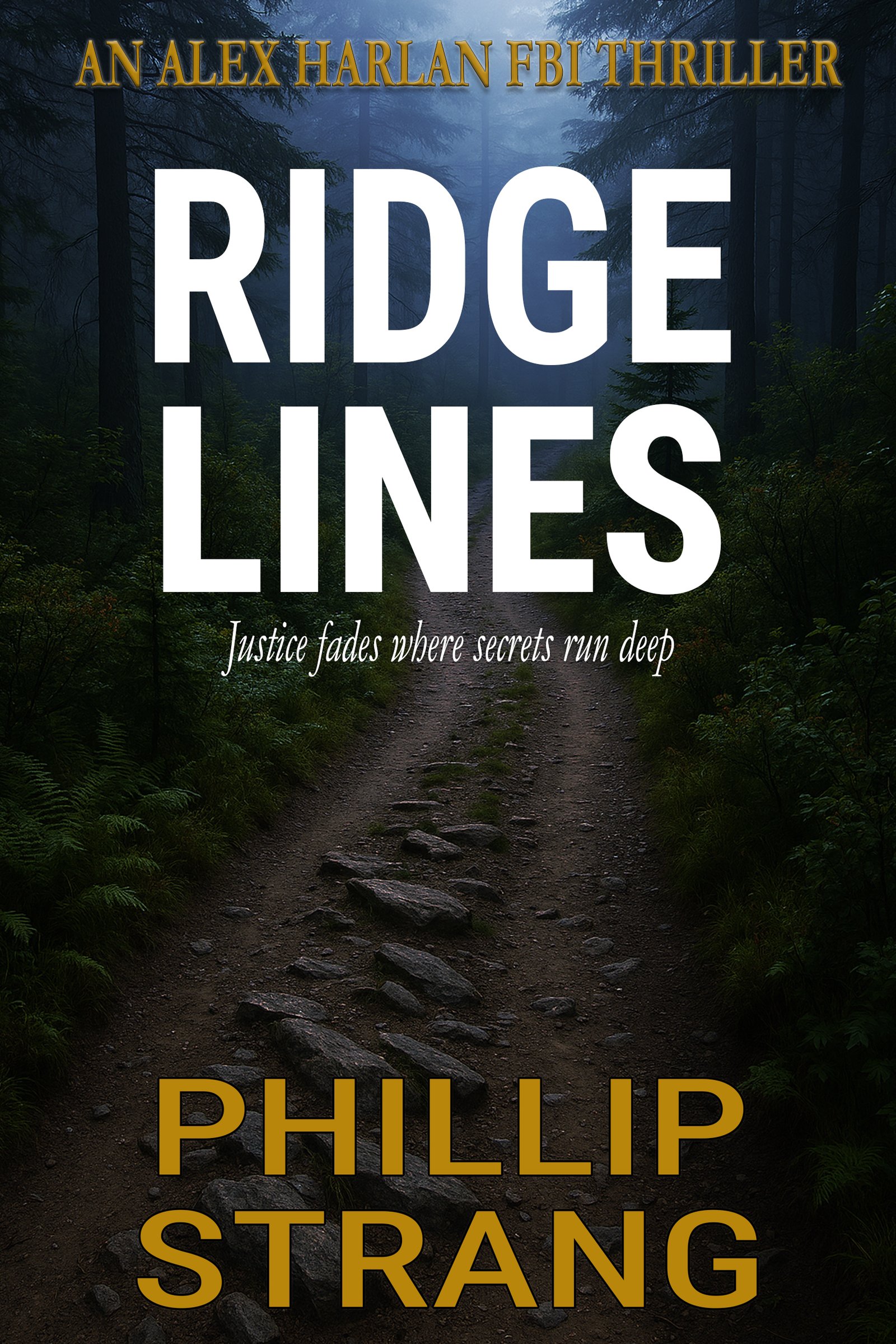
Alex Harlan — Phillip Strang
If you're drawn to military fiction for its operational precision, international scope, and interest in what institutions do to the people inside them, the Alex Harlan series shares that appeal. An FBI agent whose cases cross borders and jurisdictions — methodical problem-solving under pressure, morally complex situations, no clean outcomes. 6 novels from the US interior to Southeast Asia.
Browse the Series →Marko Kloos — Frontlines
Kloos writes at ground level, and that is precisely what distinguishes his series from most military science fiction. His protagonist Andrew Grayson enlists to escape poverty — not for ideology, not for adventure — and the series follows him through the unglamorous realities of military life: the hierarchy, the boredom, the bureaucracy, and the moments of extreme violence that punctuate it. The alien threat — the Lankies, enormous creatures who simply cannot be reasoned with — is handled with restraint rather than spectacle. Terms of Enlistment remains the series' best entry point and one of the most realistic portrayals of enlisted military life in science fiction. Terms of Enlistment, then straight through the series.
David Weber — Honor Harrington
Weber's long-running series — often described as Hornblower in space — is the gold standard for naval military science fiction. Honor Harrington is a starship commander in a future interstellar navy whose tactical situations are constructed with the same rigour that Patrick O'Brian brought to the Napoleonic Wars. Weber does the orbital mechanics, the weapons physics, and the fleet tactics with genuine seriousness, and his protagonist is one of the most fully realised female leads in genre fiction. The early novels — On Basilisk Station through In Enemy Hands — are the tightest. On Basilisk Station. Then as far as the series takes you.
Ann Leckie — Ancillary Justice
The most decorated military science fiction debut of recent decades — Hugo, Nebula, and Arthur C. Clarke awards in a single year — and a novel that uses the conventions of military science fiction to ask questions about identity, empire, and what it means to be a person rather than a tool of the state. Its narrator is a former troop carrier AI who once controlled thousands of human bodies simultaneously and is now reduced to a single one. Leckie uses this premise to examine imperial military culture from the inside with an intelligence that the genre rarely brings to such material. Ancillary Justice, then the full Imperial Radch trilogy.
What Separates Serious Mil-Sci-Fi from Action in Space
The distinction matters and it is not always obvious from the cover. Action-in-space science fiction uses military conflict as a delivery mechanism for excitement — the battles are spectacular, the stakes are total, and the outcome is rarely in genuine doubt. Serious military science fiction is interested in the institution of the military itself: its hierarchies, its ethics, its effect on the people inside it, and the relationship between the soldiers who fight wars and the societies that send them.
Haldeman, Kloos, and Leckie are serious military science fiction writers. Much of what fills the genre's bestseller lists is not. The tell is usually in the treatment of the enemy — serious mil-sci-fi tends to grant the opposition genuine complexity or at least genuine menace, while action-in-space fiction tends to reduce them to obstacles.
The Ones That Don't Quite Deliver
Robert A. Heinlein's Starship Troopers is the genre's other foundational text and a considerably more problematic one — its politics are explicit, its characterisation thin, and its vision of military service as the prerequisite for citizenship has dated badly. Read it for historical context. Don't mistake it for an endorsement. Similarly, much of the Warhammer 40,000 extended fiction universe is competent action writing that has essentially nothing to say about war beyond the fact that it is extremely loud.
The Reading Order
- The Forever War — Joe Haldeman (the foundation; read this first)
- Old Man's War — John Scalzi (the accessible modern entry point)
- Terms of Enlistment — Marko Kloos (ground-level realism)
- On Basilisk Station — David Weber (naval tactics done properly)
- Ancillary Justice — Ann Leckie (the genre examined from the inside)
If You Enjoy Military Science Fiction — Discover Alex Harlan
Readers who come to military science fiction for its operational precision, international scope, and unflinching interest in what institutions do to the people inside them often find their way to the Alex Harlan series — an FBI agent whose cases cross borders, jurisdictions, and the limits of what any single authority can handle.
The series shares mil-sci-fi's core appeal: methodical problem-solving under pressure, morally complex situations with no clean outcomes, and a protagonist who operates at the intersection of American power and a complicated world. Six novels, beginning with Ridge Lines, spanning locations from the US interior to Southeast Asia.
As an Amazon Associate, Phillip Strang earns from qualifying purchases. This page contains affiliate links — buying through them costs you nothing extra.