

Financial thrillers work when they understand that money is never the point — power is. The best of them use markets, fraud, and institutional collapse to examine who the system is actually built to protect, and what happens to the people it isn't.
The financial thriller is built on crimes that are largely invisible — numbers moving between accounts, valuations detached from reality, liabilities hidden rather than eliminated. The harm is real and often catastrophic, but it doesn't translate naturally into the visceral drama that crime fiction typically depends on. The City of London, Geneva, and Wall Street are not obvious settings for thriller fiction. They look like places where nothing violent happens.
The authors below know better. They understand that the most significant crimes of the last fifty years have been committed in glass towers by men in suits, and they have used fiction to make those crimes visible — and to make clear who pays for them.
The Best Financial Thriller Novels Worth Your Time
Ken Follett — Paper Money and Early Financial Thrillers
Follett is best known for his historical epics — The Pillars of the Earth, World Without End — but his early career produced some of the sharpest financial thrillers written by a British author. Paper Money, published in 1977, remains one of the most efficient examinations of how financial crime, political corruption, and tabloid journalism intersect in British public life. Written before Follett's historical novels made him a household name, it has the lean, unsentimental quality of a writer who hasn't yet learned to be comfortable. The plot follows a single day in which a City takeover, a robbery, and a political scandal converge — Follett understood instinctively that financial crime is never isolated, that it exists in a web of relationships and obligations that implicates people well beyond the original transaction. Paper Money for the essential early Follett. The Modigliani Scandal for a second early novel that uses the art world as a vehicle for examining the same financial criminality.
Michael Ridpath — City of London Thrillers
Ridpath worked as a bond trader in the City of London before turning to fiction, and that insider knowledge gives his novels an authenticity that research alone cannot produce. Free to Trade — his debut — is set entirely within the world of high-yield bond trading and follows a narrator who suspects his colleague's death in the Thames was not an accident. What distinguishes Ridpath from American financial thriller writers is his specific knowledge of how the City actually operates: the hierarchy, the culture, the particular way that institutional pressure makes individual ethical choices almost impossible. The Predator and Fatal Error develop similar themes — protagonists embedded in financial institutions who discover that the criminality is not incidental but structural. Ridpath is the most consistently excellent British writer working specifically in City of London financial fiction. Free to Trade for the essential Ridpath. The Predator for the series at its most morally complex.
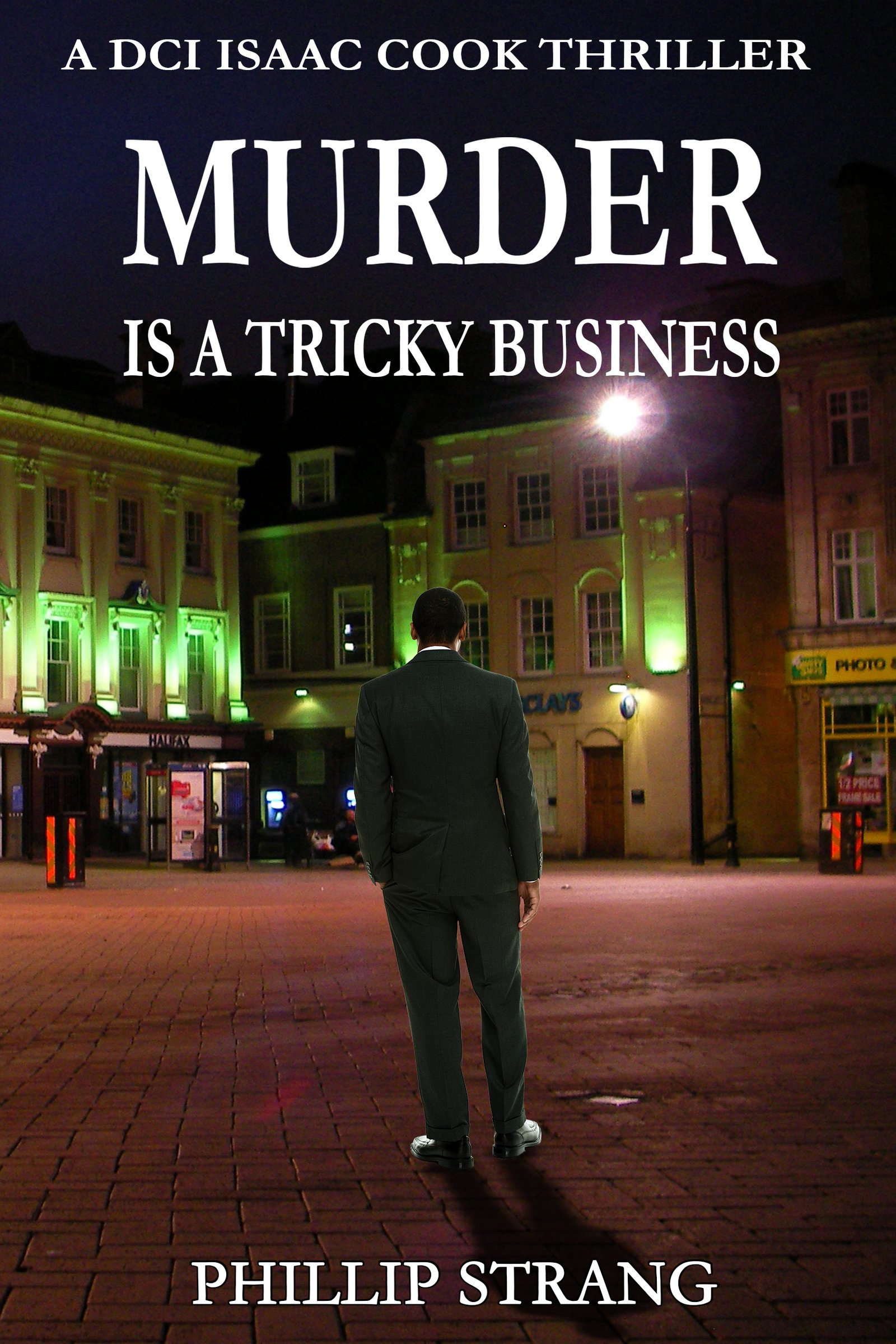
DCI Isaac Cook — Phillip Strang
A Black detective in the Metropolitan Police whose homicide cases consistently lead into London's financial networks, property corruption, and the criminal infrastructure operating alongside the legitimate economy. If you're drawn to financial thrillers for their examination of how money and power intersect — and how the boardroom connects to the back street — Cook belongs on your list. 19 novels.
Browse the Series →Robert Harris — The Fear Index
Harris is one of the finest British thriller writers of his generation — Fatherland, Archangel, The Ghost — and The Fear Index applies his particular gift for institutional analysis to the world of algorithmic trading in Geneva. The novel follows Alex Hoffmann, a physicist who has built a hedge fund around an artificial intelligence system that trades on human fear, and the single catastrophic day in which his life begins to unravel in ways he cannot explain. Harris uses the opacity of algorithmic finance — the fact that no individual fully understands what the system is doing — to create a thriller that is genuinely unsettling in its implications. The Fear Index is not simply a novel about financial crime; it is a novel about the point at which financial systems become autonomous, operating beyond the comprehension or control of the people who built them. It is the most intellectually serious financial thriller published in English in the last twenty years. The Fear Index stands alone — there is nothing else quite like it in the genre.
Bill Browder — Red Notice
Red Notice occupies an unusual position in the financial thriller canon — it is not fiction, but it reads with the propulsive momentum of the best thrillers, and the financial crime it describes is more spectacular than anything a novelist has invented. Browder is a hedge fund manager who built one of the largest foreign investment funds in Russia, was expelled by the Kremlin, and then watched his lawyer Sergei Magnitsky be arrested, tortured, and killed in a Russian prison after uncovering a $230 million tax fraud by Russian officials. The book that followed is both a memoir and an account of how state-level financial crime operates — how money is stolen, laundered, and protected by the very institutions nominally responsible for preventing it. Red Notice has sold over a million copies in the UK and remains the most widely read account of how post-Soviet financial crime actually functions. Essential reading for anyone who wants to understand how financial crime operates at the level of state power.
Martin Bodenham — The Geneva Connection
Bodenham spent twenty-five years in private equity — at 3i, Close Brothers, and as CEO of a London-based private equity firm — before turning to fiction, and The Geneva Connection draws directly on that experience. The novel follows a successful private equity investor whose largest fund turns out to be backed by a Mexican drug cartel, and the escalating crisis that follows when he attempts to extricate himself. What Bodenham does exceptionally well is the texture of private equity culture — the specific language of deal-making, the psychology of people who have spent their careers managing other people's money, the way institutional pressure makes ethical clarity almost impossible to maintain. The Geneva Connection is the most technically accurate private equity thriller in the genre, and Bodenham's subsequent novels — Dark Forces, The Reckoning — develop similar themes with growing confidence. The Geneva Connection for the essential Bodenham. Dark Forces for the series at its most geopolitically ambitious.
Paul Erdman — Banking Thrillers
Erdman wrote his first novel while serving a prison sentence in Switzerland for financial fraud, which gives his fiction an authenticity no amount of research could replicate. He is the originator of the modern financial thriller as a genre, and his novels from the 1970s and 1980s — The Billion Dollar Sure Thing, The Crash of '79, The Last Days of America — were remarkable for their prescience about the instabilities in the global financial system. Reading Erdman now is a disorienting experience: the mechanisms he described — currency speculation, leveraged positions, the fragility of banking institutions to confidence collapse — are the same mechanisms that produced the crises of 2008 and after. He understood the system from the inside and used fiction to explain it to people who had no reason to trust official accounts. The Billion Dollar Sure Thing for the origin of the genre. The Crash of '79 for his most prophetic work.
John Grisham — Legal and Financial Thrillers
Grisham's best work belongs as much to the financial thriller tradition as the legal one. The Firm is a masterclass in how financial crime operates through institutional structures that appear entirely legitimate — a young lawyer recruited to a tax firm that turns out to be a money-laundering operation, with the entire apparatus of a legal practice used to make the criminality invisible. The Rainmaker, which follows a young attorney taking on a predatory insurance company, is his most morally serious novel and one of the best examinations of corporate fraud in popular fiction. What Grisham understood from the beginning was that the most interesting financial crimes are systemic rather than individual — the corruption doesn't sit in a single bad actor but in the institutional arrangements that make certain kinds of theft both profitable and deniable. The Firm for the essential Grisham. The Rainmaker for the most serious engagement with institutional financial crime.
The City of London and the Financial Thriller
American financial thrillers tend to be set on Wall Street, which has a particular mythology — aggressive, visible, operatic in its excess. The City of London operates differently, and the British financial thriller reflects that difference. The criminality in Ridpath's bond trading novels is quieter, more institutional, embedded in professional cultures that prize discretion above almost everything else. The fraud in Bodenham's private equity world is conducted by people who consider themselves entirely respectable. Harris's algorithmic traders in Geneva have created systems so complex that the question of individual responsibility becomes almost meaningless.
This is the specific contribution of British financial fiction to the genre: an understanding that the most significant financial crimes are not committed by obvious villains but by people who have convinced themselves — and often everyone around them — that what they are doing is entirely normal.
After 2008 — What Changed
The 2008 financial crisis should have produced a wave of serious financial fiction. It largely didn't — the non-fiction accounts were better than most of the novels that followed. But the crisis did confirm what the best financial thriller writers had been arguing for decades: that the institutions were not as sound as their official representatives claimed, that the regulatory frameworks were insufficient, and that the people most harmed by financial crime were rarely the people who perpetrated it. Browder's Red Notice, published in 2015, is the post-2008 financial thriller that matters most — not because it is set in that crisis, but because it shows with documentary precision how financial crime operates when no one in a position of power has any interest in stopping it.
Where to Start
- The Fear Index — Robert Harris (the most intellectually serious financial thriller of the last twenty years)
- Free to Trade — Michael Ridpath (City of London financial fiction from the inside)
- Red Notice — Bill Browder (the essential account of state-level financial crime)
- Paper Money — Ken Follett (British financial crime fiction at its leanest)
- The Firm — John Grisham (the most important financial thriller of the last forty years)
If You Enjoy Financial Thrillers — Discover DCI Isaac Cook
Readers drawn to financial thrillers for their examination of how money and power intersect — for fiction that takes seriously the relationship between financial crime and street crime, between the boardroom and the back street — often find their way to the DCI Isaac Cook series.
Cook is a Black detective in the Metropolitan Police, working homicide cases that consistently lead into London's financial networks, property corruption, and the criminal infrastructure that operates alongside the legitimate economy. The series doesn't flinch from the relationship between money, power, and violence in a city where the two are often indistinguishable. Nineteen novels in, it remains one of the most serious portraits of how financial crime and street crime intersect in contemporary London.
As an Amazon Associate, Phillip Strang earns from qualifying purchases. This page contains affiliate links — buying through them costs you nothing extra.