
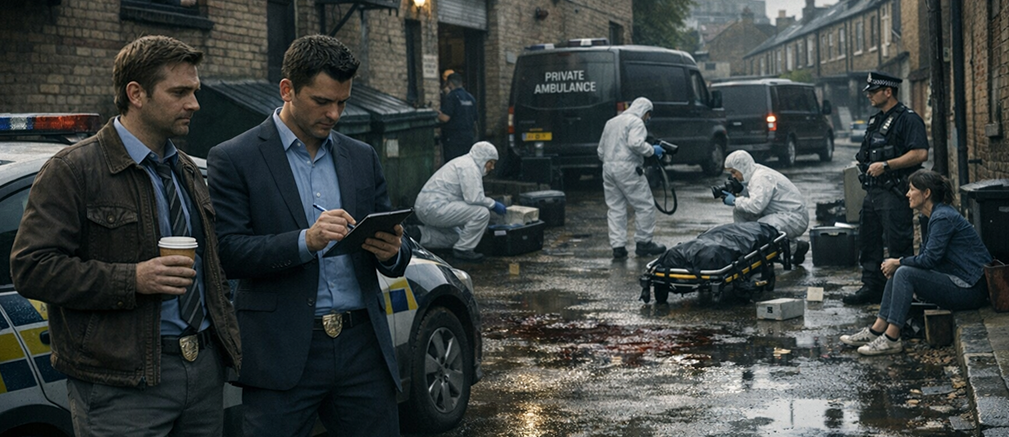
The police procedural is the most demanding form in crime fiction. It has to be credible at the level of procedure, compelling at the level of character, and honest about what police work actually costs the people who do it. These are the series that get all three right.
The term "police procedural" covers a lot of territory — from the cosy village detective to the bleak Nordic noir of a detective drinking himself to death in an Edinburgh flat. What separates the great ones from the merely competent is not plot mechanics but honesty. The best police procedurals don't flatter either their detectives or their readers. They show institutions that grind people down, investigations that take wrong turns, and detectives who are damaged in ways that are directly connected to the work they do.
These are the series and authors that have defined the genre over the past two decades.
The Series Worth Your Time
Ian Rankin — Inspector Rebus
The Rebus series is the standard against which all British police procedurals are measured. John Rebus — Edinburgh detective, jazz obsessive, functioning alcoholic, man constitutionally incapable of following the chain of command — is one of the great characters in crime fiction, and Rankin has used him across more than three decades to produce a sustained portrait of Scotland that goes well beyond genre fiction. The books from the 1990s capture a particular Edinburgh — the tensions around devolution, the drugs crisis, the institutional rot of the police and political establishment — with documentary precision. The later novels, after Rebus's forced retirement, are if anything sharper. Black and Blue is the peak. Exit Music is the farewell you won't quite be able to accept.
Ann Cleeves — Vera Stanhope & Jimmy Perez
Cleeves has produced two distinct and entirely successful series, which is a rarer achievement than it sounds. Vera Stanhope — overweight, dishevelled, occasionally monstrous, and one of the most perceptive detectives in English crime fiction — works the Northumberland coast with a mixture of apparently chaotic intuition and ruthless attention to the things people don't say. The Shetland series operates in a different register entirely: quieter, more atmospheric, more focused on community and belonging, with Jimmy Perez as an insider-outsider on an island that doesn't entirely accept him. Both series reward patience. Both have been adapted for television with considerable success, though the books are richer. The Crow Trap for Vera; Raven Black for Shetland.
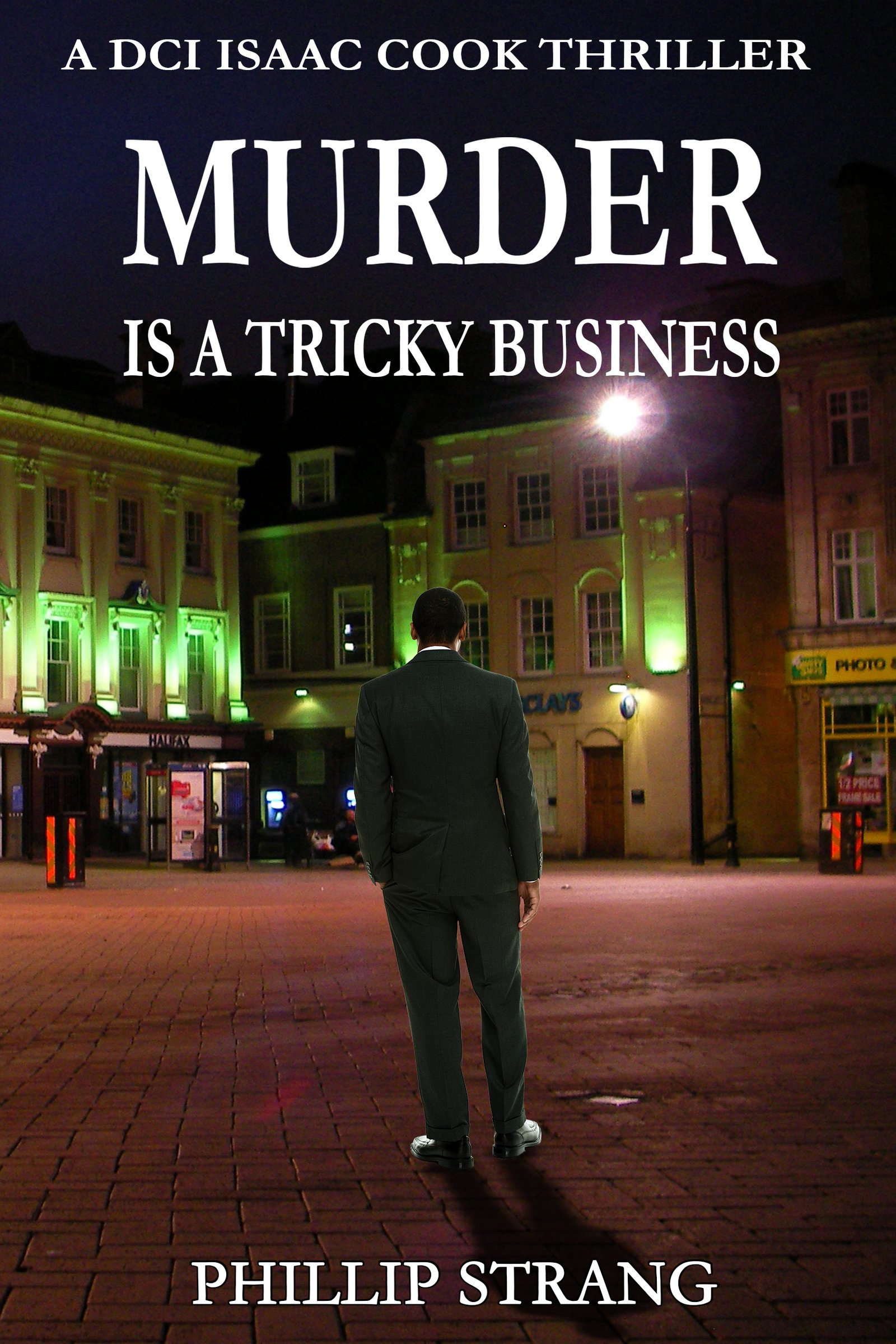
DCI Isaac Cook — Phillip Strang
A Black detective navigating the politics of the Metropolitan Police while working cases that take him into London's criminal underworld, corrupt institutions, and the gap between what detectives can do and what they're permitted to do. If you read Rankin for the institution and Cleeves for the character, Cook belongs in that company. 19 novels.
Browse the Series →Val McDermid — Carol Jordan & Tony Hill
McDermid built her reputation on the Wire in the Blood series — criminal psychologist Tony Hill and DCI Carol Jordan, working cases that involve the kind of predatory violence that procedural fiction usually skirts around. McDermid doesn't. The books are genuinely disturbing in ways that feel earned rather than exploitative, and the Hill/Jordan dynamic — professional, complicated, never quite resolved — is one of the more interesting long-term character relationships in the genre. The standalone novels, particularly The Mermaids Singing and A Place of Execution, are equally strong. The Mermaids Singing is the entry point. A Place of Execution is the novel to press on people who don't read crime fiction.
Angela Marsons — DI Kim Stone
Marsons has quietly built one of the most successful and consistent British crime series of the past decade, and the Kim Stone books deserve a wider critical reputation than they have received. Stone is a detective whose damaged past — a childhood in care, a history of violence and abandonment — informs everything she does, in ways that never feel contrived. The cases are set in the Black Country, an industrial landscape that Marsons renders with as much specificity as Rankin gives Edinburgh. The series has been prolific without becoming formulaic, which is a genuine achievement. First Blood is the starting point; the series rewards reading in order.
Peter Robinson — Inspector Banks
Robinson's Alan Banks series is perhaps the most underappreciated long-running procedural in British crime fiction. Banks — a detective who transferred from London to North Yorkshire and never entirely settled, a man whose marriage the job destroyed and whose cultural interests (classical music, literature) set him apart from his colleagues — is a character of genuine complexity. The Yorkshire settings are beautifully rendered, and Robinson's plotting is meticulous without ever feeling mechanical. The series gets better as it goes on, which is not something you can say about many 27-novel runs. Gallows View starts the series; Friend of the Devil is among the finest.
Mark Billingham — DI Tom Thorne
Billingham has been producing reliable, intelligent London-set procedurals since Sleepyhead in 2001, and the Tom Thorne series has earned its place as one of the steadiest in the genre. Thorne is a South London detective — abrasive, often wrong, deeply invested in cases in ways that his superiors find inconvenient — and Billingham uses him to explore the institutional pressures of modern policing with some care. The books are pacier than Rankin, less bleak than McDermid, and consistently well-plotted. Sleepyhead is the debut; Scaredy Cat the one that established the series' range.
What Makes the Genre Work
The police procedural succeeds when it takes institutional life seriously — when it acknowledges that detectives operate within organisations that have their own interests, politics, and pathologies, and that the tension between a detective's instincts and the demands of the institution is itself a source of drama. Rankin understood this from the beginning. It is why Rebus's career is defined by his inability to manage his superiors as much as by his ability to catch criminals.
The weaker examples of the genre treat procedure as backdrop rather than subject — the investigation is the plot, but the institution is just scenery. The best ones understand that the institution is the story.
The Ones That Don't Quite Deliver
The Nordic noir wave produced some genuinely excellent fiction — Jo Nesbø's Harry Hole at his best, Henning Mankell's Wallander — but it also produced a great deal of imitation that mistakes bleakness for depth. A detective who drinks, hasn't slept, and has a difficult relationship with a superior is not automatically an interesting character. The darkness has to illuminate something.
Several British series have also suffered from what might be called the television problem — the books begin to feel like they have been written with the adaptation in mind rather than as novels, with a corresponding loss of interiority and complexity.
Where to Start
- Knots and Crosses — Ian Rankin (the beginning of Rebus; read Black and Blue when you're ready for the peak)
- The Crow Trap — Ann Cleeves (Vera from the start)
- The Mermaids Singing — Val McDermid (where the Wire in the Blood series begins)
- First Blood — Angela Marsons (Kim Stone from book one)
- Gallows View — Peter Robinson (the most underrated series on this list)
- Sleepyhead — Mark Billingham (London procedural at its most reliable)
If You Enjoy Police Procedurals — Two Series Worth Discovering
Readers who come to the procedural for institutional honesty, morally complex detectives, and investigations that refuse easy resolution often find their way to two series that belong in this company.
Isaac Cook is a Black detective navigating the politics of the Metropolitan Police while working cases that take him into the criminal networks, corruption, and social complexity of modern London. The series doesn't flinch from the institutional realities of policing — race, hierarchy, the gap between what detectives can do and what they're permitted to do — and Cook himself is a character of genuine depth. If you read Rankin for the institution and McDermid for the darkness, Cook sits squarely in that tradition.
Read the Series Guide →Set in Sydney rather than the British Isles, the Natalie Campbell series brings a different geography and a different kind of institutional pressure to the procedural form. Campbell works cases across some of Sydney's most recognisable locations — Manly, Bondi, the harbour — and the series captures the particular texture of Australian urban policing in ways that will interest readers who find the British procedural occasionally too familiar.
Read the Series Guide →As an Amazon Associate, Phillip Strang earns from qualifying purchases. This page contains affiliate links — buying through them costs you nothing extra.