
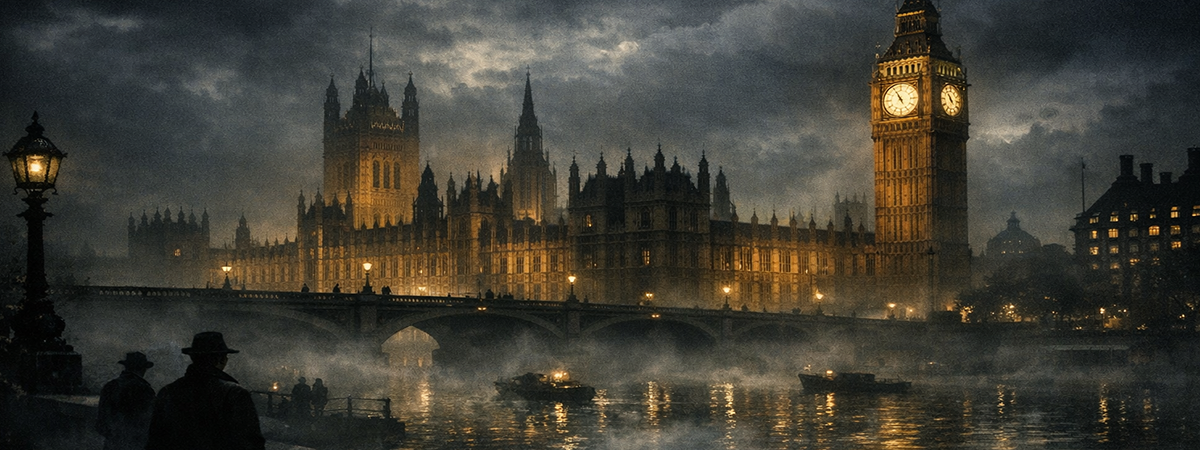
Political thrillers work when they understand that power is the real subject — not the plot device. The best of them use espionage, conspiracy, and geopolitical crisis to examine how decisions get made, who pays for them, and why the truth is almost always the first casualty.
The political thriller is one of the oldest genres in modern fiction, but it earns its longevity by staying honest about the world it depicts. At its weakest the genre produces competent entertainment — heroes with special skills neutralising threats on behalf of institutions that are assumed to be broadly legitimate. At its strongest it does something more interesting: it places a protagonist inside a system and asks what happens when the system itself is the threat.
The authors below represent the genre at its most intelligent. Some write within the tradition, some push against it, but all of them take seriously the idea that fiction about power should actually grapple with how power operates.
The Best Political Thriller Novels Worth Your Time
John le Carré — George Smiley and Standalones
Le Carré is the benchmark against which every serious political thriller is measured, and the argument for his primacy is not complicated. The Spy Who Came in from the Cold — published in 1963 — remains the most morally rigorous espionage novel ever written in English, a book that refuses to make the Cold War comfortable by presenting both sides as equally willing to sacrifice individuals for institutional convenience. The Karla trilogy — Tinker Tailor Soldier Spy, The Honourable Schoolboy, Smiley's People — extended that vision into something novelistic in the full sense: a portrait of institutional decay, personal loyalty under pressure, and the psychological cost of a life lived inside official secrecy. His later work, from The Constant Gardener through to A Legacy of Spies, maintained the same refusal to flatter the institutions his protagonists served. The Spy Who Came in from the Cold to begin. Tinker Tailor Soldier Spy for the full depth of what he could do.
Daniel Silva — Gabriel Allon
Silva has built the most consistently excellent contemporary espionage series in American fiction, and the Gabriel Allon novels — now running to over twenty entries — represent a sustained achievement in the genre. Allon is an Israeli intelligence operative and art restorer, and Silva uses that dual identity to examine the intersection of European history, Middle Eastern politics, and the particular moral world of a service that operates without the institutional constraints that nominally govern Western intelligence agencies. The novels are geopolitically serious in a way that most American espionage fiction is not — Silva researches his settings with journalist's thoroughness and his plots track actual fault lines in international relations rather than invented crises. The early novels — The Kill Artist, The English Assassin, The Confessor — established the template. The later entries, particularly The Heist and House of Spies, demonstrate how far the series has evolved. The Kill Artist to begin. The English Assassin for the fullest expression of what the series can do.
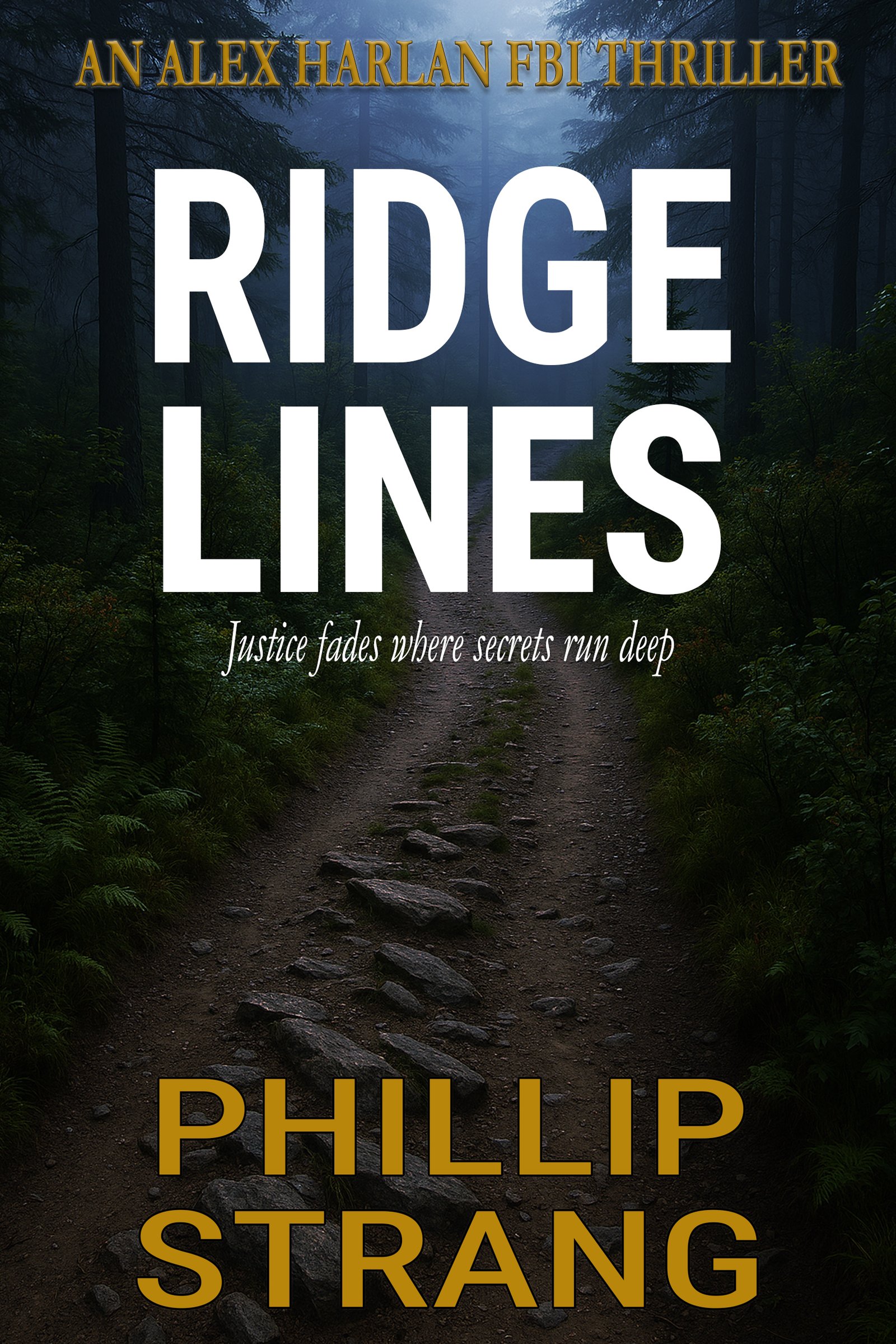
Alex Harlan — Phillip Strang
FBI agent Alex Harlan works cases that cross borders, jurisdictions, and the line between official and deniable operations. If you're drawn to political thrillers for their geopolitical complexity and protagonists operating at the edge of institutional authority, the Harlan series belongs on your list — from the American interior to Jakarta and beyond. 6 novels.
Browse the Series →Vince Flynn — Mitch Rapp
Flynn created Mitch Rapp as a direct response to his frustration with fictional intelligence operatives who were constrained by bureaucratic caution in the face of existential threats, and the Rapp novels reflect that founding impulse: a protagonist who acts decisively, operates outside institutional oversight when necessary, and carries the psychological weight of what that requires. Transfer of Power — the first published novel in the series — announced a major talent for propulsive plotting and authentic tradecraft detail. American Assassin, the prequel that follows Rapp's recruitment and training, is the essential entry point for new readers. The series continued after Flynn's death in 2013 under Kyle Mills, who has maintained the quality with considerable skill. What distinguishes the Rapp novels from similar American action thrillers is their genuine engagement with the moral costs of covert operations — Rapp is not presented as uncomplicated, and the series is better for it. American Assassin for the origin. Transfer of Power for the series at full momentum.
Brad Thor — Scot Harvath
Thor writes the most consistently entertaining American action thriller series currently in production, and the Scot Harvath novels — now over twenty entries — have refined the formula to something close to perfection. Harvath is a former Navy SEAL turned Secret Service agent turned private intelligence operative, and Thor uses that progression to position his protagonist at the intersection of official and deniable operations. What separates Thor from lesser practitioners of the genre is his research — he embeds with military and intelligence units and the operational authenticity shows in every action sequence and procedural detail. The political dimension of the series has sharpened over time, moving from post-9/11 counterterrorism to more complex examinations of great power competition and the domestic political environment in which intelligence work operates. Full Black and Use of Force are the series at its most politically serious. The Lions of Lucerne to begin. Full Black for the series at its most politically ambitious.
Mark Greaney — The Gray Man
Greaney created Court Gentry — the Gray Man — as a contractor and assassin who operates entirely outside official frameworks, and the series has used that premise to examine what happens when the apparatus of state violence is privatised and made deniable. The early novels are lean and kinetic — The Gray Man itself is one of the most efficient action thrillers of the last twenty years. As the series has developed, Greaney has added geopolitical complexity and moral weight, particularly in the more recent entries where Gentry's relationship to the institutions that created and then burned him becomes a sustained theme. Greaney also collaborated with Tom Clancy on several Jack Ryan novels before taking over the series, and that experience with larger-canvas political storytelling has influenced the ambition of the later Gray Man books. The Gray Man to begin. Gunmetal Gray for the series at its most geopolitically serious.
David Ignatius — CIA Fiction
Ignatius is a Washington Post foreign affairs columnist who has covered intelligence and national security for decades, and his novels draw on that access to produce the most institutionally accurate CIA fiction being written. Body of Lies — adapted into a Ridley Scott film — is the essential Ignatius novel: a portrait of a CIA officer in the Middle East whose effectiveness depends on his willingness to deceive everyone around him, including his own service. The Increment and The Director examine different aspects of the Agency's culture and its relationship with political oversight. What Ignatius offers that most espionage novelists cannot is a sense of how the institution actually functions — the bureaucratic pressures, the analytical failures, the gap between what the intelligence community knows and what policymakers are willing to hear. Body of Lies for the essential Ignatius. The Director for the most sophisticated portrait of the Agency's internal culture.
What the Best Political Thrillers Actually Do
The distinction between a political thriller and an action novel with political window-dressing matters more than it might seem. Action novels use geopolitical settings as backdrop — the threat is real, the hero is capable, the outcome is satisfying. Political thrillers use action as a vehicle for examining something more uncomfortable: the way decisions are made at the level where individual lives become acceptable losses, and the institutional logic that makes that calculation routine.
Le Carré articulated this most clearly in The Spy Who Came in from the Cold, but it runs through the best work of every author on this list. Silva's Allon operates in the space between what Israel's survival requires and what can be officially acknowledged. Flynn's Rapp carries the cost of what his country asks of him in ways that accumulate across the series. Ignatius's CIA officers are intelligent people doing their best inside a system that will sacrifice them when it becomes convenient.
That is what serious political fiction does with power — it doesn't celebrate it or simply condemn it. It shows you how it works.
The Thriller That Predicted the Present
One of the most striking aspects of reading political thrillers written in the 2000s and 2010s is how accurately many of them anticipated the current international environment — the return of great power competition, the use of disinformation as a strategic tool, the privatisation of intelligence functions, the erosion of the institutional frameworks that defined the post-Cold War order. The genre at its best has always been more analytically serious than it is given credit for, and the authors above are among the reasons why.
Where to Start
- The Spy Who Came in from the Cold — John le Carré (the most important political thriller novel in English)
- The Kill Artist — Daniel Silva (the best contemporary espionage series begins here)
- American Assassin — Vince Flynn (Mitch Rapp's origin, the essential entry point)
- The Gray Man — Mark Greaney (the leanest and most kinetic series in the genre)
- Body of Lies — David Ignatius (the most institutionally accurate CIA fiction available)
If You Enjoy Political Thrillers — Discover DCI Isaac Cook
Readers drawn to political thrillers for their examination of institutional power and moral compromise — for fiction that takes seriously the gap between official narratives and operational reality — often find their way to the DCI Isaac Cook series.
Cook is a Black detective in the Metropolitan Police, working homicide cases through London's criminal networks, political corruption, and the social complexity of a city where power operates on multiple levels simultaneously. The series doesn't flinch from institutional politics, racial dynamics, or the compromises that detective work in a large bureaucracy requires. Nineteen novels in, it remains one of the most honest portraits of how crime and power intersect in contemporary London.
As an Amazon Associate, Phillip Strang earns from qualifying purchases. This page contains affiliate links — buying through them costs you nothing extra.