Best Space Exploration Science Fiction Novels
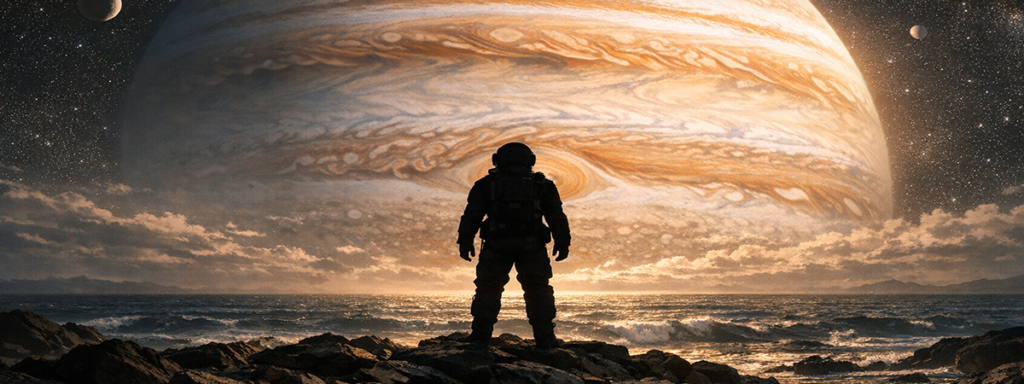
Best Space Exploration Science Fiction Novels Space exploration fiction works best when it understands that the journey outward is always also a journey inward — that what humanity discovers among the stars reveals as much about its own nature as it does about the cosmos. The best novels in this tradition use the vastness of space not as backdrop but as pressure, forcing characters and civilisations to confront questions that earthbound life permits them to avoid. The space exploration novel has always carried a double burden: it must be scientifically credible enough to sustain the reader’s sense of possibility, and humanly compelling enough to make that possibility matter. The genre’s great achievement — from Arthur C. Clarke through to the contemporary writers below — is the recognition that the encounter with the genuinely unknown does not diminish the human; it illuminates it. These are the novels that understand both the science and the stakes. The Novels Worth Your Time Series · 2 novels · 2015–present Adrian Tchaikovsky — Children of Time Tchaikovsky’s Arthur C. Clarke Award-winning novel is the most significant work of space exploration fiction produced in the last decade, and its achievement is straightforward to describe: it presents an alien intelligence — an evolved civilisation of uplifted spiders — that is genuinely alien, not simply a human society in different clothing. The novel alternates between the millennia-long development of this civilisation and the last remnants of humanity seeking a new home among the stars, creating a first contact narrative of unusual philosophical depth. The question it asks — who has the rightful claim to a world, and what does that claim rest on — has no comfortable answer, and Tchaikovsky is honest enough not to supply one. Children of Time first. Children of Ruin develops the universe further with comparable ambition. Series · 3 novels · 2021–present Adrian Tchaikovsky — The Final Architecture (Shards of Earth) Tchaikovsky’s second major series opens with Earth already destroyed — consumed by the Architects, vast alien entities that reshape planets into abstract sculptures for reasons no one understands. Protagonist Idris is one of a small number of enhanced humans who survived the war by learning to navigate unspace, a realm that drives ordinary minds to madness. Shards of Earth is space opera of genuine ambition: its universe is populated with multiple human factions, alien species, and the persistent shadow of cosmic terror, and Tchaikovsky uses that complexity to examine how exploration and displacement transform societies over generations. The series is the more accessible entry point to Tchaikovsky’s work for readers coming from action-oriented space fiction. Shards of Earth to begin. The trilogy completes with Eyes of the Void and Lords of Uncreation. Enjoying space fiction? Also worth reading: Phillip Strang — Crime Fiction Series If you’re drawn to space exploration fiction for its portrayal of individuals navigating systems — institutional, political, cosmic — that are larger and less comprehensible than they are, the Phillip Strang crime series offers that same quality closer to home. Protagonists working cases that escalate beyond what official structures can contain, in settings from rural Wiltshire to the Scottish Highlands to London. Browse the Series → Also worth exploring: DCI Isaac Cook — Phillip Strang London homicide, institutional complexity. 19 books. Browse → DI Tremayne — Phillip Strang Rural Wiltshire crime fiction. 10 books. Browse → Standalone · 2023 Greig Beck — Europa Beck’s novel takes space exploration into horror territory by grounding its dread in genuine science. Humanity’s first mission to Jupiter’s moon Europa — whose subsurface ocean is considered one of the most plausible candidates for extraterrestrial life in our solar system — makes a discovery beneath the ice that the crew is catastrophically unprepared for. What distinguishes Europa is its fidelity to the actual science of the mission: the technologies, the protocols, the physical conditions of the environment are all handled with care, which makes the horror considerably more effective than it would be in a less rigorous novel. Beck understands that the most unsettling exploration narratives are the ones where the discovery is real. A standalone for readers who want their space exploration fiction to also function as cosmic horror. Standalone · 2016 Gerald M. Kilby — Colony One Mars Kilby’s near-future Mars thriller is among the most scientifically grounded colonisation novels available. When a new mission arrives to investigate a seemingly abandoned colony after a devastating sandstorm, they discover that not all the original colonists are dead — and that the secrets buried beneath the Martian surface threaten far more than the mission. Kilby anchors the narrative in the genuine challenges of Martian colonisation: environmental hazards, resource constraints, the psychological pressure of isolation, and the knowledge that a single technical failure means death. The thriller elements emerge organically from those constraints rather than being imposed upon them. The entry point to Kilby’s Colony Mars series. Subsequent novels develop the universe further. Series · 3 novels · 2022–present Michael Simon — First Command (Cole Jackson) Simon’s military space opera trilogy focuses on engineering ingenuity and leadership under pressure rather than the overwhelming firepower that defines much of the genre. The series begins with fresh Academy graduate Cole Jackson stranded on a powerless derelict warship and tasked with bringing it back to life with limited resources and a reluctant crew — and develops through two further novels into a full-scale campaign against the alien Coven Empire. What distinguishes the First Command series is its grounded approach to spacecraft operations: the technical challenges of repair, salvage, and improvised combat feel genuinely consequential, and Jackson’s development as a commander emerges from necessity rather than destiny. First Command to begin. The trilogy concludes with Trinity. What Makes Space Exploration Fiction Work The space exploration novel earns its longevity by insisting that the journey changes the traveller. Tchaikovsky’s Children of Time is the clearest demonstration of this: humanity arrives at a new world expecting to inherit it and discovers that inheritance is not a concept the cosmos recognises.