
Dialogue in the espionage novel operates on multiple levels simultaneously—what characters say, what they mean, and what they’re deliberately concealing. Unlike other crime subgenres where misdirection might be subtle, spy fiction demands that every conversation serve the dual purpose of advancing plot while maintaining the constant tension of potential betrayal. The challenge lies in crafting exchanges that feel natural while carrying the weight of international intrigue.
Across eighteen series and more than 150 novels, I’ve found that the most effective espionage dialogue achieves authenticity through restraint rather than exposition. The temptation to showcase research through technical jargon or to explain complex geopolitical situations through character speech consistently undermines the very tension that makes spy fiction compelling.
The Reality of Operational Speech
Real intelligence operatives speak in abbreviated, coded language that assumes shared knowledge. They don’t explain tradecraft to each other any more than surgeons define scalpel mid-operation. In my Steve Case series, conversations between operatives rely heavily on implication and professional shorthand. When Case discusses ‘the Prague situation’ or mentions ‘going dark for forty-eight,’ the context provides meaning without elaborate explanation.
Authentic operational dialogue incorporates specific terminology naturally. Terms like ‘burned,’ ‘turned,’ ‘legend,’ and ‘cutout’ carry precise meanings in intelligence work, but forcing them into conversations for atmosphere destroys credibility. The key is understanding that professionals use technical language efficiently, not dramatically. They say ‘the asset’s compromised’ rather than ‘our secret informant has been discovered by enemy agents who will now torture him for information.’
The rhythm of professional communication also matters. Intelligence work involves rapid information exchange under pressure. Dialogue should reflect this urgency through sentence structure and pacing, avoiding the leisurely conversational patterns that work in other genres.
Layering Deception Through Speech
Every character in an espionage novel is potentially lying, which creates unique dialogue challenges. The writer must provide enough truth for readers to follow the story while maintaining multiple layers of deception. This requires careful attention to what characters reveal, when they reveal it, and how their speech patterns change based on their audience.
I approach this by establishing distinct speech patterns for each character’s various identities. In the Steve Case novels, when Case operates under cover, his vocabulary, sentence length, and cultural references shift to match his assumed identity. These changes must be subtle enough to feel natural but distinct enough for careful readers to notice the transformation.
Misdirection through dialogue works best when it exploits reader assumptions. Characters might tell technical truths while implying false conclusions, or use ambiguous pronouns that could reference multiple people or situations. The art lies in making these deceptions feel organic to the conversation rather than constructed for reader manipulation.
Subtext becomes crucial when characters who distrust each other must work together. Their official cooperation masks underlying tensions, creating opportunities for dialogue that operates on multiple levels. What they say for official purposes, what they communicate through tone and implication, and what they carefully avoid saying all contribute to the scene’s effectiveness.
How I Actually Write Espionage Dialogue
My process begins with mapping each character’s knowledge and motivations before writing a single line. I create charts showing what each person knows, what they think they know, what they’re hiding, and what they want to achieve through the conversation. This preparation prevents dialogue from becoming accidentally revealing or unintentionally obscure.
I write initial drafts focusing purely on information exchange—what needs to be communicated to whom. Then I layer in the deception, determining what each character would conceal, distort, or emphasize based on their objectives. Finally, I add subtext by considering the emotional and psychological dynamics between characters.
Reading dialogue aloud remains essential, but with espionage fiction, I also test it by having others read scenes without context. If beta readers can’t follow the basic information flow, the dialogue is too opaque. If they immediately spot every deception, it’s too obvious. The goal is controlled revelation that keeps readers engaged without losing them entirely.
I pay particular attention to dialogue tags and action beats in espionage scenes. Characters often perform mundane activities while discussing life-or-death matters, creating contrast that heightens tension. In one Steve Case scene, a crucial intelligence briefing occurs during a routine coffee purchase, with the operational details woven naturally into customer-vendor interaction.
Research informs authenticity, but I’m careful not to let technical accuracy overwhelm narrative flow. Intelligence work involves considerable mundane detail that doesn’t translate effectively to fiction. The best espionage thrillers capture the essence of professional communication without reproducing its every detail.
Common Dialogue Failures in Spy Fiction
The most frequent mistake involves characters explaining their own expertise. Real professionals don’t announce ‘As a former CIA operative, I know that…’ or ‘My years in Moscow taught me…’ These declarations feel artificial and break immersion immediately. Characters demonstrate expertise through competent action and knowledgeable responses, not self-identification.
Overuse of foreign phrases represents another common pitfall. Dropping Russian or Arabic terms into English conversation might seem atmospheric, but it often feels forced unless the character has specific reasons for code-switching. Most multilingual professionals default to their operational language for efficiency, mixing languages only when precision or cultural context demands it.
Many writers fall into the exposition trap, using dialogue to dump backstory or explain current events. Characters discussing ‘the recent coup in Moldavia that killed twelve civilians and destabilized the region’ sound like news anchors, not people processing information they already know. Effective espionage dialogue assumes character knowledge and provides context through reaction rather than explanation.
Info-dumping through technical exposition also weakens scenes. Characters don’t typically explain how dead drops work or define surveillance techniques unless they’re training someone. The temptation to showcase research consistently undermines natural conversation flow.
Dialogue pacing problems frequently plague espionage scenes. Writers sometimes stretch conversations beyond realistic length to build tension, but real operational discussions prioritize efficiency. Extended philosophical debates about moral ambiguity might work in literary fiction but feel contrived when characters face immediate physical danger.
Subtext as the Primary Communication Method
In effective espionage dialogue, subtext often carries more weight than actual words. Characters operating in hostile environments develop skills in communicating essential information through implication, cultural references, and carefully chosen details. This creates opportunities for dialogue that rewards attentive readers while maintaining surface-level clarity.
Professional relationships in intelligence work involve complex loyalties that dialogue must reflect. Characters might express official positions while subtly undermining them, or offer support while positioning themselves for betrayal. These contradictions create natural tension that drives scenes forward.
I use environmental details to reinforce subtext in my DI Tremayne series when characters from intelligence backgrounds appear. Their awareness of surroundings, unconscious security habits, and reactions to certain stimuli communicate their background more effectively than direct statements. When such characters choose specific seating positions or notice details others miss, their dialogue gains additional meaning through contrast with their behavior.
Timing becomes crucial in subtext-heavy dialogue. What characters choose not to say, when they change subjects, and how they respond to specific triggers all contribute to meaning. Pauses, interruptions, and verbal deflections often communicate more than direct statements.
The most effective subtext in espionage fiction exploits the gap between public and private knowledge. Characters might discuss apparently innocent topics while communicating operational details to those who share their professional context. This technique works particularly well in scenes where operatives must communicate while under surveillance.
Conclusion
Mastering dialogue in espionage fiction requires balancing authenticity with accessibility, ensuring that professional communication patterns enhance rather than obscure storytelling. The key lies in understanding that effective spy dialogue serves plot advancement, character development, and tension maintenance simultaneously, with subtext often proving more powerful than direct statement.
About Phillip Strang
Phillip Strang is an Australian crime and thriller novelist. Across eighteen series and more than 150 novels, his work spans London police procedurals (DCI Isaac Cook), UK investigations (DI Tremayne), Australian outback crime (Maya Thorne), FBI thrillers (Alex Harlan), Scottish Highland mysteries (DI Sarah Lynch), and espionage (Steve Case). Learn more about Phillip or browse his complete catalogue on Amazon.
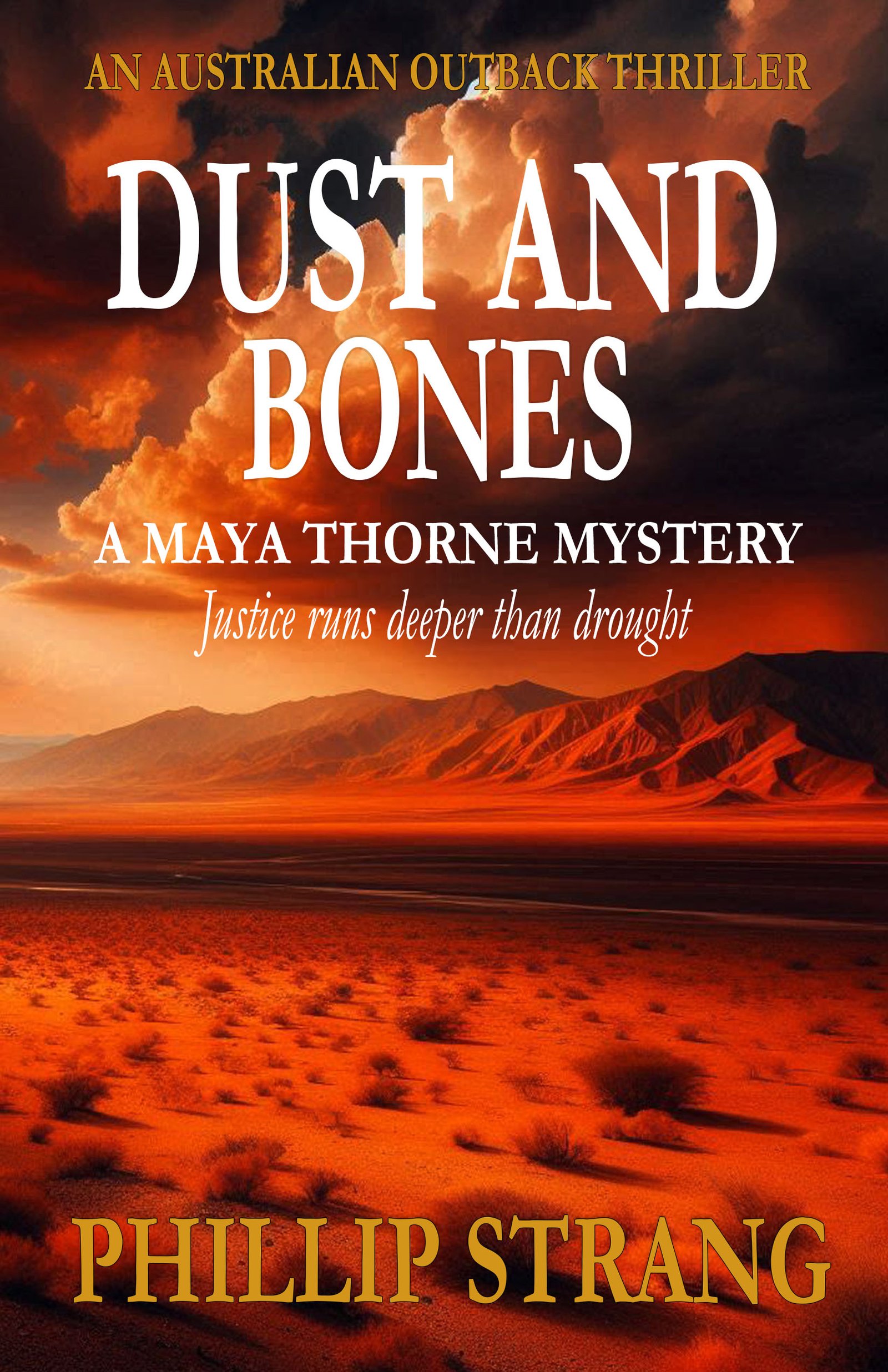
A MAYA THORNE MYSTERY
Get Dust and Bones Free
Justice runs deeper than drought.
Red dust. Shallow graves. A detective who hunts killers where the law runs thin and the nearest help is two hundred miles away.
Send Me the BookYou'll also receive occasional new release emails. Unsubscribe anytime. No spam, ever.
As an Amazon Associate, Phillip Strang earns from qualifying purchases. This page contains affiliate links — buying through them costs you nothing extra.