
The unreliable narrator’s dialogue operates on multiple levels simultaneously, serving both as character revelation and reader misdirection. When your protagonist speaks, every word must feel authentic to their distorted worldview while planting the seeds of doubt that will eventually unravel their version of events.
Across eighteen series and more than 150 novels, I have found that dialogue becomes the most potent weapon in a psychological thriller writer’s arsenal when wielded by an unreliable narrator. The challenge lies not in making them obviously deceptive, but in crafting speech patterns that feel completely natural to someone living within their own constructed reality.
The Architecture of Self-Deception in Speech
Unreliable narrators don’t typically lie outright in their dialogue—they reveal their fractured perception through what they emphasize, omit, or rationalize. Their speech patterns reflect their internal logic, however skewed that might be. When I developed the antagonist in one of my character-driven psychological thrillers, I had them consistently use passive voice when discussing their own actions, subtly deflecting responsibility even in casual conversation.
The key is understanding that unreliable narrators often believe their own version of events. Their dialogue should reflect this conviction. They don’t hesitate or stumble when recounting their distorted memories—they speak with the confidence of someone telling the absolute truth. This creates a more unsettling effect for readers who begin to sense something amiss despite the narrator’s apparent certainty.
Subtext and the Unspoken Truth
In psychological thrillers, what the unreliable narrator doesn’t say often matters more than what they do. Their dialogue should be peppered with deflections, subject changes, and seemingly innocent observations that take on sinister meaning in retrospect. The art lies in making these conversational pivots feel natural rather than obviously evasive.
I learned this technique while writing dialogue for suspects in my DI Tremayne series. Even when these characters weren’t the primary unreliable narrator, their speech needed to serve the same dual purpose—appearing cooperative while actually concealing crucial information. The most effective approach involves having them answer questions truthfully but incompletely, addressing the literal question while avoiding its deeper implications.
Pay attention to timing in these conversations. An unreliable narrator might pause before certain responses, not because they’re lying, but because they’re unconsciously editing their memories in real time. These micro-moments of hesitation can signal to astute readers that something deeper is occurring beneath the surface of the conversation.
How I Craft Unreliable Narrator Dialogue
My process begins with mapping out what the narrator actually believes versus what truly happened. This creates a framework for every conversation they have throughout the story. I write their dialogue from within their distorted worldview, ensuring that every word choice, every emphasis, every casual aside reflects their particular brand of self-deception.
When writing dialogue for Maya Thorne cases set in the Australian outback, I discovered that isolation often amplifies unreliable narration. Characters who spend long periods alone develop internal monologues that bleed into their speech patterns. They might reference conversations or events that happened only in their imagination, treating these phantom interactions as established fact when speaking with others.
I also focus heavily on the narrator’s relationship with specific words or phrases. An unreliable narrator might consistently use euphemisms for violence, clinical terms for emotional situations, or possessive language when discussing relationships. These verbal tics become signatures that careful readers will recognize as red flags, even when the narrator themselves remains oblivious to what they’re revealing.
The most crucial element is maintaining consistency within their inconsistency. Their distortions must follow internal logic, even if that logic is fundamentally flawed. This requires detailed character notes tracking not just what they believe, but why they believe it and how those beliefs evolved.
Common Pitfalls That Destroy Credibility
The biggest mistake I see writers make is having their unreliable narrator slip up too obviously in dialogue. Having them contradict themselves blatantly or provide information they couldn’t possibly know destroys the delicate balance between revelation and concealment. When a character says something like ‘I never saw him after Tuesday’ in chapter three, then casually mentions ‘when he came by Thursday’ in chapter seven, it feels like a plotting error rather than psychological complexity.
Another frequent error involves making the narrator too self-aware of their unreliability. Dialogue peppered with phrases like ‘if I remember correctly’ or ‘I might be wrong, but’ signals uncertainty that undermines the character’s psychological authenticity. Truly unreliable narrators typically speak with conviction about their distorted version of events.
Writers also tend to overuse obvious verbal tells—stammering, excessive qualifiers, or transparent deflections that make the narrator’s unreliability too apparent too early. The most effective psychological thrillers allow readers to gradually piece together the truth rather than telegraphing the narrator’s issues through heavy-handed dialogue techniques.
Inconsistent speech patterns represent another major pitfall. If your narrator uses formal, educated language in early chapters, having them suddenly adopt colloquial expressions or crude vocabulary without psychological justification will jar readers out of the story. Every shift in their dialogue style should reflect a corresponding shift in their mental state or circumstances.
Dialogue Reveals Character Psychology
The unreliable narrator’s speech patterns should reflect their specific psychological condition or trauma. Someone dealing with repressed memories might speak in fragments when certain topics arise, while a narcissistic narrator might consistently steer conversations back to themselves. These patterns must feel organic rather than clinically obvious.
Effective dialogue also reveals how the narrator processes relationships. They might refer to people by titles rather than names to maintain emotional distance, or use possessive language that suggests unhealthy attachments. In some of my espionage thrillers, unreliable characters often speak about others as if they’re chess pieces rather than individuals—a verbal reflection of their manipulative worldview.
The narrator’s relationship with time often emerges through dialogue as well. They might consistently speak about past events in present tense, suggesting unresolved trauma, or use future tense when discussing things that have already happened, indicating their disconnect from reality. These subtle temporal shifts in speech can be more effective than explicit statements about their mental state.
Conclusion
Dialogue in psychological thrillers becomes a precision instrument when channeled through an unreliable narrator, requiring writers to balance authenticity with misdirection while maintaining the internal logic of a fractured perspective.
About Phillip Strang
Phillip Strang is an Australian crime and thriller novelist. Across eighteen series and more than 150 novels, his work spans London police procedurals (DCI Isaac Cook), UK investigations (DI Tremayne), Australian outback crime (Maya Thorne), FBI thrillers (Alex Harlan), Scottish Highland mysteries (DI Sarah Lynch), and espionage (Steve Case). Learn more about Phillip or browse his complete catalogue on Amazon.
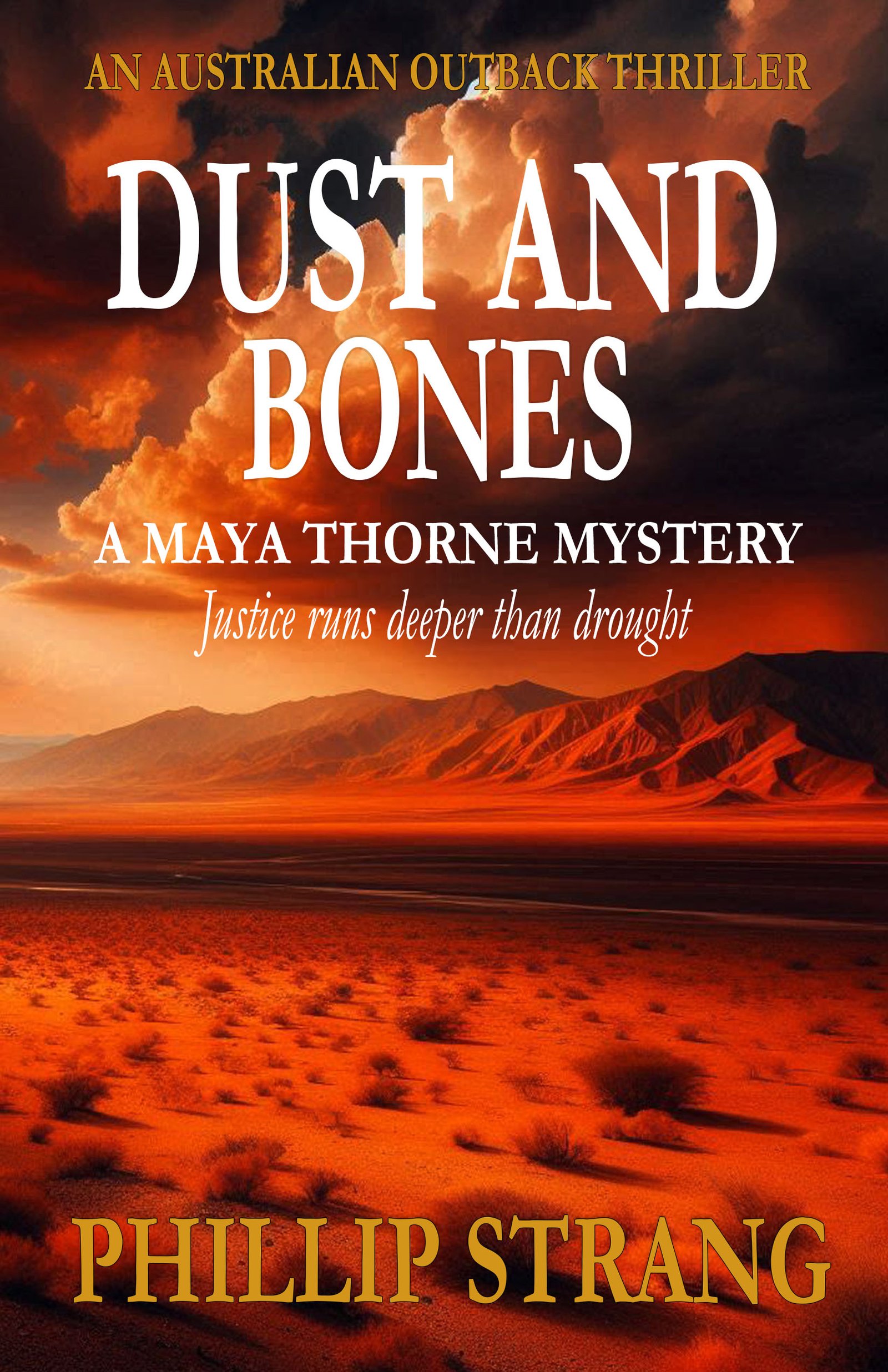
A MAYA THORNE MYSTERY
Get Dust and Bones Free
Justice runs deeper than drought.
Red dust. Shallow graves. A detective who hunts killers where the law runs thin and the nearest help is two hundred miles away.
Send Me the BookYou'll also receive occasional new release emails. Unsubscribe anytime. No spam, ever.
As an Amazon Associate, Phillip Strang earns from qualifying purchases. This page contains affiliate links — buying through them costs you nothing extra.