
Mining Towns in Crime Fiction possess an inherent darkness that extends far beyond the literal underground tunnels and shafts that define them. These communities exist in a perpetual state of tension between prosperity and collapse, between tight-knit loyalty and dangerous secrets. The very nature of extractive industry creates perfect conditions for the kind of moral complexity that drives compelling crime narratives.
Across eighteen series and more than 150 novels, I’ve discovered that the most effective crime settings are those where the environment itself becomes a character in the story. Mining towns deliver this in spades, offering writers a rich tapestry of social dynamics, economic pressures, and physical isolation that can elevate any thriller from mundane to memorable.
The Geography of Guilt: Physical Isolation as Narrative Device
Mining communities are rarely established in convenient locations. They exist where the resources are, not where humans naturally want to live. This geographical isolation creates immediate narrative advantages. Characters cannot simply escape their problems by moving to the next town over. Law enforcement operates with limited resources and backup. Witnesses disappear not because they’ve been eliminated, but because they’ve genuinely vanished into hundreds of square miles of unforgiving terrain.
In my Maya Thorne series, I’ve exploited this isolation repeatedly. The Australian outback mining settlements become pressure cookers where secrets ferment and explode. When your nearest neighbor lives fifty kilometers away and the police are based three hours’ drive on good roads, the usual social contracts break down. People solve their own problems, often through methods that civilized society would find unacceptable.
The physical environment also provides practical plot advantages. Mine shafts make excellent places to dispose of bodies or hide evidence. Underground tunnels create natural escape routes and secret meeting places. The industrial machinery masks sounds that might otherwise alert witnesses. Smart writers don’t just use these elements as convenient plot devices—they make them integral to the story’s fabric.
Economic Warfare and Social Stratification
Mining towns operate on boom-and-bust cycles that create volatile social conditions perfect for crime fiction. During boom periods, money flows freely, attracting opportunists, criminals, and desperate people looking for fresh starts. When the bust comes—and it always comes—the community faces existential crisis. Jobs vanish overnight. Property values collapse. Families that seemed secure find themselves trapped in dying towns with underwater mortgages and no prospects.
This economic instability breeds the kind of desperation that drives people to make catastrophic decisions. The mine owner’s family lives in a compound on the hill while the workers crowd into company housing. When layoffs come, the social contract shatters. Former friends become enemies. The potential for violence simmers constantly beneath the surface.
I’ve found that character-driven narratives flourish in these environments because the economic pressure strips away social pretenses. People reveal their true nature when their survival is threatened. The respected foreman who embezzles pension funds. The mayor who takes bribes from environmental criminals. The union leader who sells out his members. These aren’t cartoon villains—they’re ordinary people pushed beyond their breaking points.
Environmental Crime and Corporate Conspiracies in Mining Towns in Crime Fiction
Mining operations generate environmental damage on scales that dwarf most other industries. Toxic waste, groundwater contamination, air pollution—the potential for environmental crime is enormous. These offenses often involve corporate conspiracies spanning decades, creating perfect fodder for complex crime narratives.
The environmental angle adds moral weight to your story. When a mining company covers up a toxic spill that causes birth defects, the stakes extend beyond individual victims to entire generations. The conspiracy necessarily involves multiple participants—executives, government officials, scientists, contractors—creating a web of complicity that can sustain a series across multiple books.
Corporate environmental crime also provides realistic motivation for murder. Someone threatens to expose decades of illegal dumping? That person represents a liability worth billions in cleanup costs and legal settlements. The mathematics of murder become coldly rational. When I structure action thriller narratives around environmental crime, the violence feels inevitable rather than gratuitous.
Community Loyalty Versus Individual Justice
Mining communities develop fierce internal loyalty born from shared hardship and mutual dependence. When external threats arise—government regulators, environmental activists, corporate restructuring—the community typically closes ranks. This creates fascinating moral complexity for crime writers.
What happens when the person destroying the community from within is also someone who saved dozens of lives in the mine collapse five years ago? How do you investigate a crime when half the witnesses are related to each other and the other half owe their jobs to the primary suspect? These situations force your detective characters to navigate competing loyalties and moral gray areas.
In one of my DI Tremayne investigations, I placed him in a former coal mining village where everyone knew who committed the murder but no one would testify. The community had decided the victim deserved his fate, and they viewed outside law enforcement as a hostile intrusion. This setup forced the detective to question whether legal justice and moral justice always align.
What Not to Do: Common Mistakes in Mining Town Crime Fiction
The biggest error writers make is treating mining communities as generic small towns with industrial window dressing. They miss the unique culture, the specific dangers, and the particular social dynamics that make these settings special. Don’t write dialogue that sounds like it came from suburban coffee shops. Mine workers have their own vocabulary, their own concerns, their own way of viewing the world.
Another frequent mistake is romanticizing the work and the community. Mining is dangerous, dirty, and often soul-crushing labor. The communities are frequently scarred by industrial accidents, environmental damage, and economic instability. If your mining town feels like a charming small-town romance setting, you’re doing it wrong. These places have beauty, but it’s a harsh, unforgiving beauty that comes with real costs.
Writers also err by making the mining operation merely background scenery. The mine should influence every aspect of your story—the characters’ motivations, the plot’s structure, the setting’s atmosphere. If you could relocate your story to any other small town without changing anything substantial, you haven’t fully exploited your setting’s potential.
Conclusion
Mining towns offer crime writers a perfect storm of narrative advantages: geographic isolation, economic volatility, environmental danger, and complex social dynamics. The key is treating these communities as living, breathing places with their own rules rather than convenient backdrops for generic crime plots.
About Phillip Strang
Phillip Strang is an Australian crime and thriller novelist. Across eighteen series and more than 150 novels, his work spans London police procedurals (DCI Isaac Cook), UK investigations (DI Tremayne), Australian outback crime (Maya Thorne), FBI thrillers (Alex Harlan), Scottish Highland mysteries (DI Sarah Lynch), and espionage (Steve Case). Learn more about Phillip or browse his complete catalogue on Amazon.
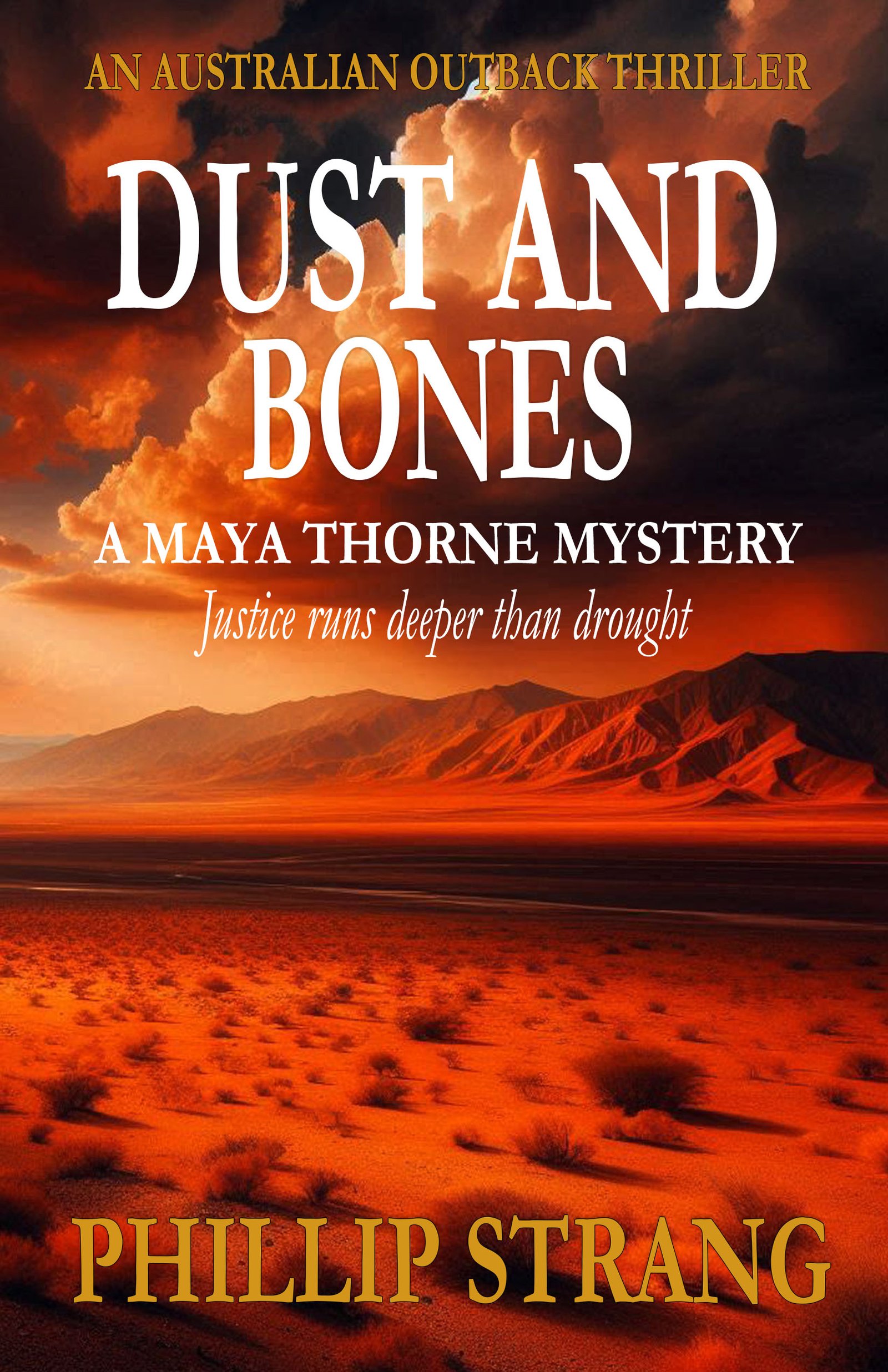
A MAYA THORNE MYSTERY
Get Dust and Bones Free
Justice runs deeper than drought.
Red dust. Shallow graves. A detective who hunts killers where the law runs thin and the nearest help is two hundred miles away.
Send Me the BookYou'll also receive occasional new release emails. Unsubscribe anytime. No spam, ever.
As an Amazon Associate, Phillip Strang earns from qualifying purchases. This page contains affiliate links — buying through them costs you nothing extra.