
Mountains in Crime Fiction serve as more than scenic backdrops—they function as active participants in the narrative machinery of murder, deception, and investigation. The vertical landscape creates unique storytelling opportunities that flat terrain simply cannot match, from the claustrophobic isolation of a snowed-in lodge to the vertiginous terror of a clifftop confrontation.
Across eighteen series and more than 150 novels, I have discovered that elevation changes everything about how crime unfolds on the page, altering the fundamental dynamics of pursuit, escape, and discovery in ways that transform the reader’s experience.
The Psychological Weight of Altitude
Mountains impose psychological pressure that seeps into every character interaction. The thin air becomes a metaphor for breathless tension, while the looming peaks create an oppressive sense of being watched or trapped. Unlike urban settings where anonymity provides cover, mountain environments strip away pretense and force characters into raw confrontation with both the elements and each other.
In my DI Sarah Lynch series, set in the Scottish Highlands, I exploit this psychological weight deliberately. The mountains become a character themselves, influencing decision-making and amplifying the emotional stakes. When a suspect flees upward rather than across level ground, the pursuit becomes exponentially more dangerous and dramatic. Every step higher raises the literal and metaphorical stakes.
The weather patterns unique to mountainous regions—sudden storms, temperature drops, visibility changes—create natural plot devices that feel organic rather than contrived. A investigation that seems straightforward at base camp becomes a life-or-death struggle when a blizzard hits at 8,000 feet.
Isolation as Narrative Engine
Mountain settings provide legitimate reasons for characters to be cut off from help, communication, and escape routes. This isolation isn’t the artificial construct you might find in other settings—it’s a natural consequence of geography and weather. When your detective is investigating a murder at a remote mountain research station, the inability to call for backup or evacuate suspects becomes an accepted reality rather than a convenient plot device.
The isolation works both ways. Criminals who choose mountain hideouts gain tactical advantages but also trap themselves. The same narrow passes and limited access routes that make pursuit difficult also restrict escape options. I’ve used this dynamic repeatedly, creating scenarios where the criminal’s apparent advantage becomes their ultimate downfall.
What makes mountain isolation particularly effective is its gradual nature. Characters don’t suddenly find themselves trapped—they make calculated decisions to venture further from civilization, each step deeper into the mountains making retreat more difficult and dangerous. This creates mounting tension as readers recognize the increasing peril even when characters don’t.
How Mountains Transform Crime Scene Investigation
The practical challenges of investigating crime in mountainous terrain create authentic obstacles that generate plot tension. Evidence collection becomes exponentially more complex when the scene is accessible only by helicopter or requires technical climbing skills to reach. Weather can destroy or preserve evidence in unexpected ways—a body frozen in a glacier tells a different story than one decomposing in summer heat.
Mountain crime scenes often span vast areas connected by treacherous terrain. A murder that begins with a body found at treeline might lead investigators to evidence scattered across multiple elevation zones, each requiring different equipment and expertise to access. This geographical complexity allows writers to pace revelations naturally while maintaining investigative authenticity.
The specialized knowledge required for mountain investigations also creates opportunities for compelling secondary characters. Mountain rescue teams, climbing guides, and wilderness experts possess skills and local knowledge that become crucial to solving cases. These characters bring authentic technical expertise while serving specific narrative functions.
Maximizing the Power of Mountains in Crime Fiction
The key to effectively using mountain settings lies in understanding their specific advantages rather than treating them as interchangeable with other remote locations. Mountains create vertical drama—literally. A rooftop chase in the city becomes a cliff-face pursuit in mountain terrain, with exponentially higher stakes and more visceral reader engagement.
Weather becomes a crucial timing element in mountain-based crime fiction. The narrow windows of opportunity created by seasonal accessibility, daily weather patterns, and sudden storms provide natural deadline pressure. When the helicopter can’t return for three days due to incoming storms, every character decision carries added weight.
I’ve found that mountain environments work best when they influence character motivation and decision-making rather than simply providing atmospheric background. In my Maya Thorne series, though set in different terrain, I apply similar principles—the landscape shapes behavior and creates opportunities that wouldn’t exist elsewhere.
Common Mistakes in Mountain Crime Fiction
Many writers treat mountains as generic ‘remote locations’ without leveraging their specific characteristics. Simply moving an urban crime plot to a mountain setting wastes the unique opportunities elevation provides. The worst mountain crime fiction ignores the practical realities of altitude, weather, and terrain, creating scenarios that feel implausible to anyone with mountain experience.
Another frequent error involves underestimating the specialized knowledge required for authentic mountain scenes. Writers who don’t understand climbing techniques, altitude effects, or mountain weather patterns create jarring inaccuracies that destroy reader immersion. Research becomes crucial—not just about criminal procedure, but about mountain environments and the people who inhabit them.
The most damaging mistake is using mountain isolation as a lazy plotting device. When characters make obviously stupid decisions just to become isolated, readers lose respect for both the characters and the story. Mountain isolation should feel like a natural consequence of legitimate character motivations, not a transparent authorial manipulation.
Some writers also fall into the trap of making mountain settings too hostile or dangerous, turning every scene into a survival story that overshadows the crime plot. The environment should enhance rather than overwhelm the central mystery or thriller elements.
Conclusion
Mountains offer crime writers a unique combination of psychological pressure, natural isolation, and dramatic possibilities that few other settings can match. When used skillfully, they become integral to plot development rather than mere scenic decoration, creating stories that could not unfold anywhere else with the same impact and authenticity.
About Phillip Strang
Phillip Strang is an Australian crime and thriller novelist. Across eighteen series and more than 150 novels, his work spans London police procedurals (DCI Isaac Cook), UK investigations (DI Tremayne), Australian outback crime (Maya Thorne), FBI thrillers (Alex Harlan), Scottish Highland mysteries (DI Sarah Lynch), and espionage (Steve Case). Learn more about Phillip or browse his complete catalogue on Amazon.
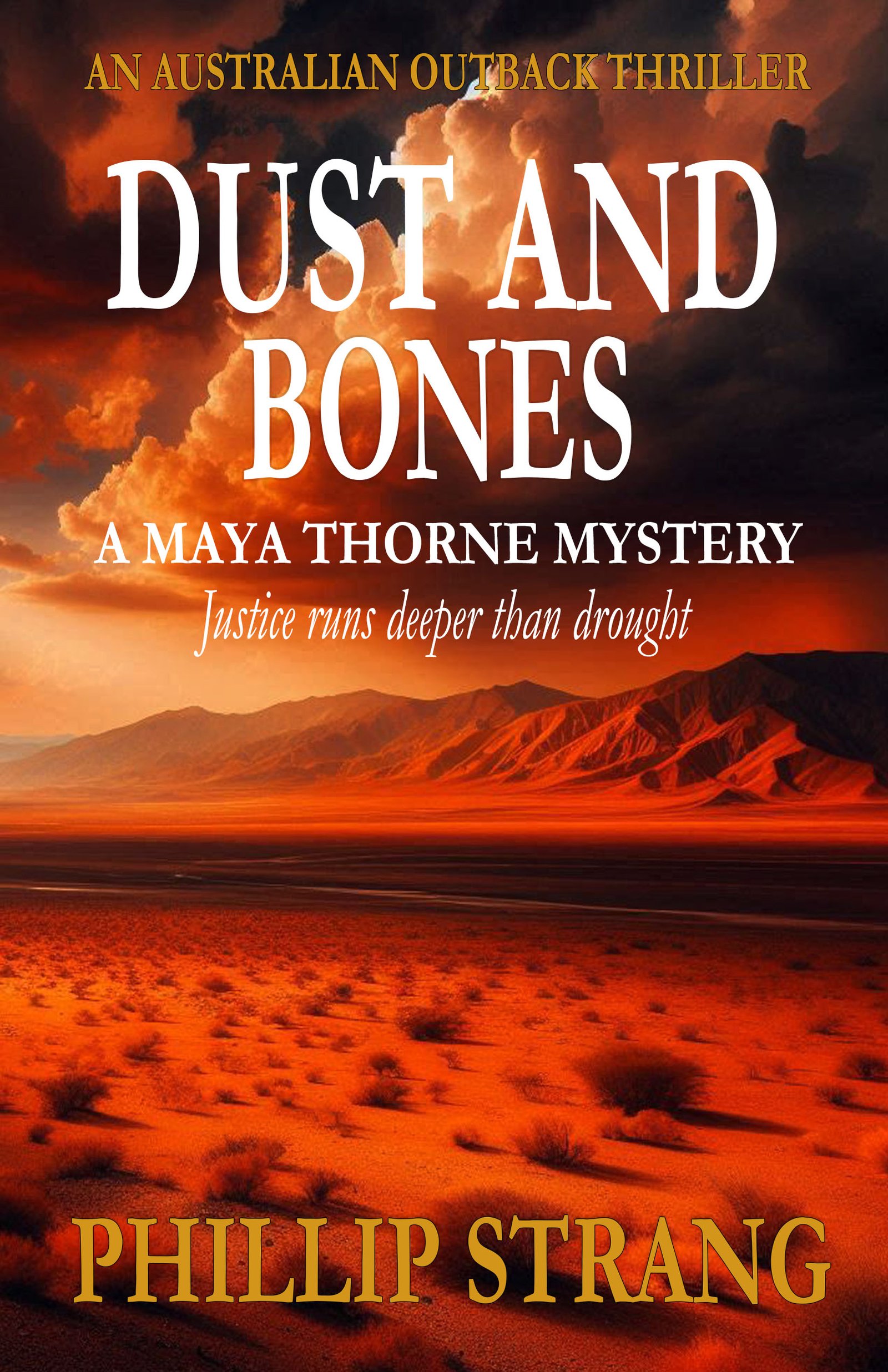
A MAYA THORNE MYSTERY
Get Dust and Bones Free
Justice runs deeper than drought.
Red dust. Shallow graves. A detective who hunts killers where the law runs thin and the nearest help is two hundred miles away.
Send Me the BookYou'll also receive occasional new release emails. Unsubscribe anytime. No spam, ever.
As an Amazon Associate, Phillip Strang earns from qualifying purchases. This page contains affiliate links — buying through them costs you nothing extra.