
Rural Crime Fiction: Small Town Secrets works because isolation amplifies everything—the lies, the grudges, the desperate measures people take when they believe no one is watching. The supposed safety of small communities becomes their greatest vulnerability, creating a pressure cooker where ordinary people commit extraordinary crimes.
Across eighteen series and more than 150 novels, I have found that rural settings offer crime writers something urban environments simply cannot: the illusion of transparency coupled with layers of deliberate concealment that go back generations.
The Geography of Guilt
Small towns operate on proximity and memory. Everyone knows everyone, yet paradoxically, this familiarity breeds the deepest secrets. When I developed my Maya Thorne series set in the Australian outback, I discovered that physical isolation doesn’t just limit escape routes for criminals—it creates psychological pressure that forces characters into increasingly desperate choices.
The key craft element here is understanding that rural crime fiction succeeds when the setting becomes a character itself. The town’s history, its economic struggles, its social hierarchies all contribute to the crime. A murder in a farming community isn’t just about the victim and perpetrator; it’s about drought affecting land values, about families who’ve feuded since the 1800s, about young people leaving and only the desperate or determined staying behind.
Distance from law enforcement creates practical complications that drive plot tension. When the nearest detective is two hours away and the local constable went to school with half the suspects, the investigation takes on different dynamics. This isn’t about quaint rural charm—it’s about how isolation corrupts normal procedures and forces improvisation.
The Economics of Rural Evil
Money moves differently in small communities, and crime writers who ignore this miss the authentic pulse of rural corruption. In cities, criminals can disappear into anonymity. In rural areas, they must hide in plain sight, which requires different skills and creates different vulnerabilities.
I’ve observed that the most compelling rural crimes often stem from economic desperation masked as community respectability. The bank manager everyone trusts, the farming family that’s been struggling for three generations, the local business owner whose success depends on arrangements that can’t bear scrutiny. These situations create moral ambiguity that elevates crime fiction beyond simple good-versus-evil narratives.
When developing rural criminals, consider how limited opportunities shape criminal thinking. Urban criminals might have dozens of potential targets and escape routes. Rural criminals often fixate on single opportunities because alternatives don’t exist. This creates obsessive, methodical planning that can surprise readers accustomed to impulsive urban crime.
Why Rural Crime Fiction Small Town Secrets Demand Different Investigation Techniques
Professional detectives investigating rural crimes face unique challenges that create natural plot complications. Information networks operate differently when witness intimidation happens through social pressure rather than physical threats. A detective’s effectiveness might depend more on understanding local family connections than forensic expertise.
In my DI Sarah Lynch series set in the Scottish Highlands, I learned that rural investigations often require patience that urban detectives don’t develop. Rushing interrogations or demanding immediate cooperation can shut down entire communities. The detective becomes an outsider whose success depends on navigating local politics and historical grievances that predate the current crime.
This creates opportunities for character development that urban settings rarely provide. A detective might need to understand why two families won’t speak to each other, how a mine closure twenty years ago still affects current relationships, or why certain areas of town are considered off-limits by unspoken agreement. These social dynamics become investigative tools, but also obstacles that must be overcome through character growth rather than procedural shortcuts.
The pacing in rural crime fiction necessarily differs from urban thrillers. Information emerges slowly, through careful relationship building rather than rapid-fire interrogations. This suits readers who appreciate character-driven narratives where psychological insight matters more than action sequences.
The Fatal Mistakes Writers Make with Rural Settings
The most common error involves treating rural communities as simplified urban environments where everyone just happens to know each other. This misses the fundamental difference: rural social structures operate on entirely different principles than urban anonymity. Writing rural characters as city dwellers who happen to live on farms creates inauthentic dialogue and unrealistic plot developments.
Another frequent mistake involves overplaying the folksy charm while ignoring the genuine hardships that create authentic rural tension. Real rural communities deal with economic decline, brain drain, substance abuse, and infrastructure challenges that create legitimate desperation. Crime fiction that treats these issues as quaint local color rather than serious motivating factors feels condescending and unrealistic.
Writers also err by making rural law enforcement incompetent rather than differently equipped. A rural sheriff might lack certain technical resources but possess deep community knowledge that urban detectives don’t develop. The conflict should arise from different approaches to problem-solving, not from rural stupidity versus urban sophistication.
Dialog represents another pitfall. Rural speech patterns aren’t just urban English with different vocabulary. The rhythm, directness, and cultural references reflect different life experiences. Authentic rural dialog comes from understanding how physical environment shapes communication patterns, not from adding ‘ain’t’ and dropping consonants.
Building Authentic Rural Criminal Networks
Rural criminal enterprises operate on personal relationships rather than hierarchical organizations. The drug dealer might be the mayor’s nephew, the money launderer could be the respected church treasurer, and the muscle might come from desperate farmers facing foreclosure. These interconnections create vulnerability for criminals but also protection through community loyalty.
When I work on rural crime plots, I focus on how criminal activities integrate with legitimate community functions. The quarterly livestock auction that provides money laundering opportunities, the hunting season that offers alibis and weapon access, the volunteer fire department that knows everyone’s schedule and property layout. Criminal success depends on understanding and exploiting these community rhythms.
This approach naturally leads to more complex moral situations than urban crime fiction typically explores. The criminal might also be the person who organized relief efforts during the last flood, or the only employer keeping young people from leaving town. Rural communities often tolerate criminal activity when it serves broader community needs, creating ethical ambiguity that enriches character development.
Conclusion
Rural crime fiction succeeds when writers understand that small towns aren’t simplified versions of cities, but complex social environments with their own rules, pressures, and survival mechanisms. The secrets that fester in isolation create opportunities for psychological depth that urban settings rarely match, provided writers approach rural communities with respect for their genuine complexity rather than romanticized stereotypes.
About Phillip Strang
Phillip Strang is an Australian crime and thriller novelist. Across eighteen series and more than 150 novels, his work spans London police procedurals (DCI Isaac Cook), UK investigations (DI Tremayne), Australian outback crime (Maya Thorne), FBI thrillers (Alex Harlan), Scottish Highland mysteries (DI Sarah Lynch), and espionage (Steve Case). Learn more about Phillip or browse his complete catalogue on Amazon.
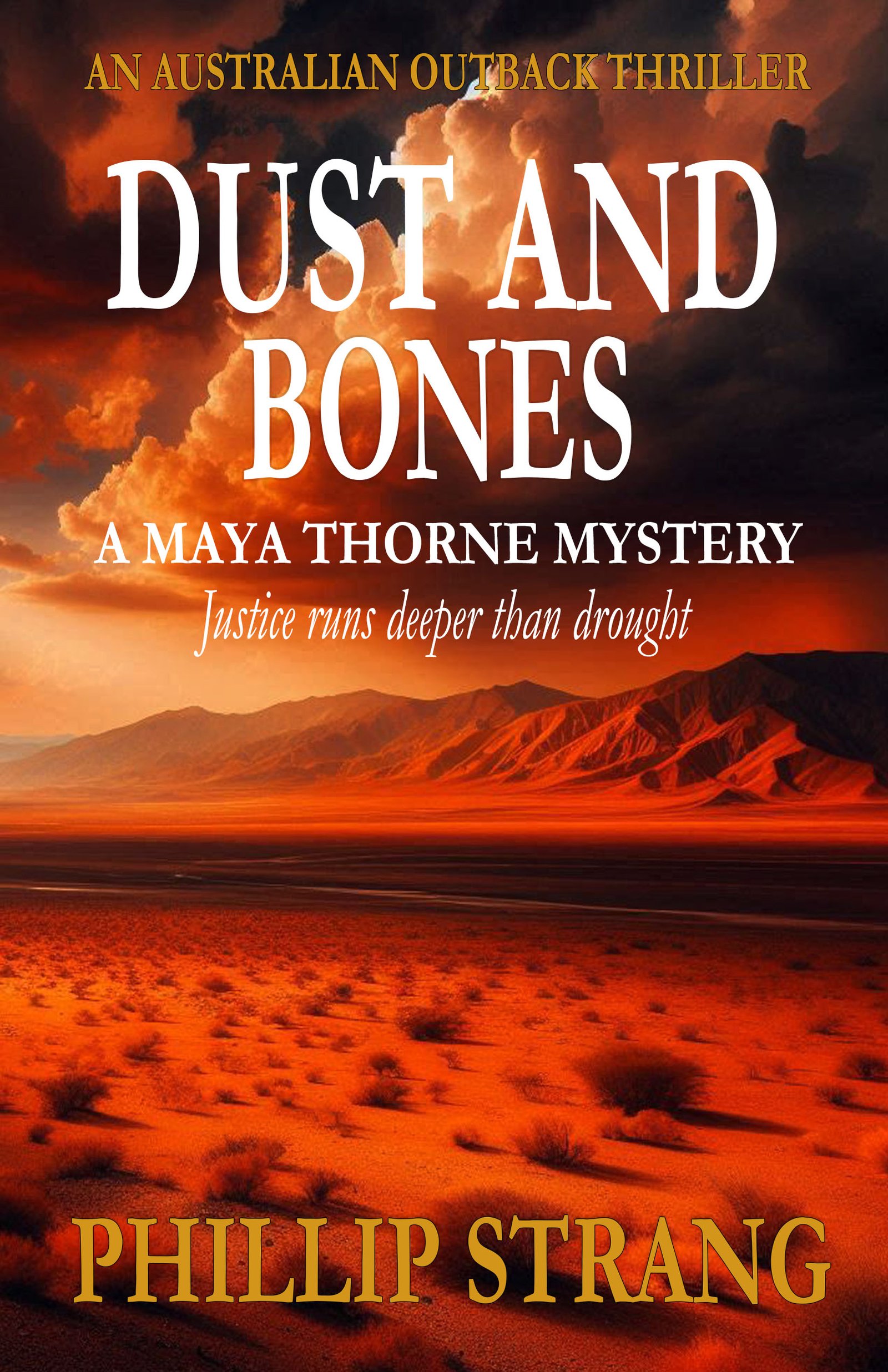
A MAYA THORNE MYSTERY
Get Dust and Bones Free
Justice runs deeper than drought.
Red dust. Shallow graves. A detective who hunts killers where the law runs thin and the nearest help is two hundred miles away.
Send Me the BookYou'll also receive occasional new release emails. Unsubscribe anytime. No spam, ever.
As an Amazon Associate, Phillip Strang earns from qualifying purchases. This page contains affiliate links — buying through them costs you nothing extra.