
The lone wolf detective presents a specific structural challenge that separates competent crime writers from those who truly understand their craft. Unlike team-based investigations where dialogue and collaboration drive plot advancement, the solo operator forces you to find alternative mechanisms for revelation, conflict, and pacing without falling into the trap of extended internal monologue or contrived coincidence.
Across eighteen series and more than 150 novels, I have found that lone wolf detectives demand a fundamentally different approach to story architecture, one that relies heavily on environmental storytelling, strategic secondary character deployment, and what I call ‘discovery through action’ rather than deduction through discussion.
The Information Flow Problem
When your protagonist works alone, information acquisition becomes your primary structural concern. In team-based narratives, evidence analysis happens through dialogue between partners or briefings with superiors. The lone wolf detective eliminates these natural exposition opportunities, forcing you to embed crucial details within action sequences and observational moments.
My Maya Thorne series taught me this lesson early. Operating in the Australian outback with minimal backup, Maya cannot simply talk through evidence with a partner. Instead, I developed what I call the ‘environmental witness’ technique—using locations, weather patterns, and local knowledge as active participants in the investigation. The landscape itself becomes a source of information, from tire tracks in red dirt to the behavior of cattle around a crime scene.
The key is making information discovery feel organic rather than convenient. Your solo detective should work harder for every piece of evidence, creating natural tension while avoiding the pitfall of having clues simply present themselves when the plot demands it.
Secondary Character Architecture
Successful lone wolf detectives require a carefully constructed ecosystem of secondary characters who serve specific narrative functions without undermining the protagonist’s independence. These characters cannot be traditional sidekicks or partners—they must provide essential services while maintaining their own agency and limitations.
I structure these supporting players into three categories: the reluctant informant, the territorial expert, and the personal anchor. The reluctant informant provides crucial local knowledge but has reasons to withhold information. The territorial expert possesses specialized skills the detective lacks but operates within strict professional boundaries. The personal anchor—often a family member or old friend—keeps the detective tethered to emotional stakes beyond the immediate case.
In my Steve Case series, Case operates independently across international locations, but each setting requires him to navigate relationships with local contacts who have their own agendas. These characters advance the plot through conflict and negotiation rather than simple cooperation, maintaining narrative tension while serving functional story needs.
How I Structure the Solo Investigation
My approach to lone wolf detective stories follows what I call the ‘spiral methodology’—the protagonist circles the central mystery, getting closer with each revolution but never moving in a straight line toward the solution. This creates the sense of methodical investigation while avoiding the problem of having your detective simply interview suspects in sequence.
Each chapter represents one rotation of the spiral, bringing the detective into contact with a different aspect of the case. Physical locations become as important as characters—crime scenes, victim’s homes, relevant businesses, and community gathering places each offer distinct types of evidence and obstacles. The detective must adapt their approach to each environment, creating natural variation in pacing and tone.
I also employ what I call ‘discovery through resistance’—the detective encounters obstacles that reveal information indirectly. A locked door suggests something worth hiding. A nervous witness indicates sensitive information. A community’s silence around certain topics points toward shared secrets. This technique transforms every setback into a form of progress, maintaining momentum even when the detective appears to be getting nowhere.
Avoiding the Common Pitfalls
The most frequent mistake I see in lone wolf detective fiction is the extended internal monologue—pages of the detective thinking through evidence because the author has no other mechanism for processing information. This approach kills pacing and reduces the reader to a passive observer of someone else’s reasoning process. Instead, embed analysis within action. Let your detective work through theories while examining a crime scene or driving to the next interview.
Another trap is the convenient coincidence—the overheard conversation, the accidentally discovered evidence, the witness who suddenly remembers crucial details. These shortcuts undermine the competence you are trying to establish in your protagonist. When my DI Sarah Lynch investigates Highland crimes, she succeeds through persistence and local knowledge, not lucky breaks. Every breakthrough results from methodical work or calculated risk-taking.
The third common error involves making your detective too self-sufficient. Even the most independent investigator should have gaps in knowledge or capability that force them to seek help, creating natural opportunities for character development and plot advancement. The lone wolf who never needs assistance quickly becomes an implausible superman rather than a believable professional.
Sustaining Tension Without Team Dynamics
Team-based detective stories create tension through interpersonal conflict, disagreement over tactics, and competitive dynamics between partners. The solo operator must generate equivalent tension through environmental opposition—hostile communities, dangerous suspects, institutional resistance, and time pressure become your primary sources of conflict.
I focus heavily on what the detective cannot control. Weather conditions that threaten evidence preservation. Jurisdictional limitations that restrict access to witnesses. Personal relationships that create ethical dilemmas around the investigation. These external pressures replace the internal team conflicts while maintaining narrative drive.
The solo detective story also benefits from higher personal stakes. Without partners to share risk, every dangerous situation carries greater weight. Without institutional support, every mistake has larger consequences. This isolation can intensify the reader’s investment in your protagonist’s success while justifying the heightened tension that effective thrillers demand.
The Revelation Challenge
Perhaps the greatest structural challenge in lone wolf detective fiction involves the final revelation. Team-based stories can use the classic gathering of suspects or the partner-to-partner explanation of the solution. The solo detective must find alternative mechanisms for revealing the solution that feel organic to their independent working style.
I prefer what I call the ‘confrontational revelation’—the detective presents their theory directly to the perpetrator in a setting where the truth can be tested through action rather than confession. This approach maintains the detective’s proactive nature while creating opportunities for final conflict and resolution. The truth emerges through the villain’s response rather than through lengthy exposition.
Another effective technique involves the ‘environmental confirmation’—returning to the original crime scene or key location with new understanding, allowing physical evidence to confirm the detective’s theory. This approach emphasizes the detective’s analytical skills while grounding the solution in observable reality rather than abstract deduction.
Conclusion
The lone wolf detective demands structural innovation and careful attention to information flow, but rewards the writer with intensely personal narratives and unique opportunities for atmospheric storytelling. Master these techniques, and you will discover that the solo operator offers some of the richest possibilities in crime fiction.
About Phillip Strang
Phillip Strang is an Australian crime and thriller novelist. Across eighteen series and more than 150 novels, his work spans London police procedurals (DCI Isaac Cook), UK investigations (DI Tremayne), Australian outback crime (Maya Thorne), FBI thrillers (Alex Harlan), Scottish Highland mysteries (DI Sarah Lynch), and espionage (Steve Case). Learn more about Phillip or browse his complete catalogue on Amazon.
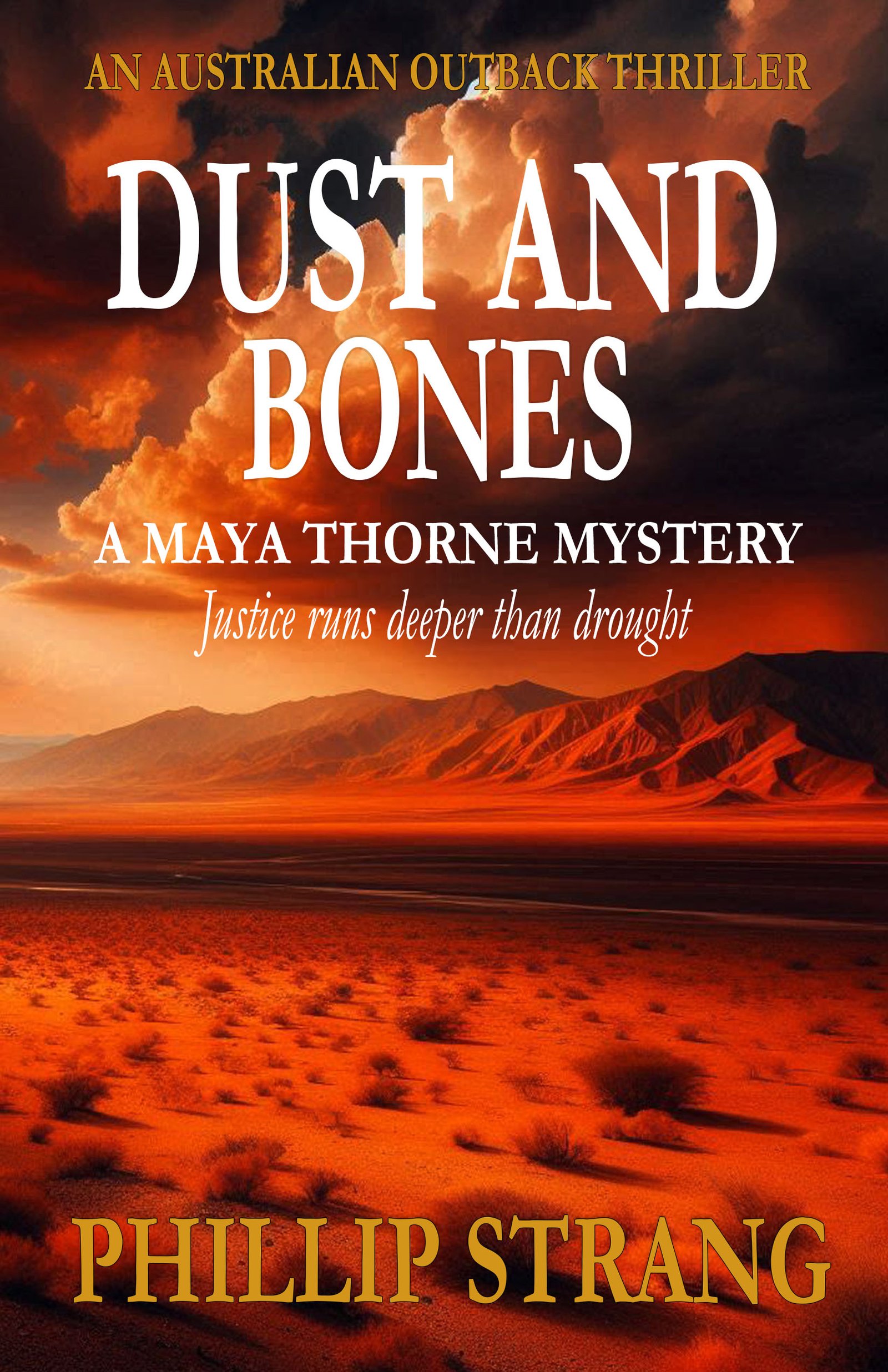
A MAYA THORNE MYSTERY
Get Dust and Bones Free
Justice runs deeper than drought.
Red dust. Shallow graves. A detective who hunts killers where the law runs thin and the nearest help is two hundred miles away.
Send Me the BookYou'll also receive occasional new release emails. Unsubscribe anytime. No spam, ever.
As an Amazon Associate, Phillip Strang earns from qualifying purchases. This page contains affiliate links — buying through them costs you nothing extra.