
The decision to write from your antagonist’s point of view isn’t just about giving readers access to the villain’s thoughts—it’s a structural choice that fundamentally alters the architecture of your psychological thriller. Every time you shift into the antagonist’s perspective, you’re making a calculated decision about information flow, tension building, and reader manipulation that will ripple through your entire narrative.
Across eighteen series and more than 150 novels, I’ve found that the most effective antagonist POV sequences aren’t the ones that simply reveal what the villain is thinking, but those that serve specific structural purposes within the broader thriller framework. The key lies in understanding that antagonist perspective is a tool for controlling narrative tension, not just character exposition.
The Information Control Problem
When you write from the antagonist’s POV, you’re immediately confronted with what I call the information control problem. Too much revelation kills suspense; too little makes the POV shift pointless. The solution isn’t finding a middle ground—it’s being strategic about which information serves your story’s tension curve.
In my Steve Case series, I use the antagonist’s POV primarily to show the sophistication of the threat without revealing the specific mechanics of their plan. Readers see the antagonist’s intelligence, their resources, their commitment, but not their exact methodology. This creates what I call informed dread—the reader knows something terrible is coming and understands the caliber of mind behind it, but can’t predict the precise form it will take.
The mistake many writers make is using antagonist POV as an exposition dump. They think showing the villain’s perspective means explaining their entire scheme, their complete backstory, their full motivation. This approach treats the antagonist like a confessional narrator rather than a strategic storytelling device. The antagonist’s thoughts should create questions as much as they answer them.
Structural Positioning and Pacing
Where you place antagonist POV chapters within your thriller’s structure determines their impact on pacing and tension. Opening with the antagonist can establish threat level and stakes, but it can also dissipate the mystery that drives readers forward. Closing sections with antagonist POV can build toward climax, but they can also telegraph your ending.
I’ve found the most effective positioning often comes at what I call pressure points—moments when the protagonist has made progress or achieved a small victory. Shifting to the antagonist’s POV at these moments shows how their plans adapt, how they’re always several steps ahead, how the protagonist’s apparent progress might actually be playing into their hands. This creates a structural rhythm of hope and dread that keeps pages turning.
In psychological thrillers specifically, antagonist POV works best when it complicates rather than clarifies the protagonist’s situation. The reader should finish an antagonist chapter feeling more anxious about the protagonist’s fate, not more informed about how things will resolve. This requires treating the antagonist as an active force responding to events, not just a static threat waiting to be discovered.
The Psychology of Revelation
The psychological thriller genre demands that antagonist POV serve the story’s exploration of human psychology, not just its plot mechanics. This means the antagonist’s thoughts must reveal psychological truth without necessarily revealing factual truth. The reader should understand how this person thinks without necessarily understanding what they plan to do.
This distinction becomes crucial when crafting what the antagonist reveals about themselves versus what they reveal about their actions. Their internal monologue might show a completely rational thought process applied to completely irrational goals. Or it might show emotional reasoning that makes perfect sense from their perspective while being obviously flawed to the reader. The key is that psychological revelation should feel authentic to the character while serving the story’s broader themes about human nature.
Effective antagonist POV in psychological thrillers often works by showing the reader exactly how reasonable the antagonist believes themselves to be. This creates cognitive dissonance—the reader simultaneously understands the antagonist’s reasoning and recognizes its fundamental wrongness. This psychological complexity separates sophisticated thrillers from simple action stories where villains are merely obstacles to overcome.
My Working Approach to Antagonist Scenes
When I sit down to write an antagonist POV scene, I start with a simple question: what does this scene accomplish that no other POV could achieve? If the answer is just ‘showing what the villain is doing,’ I reconsider whether the scene belongs in the book at all. Antagonist POV should leverage the unique advantages of that perspective—access to plans the protagonist doesn’t know about, reactions to the protagonist’s actions, insights into the antagonist’s psychological state.
I write antagonist scenes with the same attention to voice and character development I give my protagonists, but I’m more ruthless about information management. Every detail the antagonist notices, every memory they recall, every emotion they experience must serve the story’s tension rather than just developing their character. This doesn’t mean making them one-dimensional—it means ensuring their dimensionality serves the thriller’s purposes.
In my DI Tremayne series, I use antagonist POV sparingly but with maximum impact, often showing the antagonist’s response to Tremayne’s investigative progress. The antagonist’s thoughts reveal their respect for Tremayne’s abilities, their concern about specific discoveries, their adaptations to changing circumstances. This creates a chess-match dynamic where readers understand both players’ general strategies without knowing their specific next moves.
The best action thriller novels often use antagonist POV to establish stakes and threat level, while character-driven narratives use it to explore psychological complexity.
Common Mistakes That Undermine Effectiveness
The most frequent error I see in antagonist POV is what I call the evil soliloquy problem. Writers have their antagonists think in ways that real people simply don’t think—explicitly acknowledging their own evil, explaining their plans to themselves as if addressing an audience, or reflecting on their actions with a level of self-awareness that contradicts their behavior. Real people, including real criminals, rationalize their actions and think of themselves as reasonable. An antagonist thinking ‘my evil plan’ or ‘when I destroy the protagonist’ immediately breaks psychological realism.
Another common mistake is using antagonist POV as a substitute for proper plotting. Writers sometimes use these scenes to introduce information they couldn’t figure out how to reveal naturally through the protagonist’s investigation. This creates scenes that feel forced and expository rather than organic to the story. The antagonist’s perspective should enhance mysteries, not solve plotting problems.
Timing mistakes also plague many thrillers. Some writers introduce antagonist POV too early, before readers are invested in the protagonist, which dilutes emotional attachment. Others wait too long, making the antagonist feel like an afterthought rather than an integral part of the story’s architecture. The most effective antagonist POV emerges naturally from the story’s structure rather than being imposed upon it.
Conclusion
Writing effective antagonist POV requires treating it as a structural tool rather than just a character exercise. Every scene from the antagonist’s perspective should serve your thriller’s broader architecture of tension, information control, and psychological complexity. When done well, these scenes don’t just show readers what the villain is thinking—they manipulate how readers feel about what’s coming next.
About Phillip Strang
Phillip Strang is an Australian crime and thriller novelist. Across eighteen series and more than 150 novels, his work spans London police procedurals (DCI Isaac Cook), UK investigations (DI Tremayne), Australian outback crime (Maya Thorne), FBI thrillers (Alex Harlan), Scottish Highland mysteries (DI Sarah Lynch), and espionage (Steve Case). Learn more about Phillip or browse his complete catalogue on Amazon.
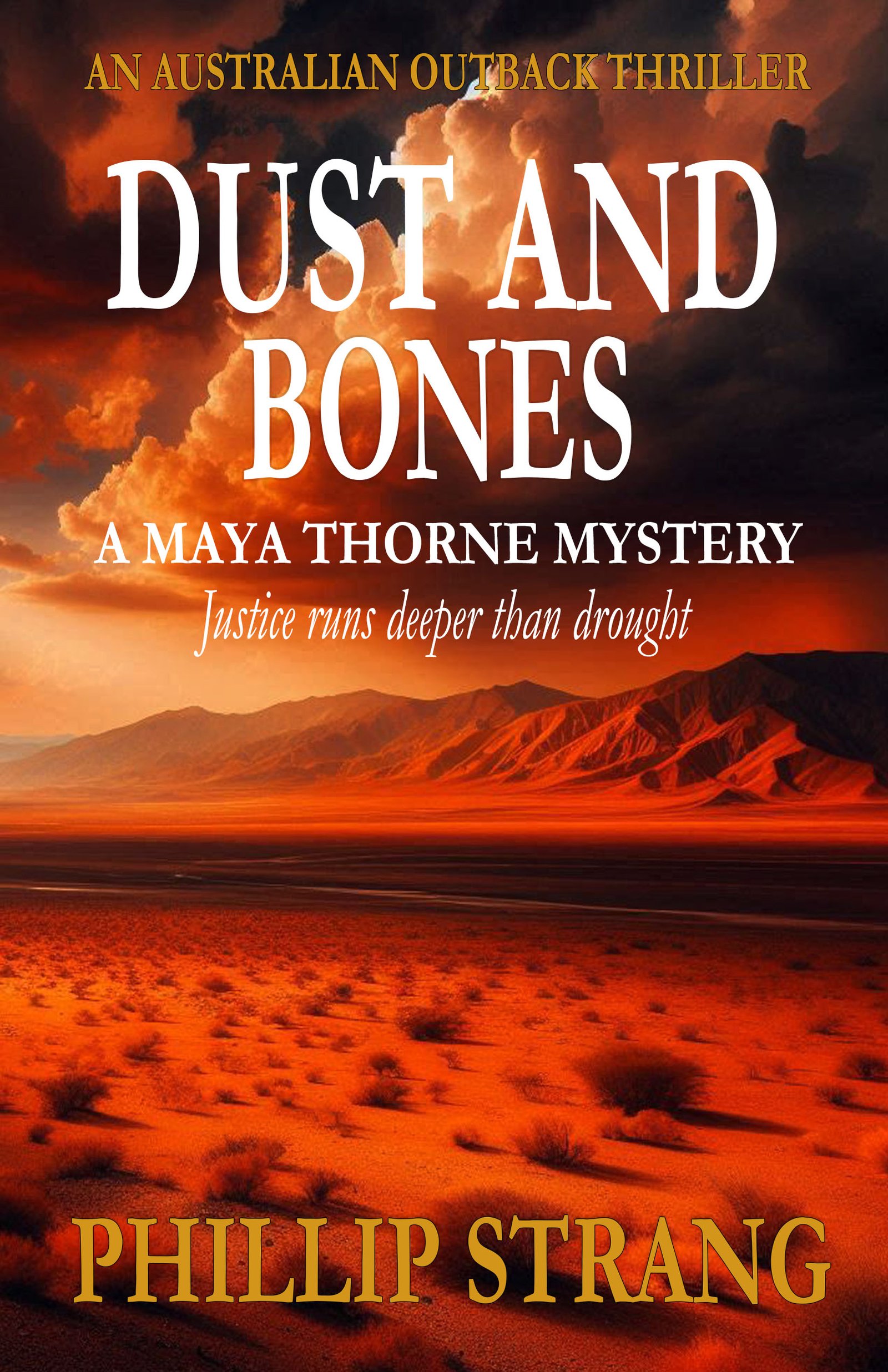
A MAYA THORNE MYSTERY
Get Dust and Bones Free
Justice runs deeper than drought.
Red dust. Shallow graves. A detective who hunts killers where the law runs thin and the nearest help is two hundred miles away.
Send Me the BookYou'll also receive occasional new release emails. Unsubscribe anytime. No spam, ever.
As an Amazon Associate, Phillip Strang earns from qualifying purchases. This page contains affiliate links — buying through them costs you nothing extra.