
Writing Australian crime fiction demands more than dropping a detective into Sydney Harbour or the red dirt of the Outback. The landscape, voice, and market expectations create a unique set of challenges that can make or break a crime novel. Too many writers treat Australia as exotic window dressing rather than understanding how geography, culture, and publishing realities shape every aspect of the narrative.
Across eighteen series and more than 150 novels, I have found that successful Australian crime fiction requires a fundamentally different approach to location, character voice, and market positioning than crime fiction set elsewhere. The vastness of the continent, the cultural nuances, and the relatively small but discerning readership create opportunities and pitfalls that demand specific craft decisions.
Location as Character, Not Backdrop
Australian crime fiction fails when writers use location as mere scenery. The harsh beauty of the Outback, the claustrophobic intimacy of small towns, or the urban sprawl of Melbourne are not backdrops—they are active participants in the crime itself. In my Maya Thorne series, the isolation of remote communities becomes a character that enables certain crimes while making investigation nearly impossible. The red dust gets into everything, including the investigation process, affecting how evidence is collected and preserved.
The key is understanding how Australian geography shapes criminal behavior and police response. A murder in Kings Cross operates under completely different investigative constraints than one in Coober Pedy. Distance matters. Communication matters. The tyranny of distance that shaped Australian history continues to shape Australian crime fiction. Weather patterns, seasonal variations, and the relationship between urban and rural areas all influence how crimes unfold and how they are solved.
Research goes beyond Google Earth. You need to understand local police procedures, jurisdictional issues between state and federal authorities, and how the Australian Federal Police operates differently from state forces. These procedural realities create natural tension and conflict that drives plot development.
Authentic Australian Voice Without Caricature
Australian dialogue in crime fiction walks a narrow line between authenticity and accessibility. The temptation to overload dialogue with ‘mate’ and ‘fair dinkum’ creates caricature rather than character. Real Australian speech patterns are more subtle—it is about rhythm, understatement, and a particular kind of dry humor that emerges under pressure.
Regional variations matter enormously. A detective from Darwin speaks differently than one from Tasmania. Class, education, and cultural background create layers of voice that reflect Australia’s complex social structure. Indigenous voices require particular care and cultural sensitivity—avoid appropriation while acknowledging the reality of Indigenous involvement in both crime and law enforcement.
The most effective approach is to listen more than you speak. Spend time in the locations you are writing about. Understand that Australian understatement often carries more weight than dramatic declarations. Characters reveal emotion through what they do not say rather than through elaborate speeches. This restraint creates tension that serves crime fiction particularly well.
How I Approach Australian Crime Settings
When developing Maya Thorne stories, I start with the specific location and work outward to the crime. Each setting in the Australian Outback presents unique challenges for both criminal and investigator. A mining town facing closure creates desperation that breeds certain types of crimes. Tourist areas struggling with seasonal economic pressures generate different criminal opportunities.
I map the practical realities first—how far is the nearest hospital, police station, or major airport? What is the mobile phone coverage like? How do people actually make their living, and what pressures are they under? These practical considerations become plot points. The character who needs medical attention but is three hours from the nearest hospital faces different stakes than one in metropolitan Sydney.
Research involves understanding both contemporary Australia and its historical layers. Old mining sites, abandoned settlements, and the remnants of failed agricultural projects all provide natural settings for discovering bodies or hiding evidence. The contrast between Australia’s modern urban centers and its frontier mentality in remote areas creates inherent tension. Characters moving between these worlds carry those tensions with them.
Weather and seasonal patterns become crucial timing elements. Bushfire season, flood season, and the tourist calendar all affect when certain crimes become possible or necessary. Road conditions, accessibility, and the movement of seasonal workers create natural rhythms that crime fiction can exploit for both plot development and atmosphere.
Common Mistakes and Pitfalls
The biggest mistake is treating Australia as a version of America or Britain with different accents. Australian law enforcement operates differently, with different jurisdictional arrangements and different relationships between state and federal authorities. A story that ignores these realities reads as inauthentic to Australian readers and confusing to international ones.
Overemphasizing the exotic elements backfires. Yes, Australia has dangerous wildlife, but most crimes occur in urban or suburban settings where the main threats are human rather than reptilian. The crocodile or spider as plot device has been overdone to the point of parody. Focus on the human dangers—isolation, economic pressure, and social tensions—rather than relying on fauna for menace.
Cultural stereotypes undermine character development. Not every Australian character needs to be laconic, beer-drinking, and obsessed with sports. Australia is a multicultural society with complex class structures and regional variations. A Vietnamese-Australian detective in Melbourne brings different perspectives and skills than an Anglo-Celtic investigator in rural Queensland. These differences create investigative opportunities rather than just demographic checking boxes.
The tendency to explain everything to international readers disrupts narrative flow. Trust your readers to understand context from action rather than stopping to define every cultural reference. The story should work for both domestic and international audiences without pandering to either, similar to how the best police procedural novels maintain authenticity while remaining accessible.
Market Realities and Reader Expectations
Australian crime fiction serves both domestic and international markets, but the expectations differ significantly. Australian readers want authenticity in procedure, location, and voice. They will quickly spot inaccuracies in police hierarchy, legal procedures, or geographic details. International readers, particularly in the UK and US markets, expect something distinctly Australian while remaining accessible to their cultural references.
The domestic market is smaller but more discerning. Australian readers of crime fiction are well-read in both local and international authors. They expect sophisticated plots and character development, not just local color. The challenge is creating stories that satisfy this knowledgeable audience while appealing to international readers seeking something different from traditional action thriller novels.
Publishing realities affect craft decisions. Australian publishers often seek series rather than standalone novels, which influences character development and story structure. International sales become crucial for commercial success, which affects setting choices and the balance between local authenticity and universal themes. Understanding these market pressures helps craft decisions about character backgrounds, plot complexity, and series development.
Digital publishing has opened opportunities for Australian crime writers to reach international audiences directly, but this requires understanding what international readers expect from Australian crime fiction. The key is delivering authentic Australian elements within familiar crime fiction structures, similar to how espionage thrillers work across different national contexts.
Conclusion
Writing successful Australian crime fiction requires balancing authenticity with accessibility, using location as an active story element rather than decoration, and understanding both domestic and international market expectations. The vast continent offers endless opportunities for crime writers willing to dig deeper than surface stereotypes and engage seriously with the unique challenges of Australian geography, culture, and law enforcement.
About Phillip Strang
Phillip Strang is an Australian crime and thriller novelist. Across eighteen series and more than 150 novels, his work spans London police procedurals (DCI Isaac Cook), UK investigations (DI Tremayne), Australian outback crime (Maya Thorne), FBI thrillers (Alex Harlan), Scottish Highland mysteries (DI Sarah Lynch), and espionage (Steve Case). Learn more about Phillip or browse his complete catalogue on Amazon.
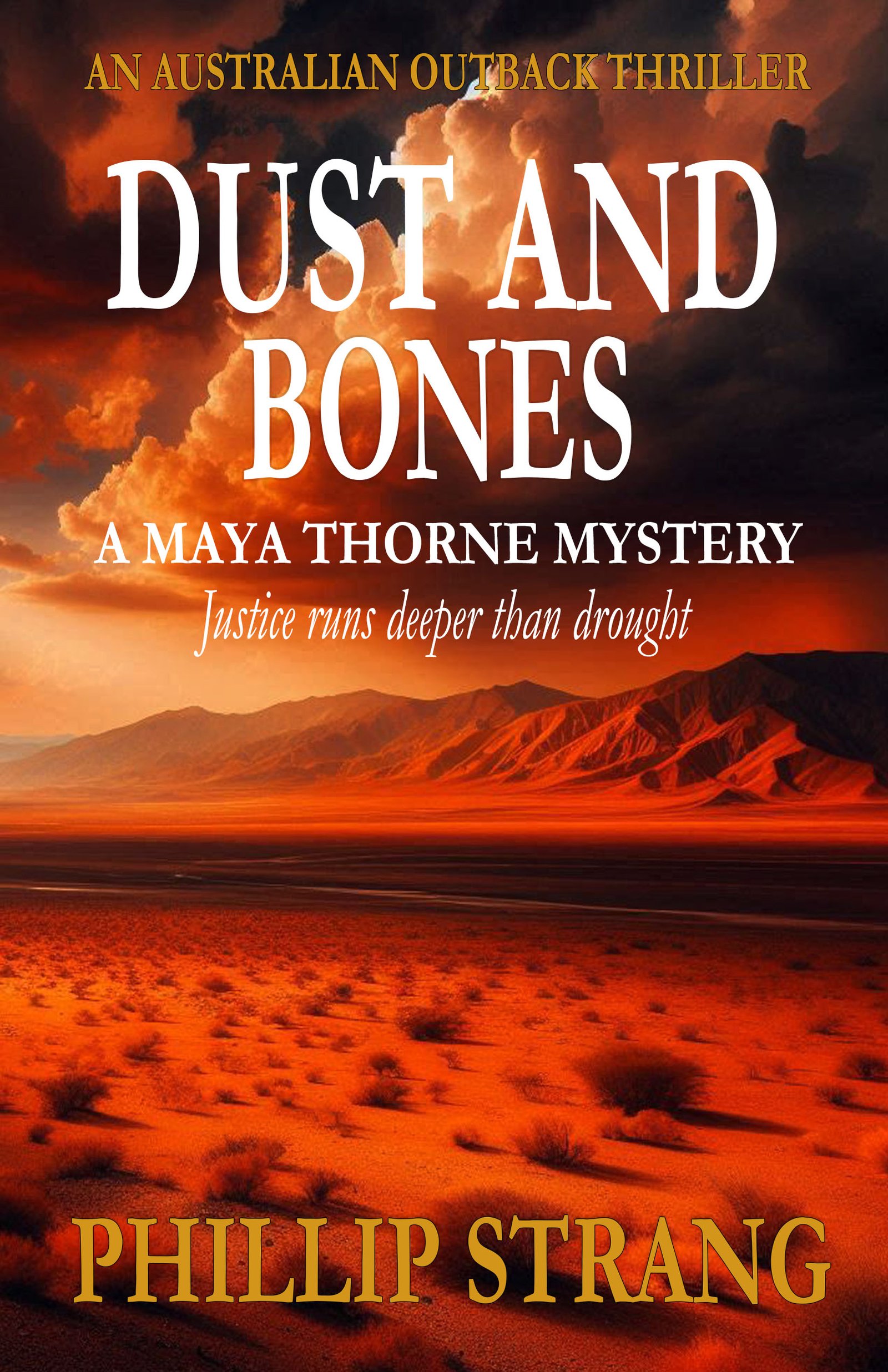
A MAYA THORNE MYSTERY
Get Dust and Bones Free
Justice runs deeper than drought.
Red dust. Shallow graves. A detective who hunts killers where the law runs thin and the nearest help is two hundred miles away.
Send Me the BookYou'll also receive occasional new release emails. Unsubscribe anytime. No spam, ever.
As an Amazon Associate, Phillip Strang earns from qualifying purchases. This page contains affiliate links — buying through them costs you nothing extra.