
The choice of narrative perspective can make or break a crime novel. Whether you opt for the intimate voice of first person, the flexibility of third person, or the complexity of multiple viewpoints will fundamentally shape how readers experience your story and how effectively you can deliver the essential elements of mystery, suspense, and revelation.
Across eighteen series and more than 150 novels, I have found that point of view decisions must serve the specific demands of your crime subgenre, the complexity of your plot, and most crucially, the investigative structure you’re building. There’s no universal right answer, but there are strategic choices that will either amplify or undermine your story’s impact.
Third Person: The Workhorse of Crime Fiction
Third person limited remains the dominant choice in crime fiction for good reason. It provides the psychological distance necessary for readers to observe both detective and criminal without becoming trapped in either perspective. This distance proves essential when you need to show forensic details, crime scenes, or investigative procedures without the constraints of a single character’s knowledge base.
In my DI Tremayne series, third person limited allows me to shift focus between the methodical detective work and the broader investigative team dynamics while maintaining the reader’s objective viewpoint. You can reveal clues through evidence and observation rather than internal monologue, which keeps the mystery mechanics clean and fair to the reader.
Third person also solves the fundamental problem of crime fiction: how do you show the crime being committed without immediately revealing the perpetrator’s identity? You can present the criminal’s actions from an external perspective, describing behavior and consequences without diving into motivations that would spoil the mystery too early.
First Person: Intimacy with Limitations
First person narration creates immediate intimacy between reader and protagonist, making it particularly effective for psychological thrillers and character-driven investigations. The reader experiences every discovery, every dead end, every breakthrough alongside your detective. This proximity can generate intense suspense because the reader’s knowledge is strictly limited to what the narrator knows and chooses to reveal.
However, first person in crime fiction comes with significant structural constraints. Your narrator must be present for every crucial scene, which can create artificial plot contrivances. More critically, if your first-person narrator is the detective, you cannot show the criminal’s actions independently, forcing you to rely on reported crimes, witness statements, and discovered evidence rather than direct dramatic scenes.
The technique works best when the investigation itself is less important than the psychological journey of the investigator. It’s particularly effective for stories where the crime reflects or triggers personal demons in your protagonist, creating that essential connection between the external case and internal character development that drives the best character driven novels.
Multiple POVs: Complexity and Risk
Multiple viewpoints allow you to show different aspects of the investigation simultaneously while maintaining mystery elements through selective revelation. You can follow the detective’s logical process, show the criminal’s escalating desperation, and even include victim or witness perspectives to create a fuller picture of the crime’s impact.
In my Steve Case series, I often employ multiple POVs to show the international scope of espionage operations. Different characters operating in different locations can advance separate plot threads that eventually converge, creating the kind of complex narrative structure that espionage thrillers demand.
The danger lies in diffusing focus and confusing readers about whose story they’re actually following. Each POV character must have a genuine reason for existence beyond mere plot convenience. They need distinct voices, clear motivations, and meaningful contributions to the overall investigation. Weak POV characters become dead weight that slows your narrative pace.
My Working Approach to POV Selection
When starting a new book, I consider three primary factors: the complexity of the crime, the number of significant players, and the emotional core of the story. Simple murders with clear victim-perpetrator relationships often work best in third person limited, focusing on the detective’s methodical approach to evidence and witnesses.
Complex conspiracies or crimes spanning multiple locations typically require multiple POVs to avoid having one character unrealistically present at every crucial moment. International terrorism plots, organized crime networks, or serial killers operating across jurisdictions benefit from multiple perspectives that can show simultaneous actions.
For my Maya Thorne series set in the Australian outback, I use third person limited because the harsh environment itself becomes a character, and the isolation focuses the story on a small cast of suspects and investigators. The limited perspective maintains the claustrophobic atmosphere that remote settings provide.
I also consider the series implications. If you’re planning multiple books with the same detective, first person can become limiting over time. Readers may grow tired of the same narrative voice across eight or ten books, while third person offers more flexibility to explore different aspects of your protagonist’s character and relationships.
Common Mistakes That Undermine Your Choice
The most frequent error I see is switching POV within scenes or chapters without clear transitions, creating what amounts to accidental head-hopping. If you choose third person limited, stay limited. Don’t slip into omniscient narration just because it’s convenient for revealing a piece of information. This inconsistency destroys reader trust and breaks the narrative contract you’ve established.
Another common problem is choosing multiple POVs when the story doesn’t require them. Beginning writers often think multiple perspectives automatically create complexity and sophistication, but unnecessary viewpoint characters dilute focus and slow pacing. Every POV must earn its place by providing information or emotional content that cannot be delivered effectively through your primary narrator.
First person narrators who know too much or too little also create problems. A detective who conveniently intuits solutions without logical deduction feels unrealistic, while one who misses obvious clues frustrates readers. The challenge is creating a narrator whose knowledge and insights feel authentic to their professional experience while maintaining legitimate mystery elements.
Many writers also underestimate the voice demands of first person narration. Your protagonist must sustain an engaging, distinctive voice across an entire novel. Generic or inconsistent first person narration becomes tedious quickly, particularly in series work where readers will encounter the same voice repeatedly across multiple books, as seen in the most successful police procedural novels.
Conclusion
Point of view in crime fiction is a strategic decision that shapes every aspect of your story’s delivery. Choose based on your plot requirements, character strengths, and the investigative structure you’re building, not on theoretical preferences or what seems easiest to write.
About Phillip Strang
Phillip Strang is an Australian crime and thriller novelist. Across eighteen series and more than 150 novels, his work spans London police procedurals (DCI Isaac Cook), UK investigations (DI Tremayne), Australian outback crime (Maya Thorne), FBI thrillers (Alex Harlan), Scottish Highland mysteries (DI Sarah Lynch), and espionage (Steve Case). Learn more about Phillip or browse his complete catalogue on Amazon.
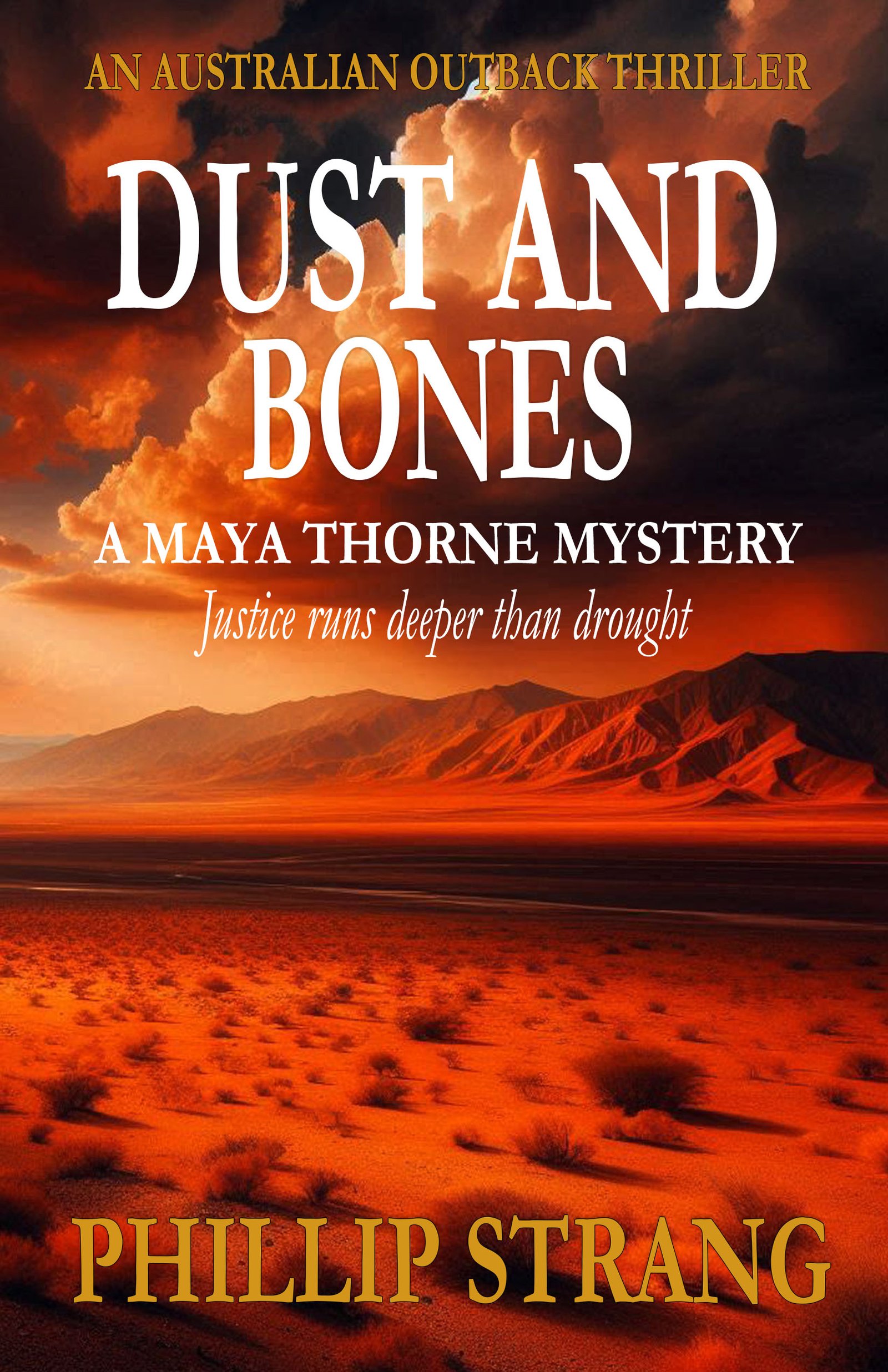
A MAYA THORNE MYSTERY
Get Dust and Bones Free
Justice runs deeper than drought.
Red dust. Shallow graves. A detective who hunts killers where the law runs thin and the nearest help is two hundred miles away.
Send Me the BookYou'll also receive occasional new release emails. Unsubscribe anytime. No spam, ever.
As an Amazon Associate, Phillip Strang earns from qualifying purchases. This page contains affiliate links — buying through them costs you nothing extra.