
Multiple timelines in crime fiction can elevate a straightforward investigation into a complex narrative that reveals character depths and plot connections impossible to achieve through linear storytelling. The challenge lies not in the concept itself, but in executing the structure without confusing readers or sacrificing the momentum that crime fiction demands.
Across eighteen series and more than 150 novels, I have found that successful multiple timeline narratives in crime fiction require rigorous discipline and clear structural frameworks. The technique works best when each timeline serves a distinct purpose in revealing the crime, the criminal, or the investigator’s journey, rather than existing merely to add complexity.
The Foundation: Purpose-Driven Timeline Construction
Every timeline in your crime novel must justify its existence through narrative necessity, not stylistic flourish. In my DI Tremayne series, I often employ dual timelines to contrast the methodical present-day investigation with the chaotic events that led to the crime. This approach works because each timeline reveals information the other cannot provide effectively.
The key principle is complementary revelation. Your present timeline typically follows the investigation’s logical progression, while your past timeline should unveil the emotional and circumstantial forces that created the crime. This creates natural tension as readers piece together how the past inevitably leads to the present discovery. The most effective police procedural novels using this technique ensure that neither timeline could tell the complete story alone.
Consider the structural weight of each timeline. Your primary investigation timeline usually carries sixty to seventy percent of the narrative load, while secondary timelines provide crucial context and emotional depth. This imbalance is intentional and necessary to maintain the crime fiction’s forward momentum.
Transition Techniques That Maintain Momentum
The transition between timelines determines whether your structure enhances or destroys narrative flow. Abrupt cuts work in film but often jar readers out of the story. I have learned to use what I call bridging elements: objects, locations, or emotional states that appear in both timelines, creating smooth passage between different time periods.
In practice, this might mean ending a present-day scene with a detective examining a murder weapon, then opening the past timeline with the victim purchasing that same weapon. The object becomes the bridge, maintaining reader engagement while clearly signaling the temporal shift. Character emotions work similarly. A detective’s frustration in the present can transition into the victim’s desperation twenty years earlier, connecting the timelines through shared emotional resonance.
Physical markers are equally effective. Returning to the same location across different time periods allows readers to see how places change while crimes echo through time. This technique proves particularly powerful in crime series where locations become characters themselves, accumulating history and significance across multiple investigations.
How I Actually Structure Multiple Timelines
My working method begins with a dual outline system. I plot each timeline separately first, ensuring each has its own complete narrative arc with rising action, climax, and resolution. Only after both timelines work independently do I weave them together, identifying the optimal intersection points where one timeline’s revelation enhances the other’s impact.
I use what I call timeline anchors: specific scenes in each timeline that must connect directly to scenes in the other timeline. These anchors prevent the timelines from drifting apart thematically or structurally. In my Steve Case series, where espionage operations often span decades, I typically place three to four anchors throughout the novel, ensuring the timelines remain interdependent rather than parallel but separate stories.
The practical editing process involves reading each timeline in isolation during revision. If a timeline reads as incomplete or unsatisfying on its own, it needs strengthening before integration. This approach has saved me from publishing novels where secondary timelines felt like afterthoughts or unnecessary complications. Espionage thrillers particularly benefit from this rigorous structural approach, given their complex plotting demands.
Reader Orientation and Clarity Markers
Crime fiction readers expect to follow the investigation’s logic without struggling to determine when events occur. Clear temporal markers become essential, but heavy-handed dating (‘Tuesday, March 15th, 1985’) can feel clunky and intrusive. Instead, I embed temporal cues within the narrative context: technology references, cultural details, character ages, and environmental descriptions that naturally establish time periods.
Consistent voice and perspective choices for each timeline help readers orient themselves quickly. I often assign different narrative approaches to different time periods: present tense for current investigations and past tense for historical events, or first person for one timeline and third person for another. These stylistic differences create immediate recognition without requiring explicit temporal announcements.
Chapter structure also serves orientation purposes. I avoid extremely short timeline segments that feel choppy, instead building substantial sections that allow readers to fully engage with each time period. A minimum of 1,500 words per timeline section typically provides sufficient immersion while maintaining structural clarity.
Common Structural Mistakes to Avoid
The most frequent error I encounter in multiple timeline crime fiction is timeline inequality, where one period receives insufficient development. A past timeline that merely provides exposition for the present investigation wastes the structure’s potential. Each timeline must offer genuine narrative engagement, not just background information. When I see manuscripts where the historical timeline consists of brief flashbacks rather than fully developed scenes, the structure inevitably feels imbalanced.
Another critical mistake involves resolution timing. Both timelines must reach satisfying conclusions, but they need not conclude simultaneously. Resolving the historical timeline too early leaves readers wondering why it existed, while extending it past the present timeline’s conclusion can feel anticlimactic. The most effective approach often involves resolving the historical timeline’s central conflict just before the present timeline’s climax, allowing the past’s resolution to inform and intensify the current investigation’s conclusion.
Timeline confusion represents perhaps the most damaging error. When readers cannot easily determine which time period they are experiencing, the entire narrative suffers. This usually results from inconsistent transition techniques or insufficiently distinct timeline characteristics. I have found that testing timeline clarity with beta readers prevents this issue more effectively than any amount of solitary revision.
Character voice inconsistency across timelines also undermines the structure’s effectiveness. The same character at different ages or life stages should feel recognizably similar while showing believable development. In my Maya Thorne series, when past events show characters in their younger years, their core personalities remain consistent even as their circumstances and wisdom levels change dramatically.
Advanced Techniques for Complex Crime Narratives
Once you master dual timelines, more complex structures become possible. Triple timelines can work in crime fiction when examining generational crimes or investigating cases that span decades. However, each additional timeline exponentially increases structural complexity and reader cognitive load. I rarely employ more than three timelines, and only when the story absolutely demands such complexity.
Non-linear revelation within multiple timelines offers advanced storytelling possibilities. Rather than progressing chronologically within each timeline, you can reveal past events out of sequence while maintaining chronological progression in the present. This technique works particularly well in character-driven novels where understanding the criminal’s psychology requires seeing formative events in a specific emotional order rather than temporal sequence.
Convergence points, where timelines briefly merge or directly impact each other, create powerful structural moments. These might involve the same location at different times, descendants investigating crimes against their ancestors, or investigators discovering their personal connections to historical cases. Such convergences must feel organic rather than contrived, arising naturally from the story’s logic rather than forced dramatic convenience.
Conclusion
Multiple timelines in crime fiction succeed when they serve the story’s investigative and emotional needs rather than existing as structural ornamentation. The technique demands rigorous planning, clear execution, and constant attention to reader orientation, but when done well, it creates narrative depth impossible through linear storytelling alone.
About Phillip Strang
Phillip Strang is an Australian crime and thriller novelist. Across eighteen series and more than 150 novels, his work spans London police procedurals (DCI Isaac Cook), UK investigations (DI Tremayne), Australian outback crime (Maya Thorne), FBI thrillers (Alex Harlan), Scottish Highland mysteries (DI Sarah Lynch), and espionage (Steve Case). Learn more about Phillip or browse his complete catalogue on Amazon.
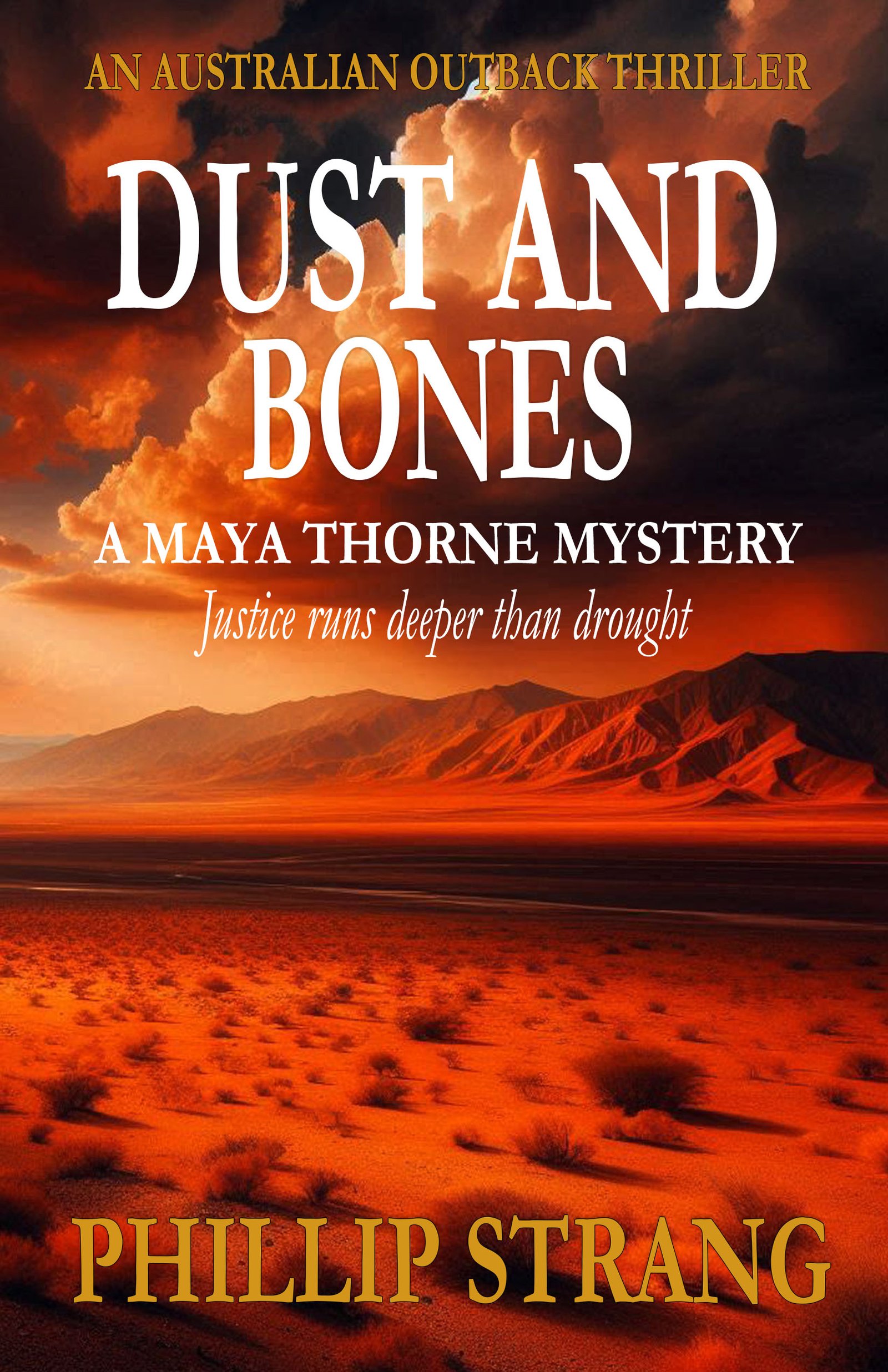
A MAYA THORNE MYSTERY
Get Dust and Bones Free
Justice runs deeper than drought.
Red dust. Shallow graves. A detective who hunts killers where the law runs thin and the nearest help is two hundred miles away.
Send Me the BookYou'll also receive occasional new release emails. Unsubscribe anytime. No spam, ever.
As an Amazon Associate, Phillip Strang earns from qualifying purchases. This page contains affiliate links — buying through them costs you nothing extra.