
The moment your detective draws their service weapon or your thriller protagonist handles a sniper rifle, you face a choice that will define your credibility as a crime writer. Get the basics wrong, and knowledgeable readers will abandon your story faster than a hot shell casing hits the ground. But obsess over every ballistic coefficient and manufacturing detail, and you’ll bog down both your research phase and your narrative momentum.
Across eighteen series and more than 150 novels, I’ve found that successful weapon research in crime fiction requires surgical precision about what matters and ruthless dismissal of what doesn’t. The goal isn’t to become a firearms expert—it’s to avoid obvious errors while serving your story’s needs.
The Essential Knowledge That Actually Matters
Your readers need to trust that your detective knows which end of the gun the bullet comes from, but they don’t need a dissertation on metallurgy. Focus your research on the fundamentals that directly impact your story. Know the difference between a revolver and a semi-automatic pistol, understand basic police and military weapon protocols, and grasp how different firearms affect the physical possibilities of your scenes.
When I developed DI Tremayne’s character, I researched standard UK police firearms protocols because his access to weapons directly shapes plot possibilities. British police don’t routinely carry firearms, which creates natural tension and procedural obstacles that American writers often miss. This research informed story structure, not just surface details.
Caliber matters more for story logic than technical specifications. A .22 creates different wound patterns and stopping power than a .45, which affects whether your victim dies instantly or lingers long enough for crucial dialogue. But you don’t need to memorize every cartridge dimension—understand the practical consequences for your plot.
How I Actually Approach Weapon Research
I start with the story requirements, not the technical specifications. What needs to happen in the scene? Does the weapon need to be concealable? Silent? Capable of penetrating body armor? Available to civilians? These story demands narrow the research focus immediately.
For my Steve Case espionage series, I needed weapons that fit covert operations—suppressors that actually work, firearms that pass through certain security checkpoints, and combat techniques that work in confined spaces. I researched backwards from story needs rather than forwards from general weapon knowledge.
I maintain a simple reference system: basic specifications, visual descriptions, and operational characteristics that affect plot. I don’t collect detailed histories or manufacturing processes unless they’re central to a specific story. When writing police procedural novels, I focus on department-issued weapons and protocols rather than exotic alternatives.
Professional consultations beat internet research every time. Retired police officers, military veterans, and firearms instructors provide practical insights that online forums can’t match. They understand how weapons actually perform under stress, not just how they’re supposed to work on paper.
The Research Rabbit Holes That Kill Productivity
The internet makes it dangerously easy to spend days researching grain weights and muzzle velocities that add nothing to your story. I’ve watched writers disappear into ballistics tables for weeks, emerging with encyclopedic knowledge and zero additional pages written. Military surplus catalogs and gun forums become procrastination disguised as research.
Historical weapon research presents particular traps. Yes, the Welrod pistol was used by British SOE agents during World War II, but do you really need to know its complete development history and every variant ever manufactured? Unless your plot hinges on specific historical details, broad strokes serve better than exhaustive documentation.
Technical accuracy obsession can actually damage story flow. Readers don’t want to pause mid-chase scene to absorb detailed explanations of how a particular scope adjustment affects long-range accuracy. They want to know if the shot hits or misses and what happens next. When developing action sequences for my thriller novels, I learned that tactical accuracy matters less than emotional authenticity.
Another productivity killer is researching weapons you’ll never use. Crime writers often study exotic military hardware or specialized competitive firearms that have no place in civilian crime stories. Stay focused on weapons that fit your story’s world and your characters’ realistic access levels.
Balancing Authenticity With Narrative Flow
The best weapon research becomes invisible to readers. They should never notice you researching—they should simply trust that your characters handle firearms competently and that the weapons behave consistently within your story world.
Authenticity doesn’t require technical exposition. Show competence through character behavior rather than dialogue about specifications. A experienced detective checks their weapon automatically, knows their ammunition count without thinking, and handles firearms with unconscious proficiency. These details demonstrate knowledge without stopping the story for lectures.
In my DCI Isaac Cook series, I established early that Cook is firearms-trained but doesn’t rely on weapons as his primary investigative tool. This choice eliminated the need for extensive tactical research while maintaining credibility for the few scenes where weapons appear. The research serves character development rather than dominating it.
Consider your genre expectations carefully. Military thrillers demand more technical precision than cozy mysteries. Espionage thrillers require different weapon knowledge than small-town police procedurals. Match your research depth to your readers’ expertise and expectations without over-delivering on details that don’t enhance the story experience.
Common Research Mistakes That Destroy Credibility
The fastest way to lose knowledgeable readers is mixing up basic terminology. Clips and magazines aren’t interchangeable terms. Bullets, cartridges, and rounds have specific meanings. Silencers don’t make guns whisper-quiet like movie sound effects suggest. These errors signal sloppy research and make readers question everything else in your story.
Geographic weapon laws create another credibility trap. British police protocols differ dramatically from American ones. Australian firearm availability doesn’t match Canadian regulations. When I write my Maya Thorne outback crime series, I research current Australian firearm laws rather than assuming American readers won’t notice the differences. International readers definitely will.
Over-relying on movie and television portrayals leads to systematic errors that compound throughout your story. Real firearms produce significant recoil, muzzle flash, and noise. Shooting accurately under stress requires training most civilians lack. Combat shooting differs dramatically from target range performance. These realities affect plot logic even when you don’t explicitly describe them.
Timeline inconsistencies destroy careful research. Don’t arm your 1980s detective with weapons introduced in 1995. Don’t give your civilian character easy access to military-restricted equipment without explaining how they obtained it. These logical gaps undermine the authenticity you worked to establish through technical research.
Conclusion
Effective weapon research in crime fiction serves story needs without overwhelming them. Master the basics that affect plot logic, avoid the technical rabbit holes that consume time without adding value, and remember that readers want compelling characters and tight plots more than firearms specifications. Research enough to write with confidence, then focus that energy on the story elements that truly matter.
About Phillip Strang
Phillip Strang is an Australian crime and thriller novelist. Across eighteen series and more than 150 novels, his work spans London police procedurals (DCI Isaac Cook), UK investigations (DI Tremayne), Australian outback crime (Maya Thorne), FBI thrillers (Alex Harlan), Scottish Highland mysteries (DI Sarah Lynch), and espionage (Steve Case). Learn more about Phillip or browse his complete catalogue on Amazon.
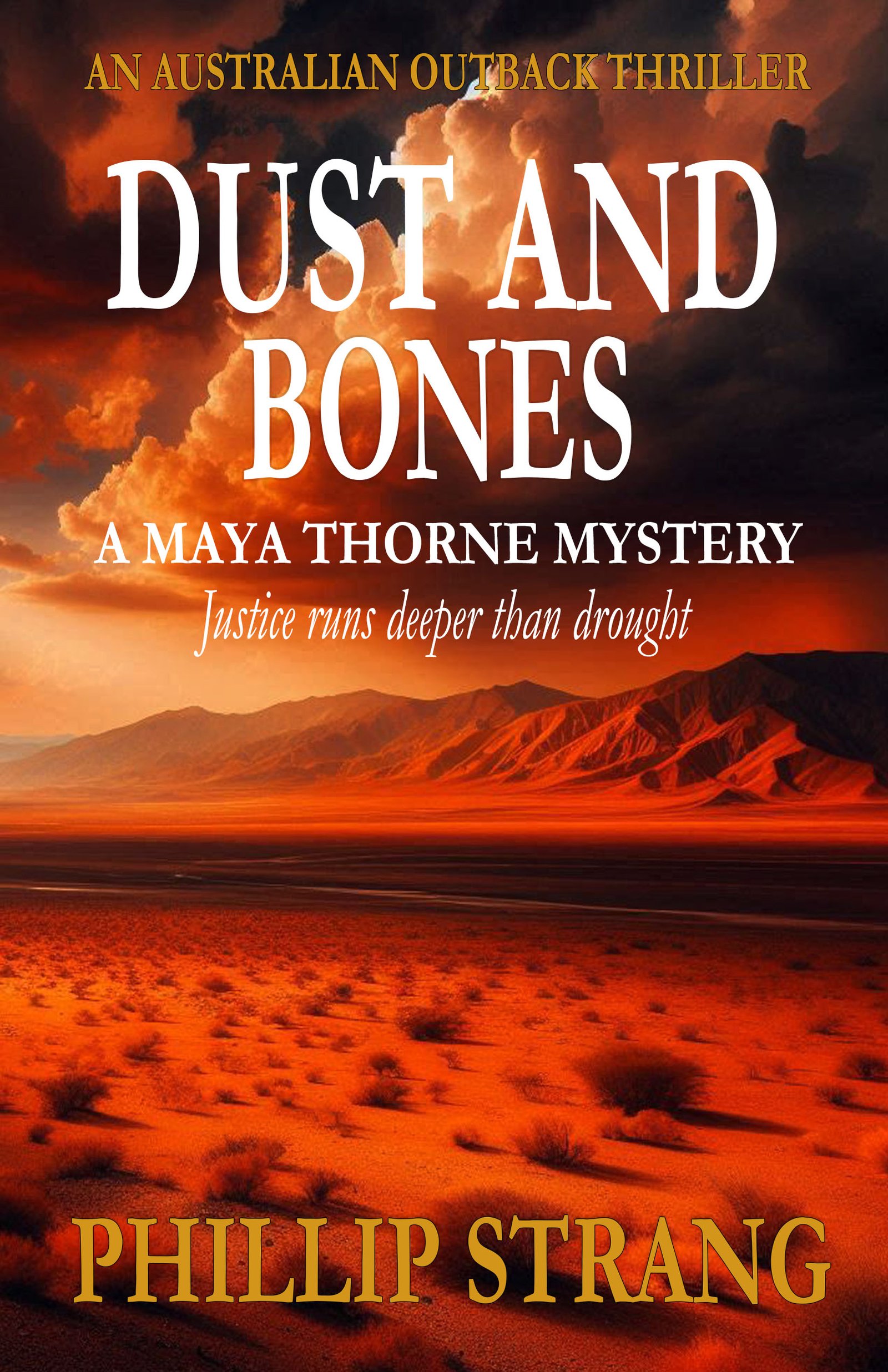
A MAYA THORNE MYSTERY
Get Dust and Bones Free
Justice runs deeper than drought.
Red dust. Shallow graves. A detective who hunts killers where the law runs thin and the nearest help is two hundred miles away.
Send Me the BookYou'll also receive occasional new release emails. Unsubscribe anytime. No spam, ever.
As an Amazon Associate, Phillip Strang earns from qualifying purchases. This page contains affiliate links — buying through them costs you nothing extra.