
The most counterintuitive truth about crime fiction series pricing is that your first book should actively lose you money. Every dollar you sacrifice on book one becomes leverage for the entire series, yet most crime writers approach pricing like they’re selling standalone novels rather than building a criminal empire of devoted readers.
Across eighteen series and more than 150 novels, I have found that strategic pricing separates successful crime series from those that vanish into the Amazon algorithm abyss. The mathematics are brutal but simple: readers who invest in your detective once will follow them through multiple cases, provided you give them that crucial first taste at the right price point.
The Loss Leader Psychology in Crime Fiction
Crime readers are series addicts by nature. They don’t just want to solve one case with DCI Isaac Cook; they want to follow his entire career trajectory through London’s darkest corners. This addiction works in your favor if you understand the entry point psychology. When I price the first Isaac Cook novel at 99p or free, I’m not selling a book—I’m selling access to a world that spans fifteen novels and counting.
The loss leader strategy works because crime fiction operates on familiarity and escalation. Readers invest emotionally in recurring characters, procedural methods, and series mythology. Once they’ve committed to understanding your detective’s personal demons and professional methods, abandoning the series feels like leaving a case unsolved. This psychological investment translates directly into purchasing behavior for subsequent books.
Consider your first book as expensive marketing rather than a revenue source. Every reader who discovers your series through a deeply discounted or free first book becomes a potential customer for five, ten, or twenty future releases. The lifetime value of that reader relationship far exceeds the profit margin on any single novel.
How I Actually Price My Crime Series
My approach follows a deliberate escalation pattern that reflects both reader investment and production costs. Book one in any series launches at full price for the first month to capture early enthusiasts and reviewers, then drops permanently to 99p or cycles through free promotions. This isn’t arbitrary—it’s calculated based on eighteen series worth of sales data.
Books two through four gradually increase in price as reader commitment deepens. By book five, I’m charging full market rate because anyone reaching that point has demonstrated series loyalty. The best police procedural novels follow this pattern successfully: hook readers cheaply, then reward their investment with consistent quality at fair prices.
For my Maya Thorne Australian outback crime series, the first book sits permanently at 99p while books five through eight command £3.99 each. This pricing reflects the reality that early books do the marketing work while later books deliver the payoff. Readers understand this transaction: they get cheap entry to a quality series, and I get their attention long enough to prove the series worth.
Geographic pricing also matters significantly. What works in the US market doesn’t necessarily translate to UK or Australian readers. I adjust pricing by region based on local market conditions and competition, but the loss leader principle remains constant across all territories.
Series Architecture and Revenue Planning
Successful crime fiction series pricing requires thinking like a television producer rather than a novelist. Each book functions as an episode in a larger narrative arc, with early episodes designed to build audience and later episodes capitalizing on established viewership. This means planning your series economics from book one, not discovering them by accident around book four.
I structure series with clear financial milestones: break-even by book three, profit by book five, and sustainable income by book seven. This planning influences not just pricing but also marketing spend, cover design investment, and editorial quality. Books one through three receive the highest marketing investment because they’re building the foundation for long-term revenue.
The sweet spot for most crime series lies between eight and twelve books. Shorter series never recoup the loss leader investment, while longer series risk reader fatigue unless you’re operating at the very top tier of the genre. My DI Tremayne series runs to ten books because that’s the natural arc for the character and the optimal financial return on the series investment.
Bundle pricing becomes crucial once you have four or more books in a series. I regularly package the first three books at a discount that’s still profitable while providing clear value to readers ready to commit to the series. This strategy accelerates the reader journey from tentative first-book sampling to committed series following.
Common Pricing Mistakes That Kill Crime Series
The most destructive mistake is pricing all books identically from launch. I see crime writers charging £2.99 for book one and wondering why nobody discovers their series, while simultaneously underpricing book six at the same rate despite having an established readership. This approach maximizes neither discovery nor revenue.
Frequent price changes confuse and alienate readers who feel manipulated by constant fluctuations. Your first book should find its loss leader price within three months and stay there permanently. Readers need predictability to recommend your series to others, and word-of-mouth remains the most powerful marketing force in action thriller novels and crime fiction generally.
Geographic inconsistency creates reader resentment when British readers discover they’re paying twice what American readers pay for identical content. Price proportionally across markets, but maintain the same relative strategy. If book one is your loss leader in the US, it should be your loss leader everywhere, adjusted for local market conditions.
The biggest strategic error is abandoning the loss leader approach too early. Crime writers often see book one generating minimal revenue and assume the strategy isn’t working, not realizing that loss leaders work slowly but compound over time. My most successful series took eighteen months to show clear profitability, but they’ve been generating consistent income for years since.
Advanced Strategies for Established Series
Once you have multiple series running simultaneously, pricing becomes a portfolio management exercise. I use successful series to subsidize new series launches, allowing new first books to remain at loss leader prices longer while established series generate the income. This cross-subsidization accelerates the growth of newer series while maintaining revenue from established ones.
Seasonal pricing adjustments can significantly boost revenue without alienating core readership. Crime fiction sales spike during winter months and holiday periods when readers have more time for series binging. I schedule major promotions during these windows while maintaining baseline pricing throughout the year.
The emergence of subscription services like Kindle Unlimited changes the loss leader equation by providing alternative revenue streams for deeply discounted books. A 99p book that generates significant page reads can actually become profitable through the subscription model, making aggressive loss leader pricing more sustainable for crime writers willing to embrace these platforms.
Collaboration with other crime writers through cross-promotion and shared box sets amplifies the loss leader strategy by exposing your series to readers already committed to the genre. These partnerships work because crime readers consume multiple series simultaneously and appreciate curated recommendations from authors they trust.
Conclusion
Crime fiction series pricing strategy demands patience, planning, and a willingness to sacrifice short-term revenue for long-term readership growth. The mathematics are unforgiving: series that fail to establish readership through strategic loss leader pricing rarely recover, while those that master this approach build sustainable writing careers. Your first book isn’t a product—it’s an investment in every book that follows.
About Phillip Strang
Phillip Strang is an Australian crime and thriller novelist. Across eighteen series and more than 150 novels, his work spans London police procedurals (DCI Isaac Cook), UK investigations (DI Tremayne), Australian outback crime (Maya Thorne), FBI thrillers (Alex Harlan), Scottish Highland mysteries (DI Sarah Lynch), and espionage (Steve Case). Learn more about Phillip or browse his complete catalogue on Amazon.
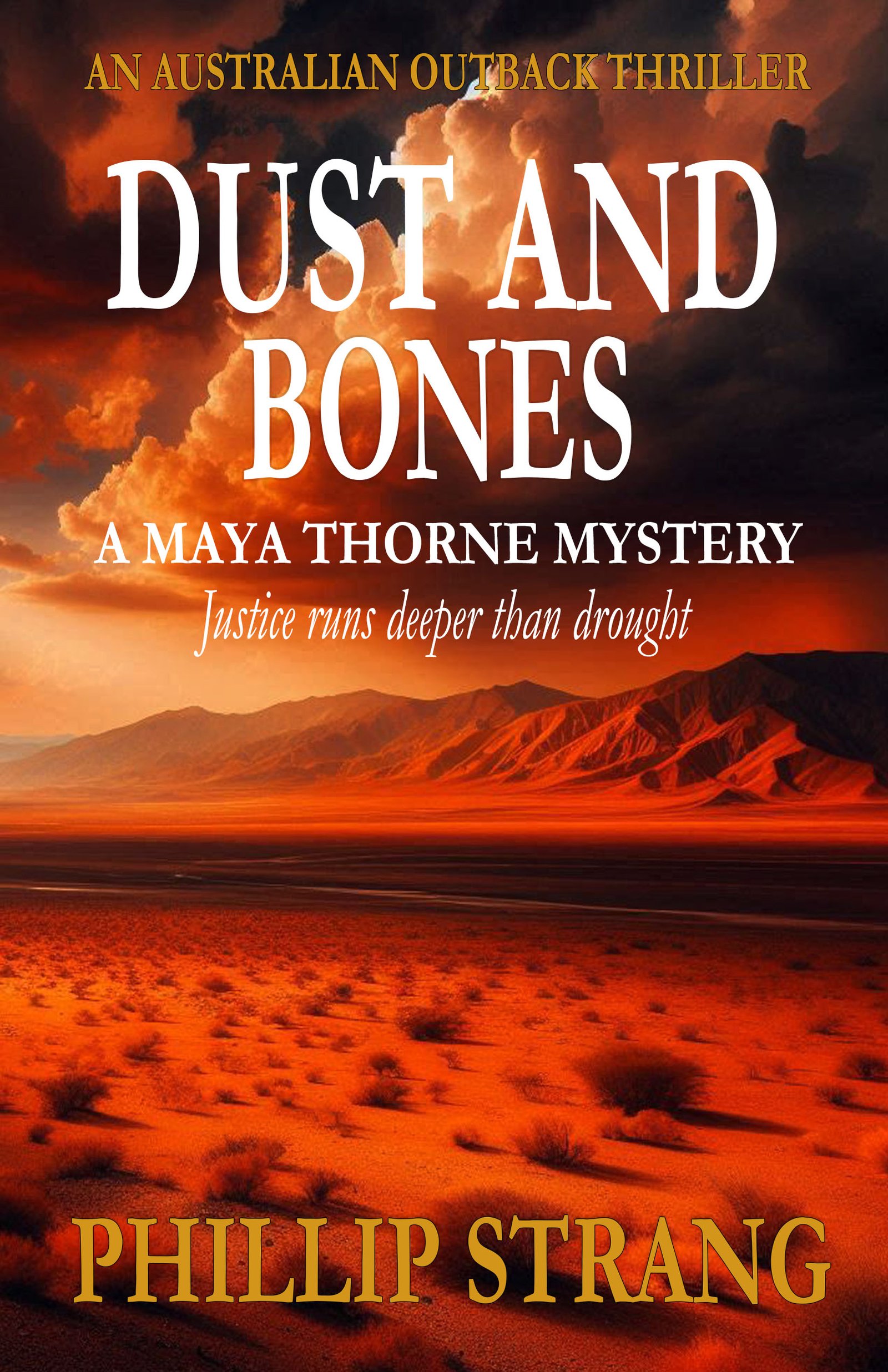
A MAYA THORNE MYSTERY
Get Dust and Bones Free
Justice runs deeper than drought.
Red dust. Shallow graves. A detective who hunts killers where the law runs thin and the nearest help is two hundred miles away.
Send Me the BookYou'll also receive occasional new release emails. Unsubscribe anytime. No spam, ever.
As an Amazon Associate, Phillip Strang earns from qualifying purchases. This page contains affiliate links — buying through them costs you nothing extra.