
Phone call scenes present a unique challenge in crime fiction: you must create dramatic tension using only voices, with no body language, setting details, or visual cues to carry the weight. The reader experiences the conversation through disembodied dialogue, yet these scenes often deliver the most crucial plot revelations, threats, or character breakdowns in our novels.
Across eighteen series and more than 150 novels, I have found that phone call scenes either electrify readers or fall completely flat, with very little middle ground. When they work, they create an intimacy and immediacy that face-to-face scenes sometimes cannot match, stripping away everything except pure human interaction under pressure.
The Power of What Cannot Be Seen
The fundamental strength of phone call scenes lies in their limitations. Your detective cannot read the caller’s expression when they claim innocence. Your protagonist cannot see the killer’s hands shaking or notice the background details that might provide crucial clues. This blindness creates natural tension because both character and reader operate with incomplete information.
In my DCI Isaac Cook series, I frequently use phone calls between Cook and suspects because the telephone strips away Cook’s ability to use his observational skills. He must rely purely on vocal inflection, word choice, and what the caller chooses to reveal or conceal. The reader experiences this same limitation, creating a shared vulnerability that heightens engagement.
Smart crime writers exploit this sensory deprivation. When your character cannot see who they are talking to, every pause becomes significant. Every background sound might be a clue. The caller’s choice to phone rather than meet face-to-face becomes a plot point in itself.
Building Tension Through Vocal Rhythm and Pacing
Dialogue rhythm becomes critical in phone scenes because it carries the entire emotional weight. Short, clipped responses suggest tension or concealment. Rambling speeches might indicate nervousness or misdirection. Long pauses can be more threatening than explicit threats.
I structure phone call tension through interruption patterns and response timing. When writing threatening calls in my Alex Harlan FBI thrillers, I often have the caller control the conversation pace, cutting off Harlan mid-sentence or letting silence stretch uncomfortably. This vocal dominance translates directly into power dynamics that readers feel viscerally.
The key is varying your rhythm deliberately. If every exchange follows the same call-and-response pattern, the scene becomes monotonous regardless of the content. Break patterns to signal shifts in power, revelations, or emotional stakes.
How I Actually Write Phone Call Scenes
My approach starts with mapping the emotional journey of both participants before writing a single line of dialogue. Who initiated the call and why? What does each person want from this conversation? What are they hiding? Most importantly, how should each character feel differently by the call’s end?
I write the initial draft focusing purely on information exchange, getting the necessary plot points or revelations onto the page. Then I layer in the subtext, tension, and character voice. The third pass focuses entirely on rhythm, reading the dialogue aloud to ensure it sounds natural when spoken rather than written.
For background audio, I am sparing but deliberate. A dog barking might establish location. Traffic noise could indicate the caller is mobile. But I avoid cluttering phone scenes with excessive environmental detail because it dilutes the focus on pure dialogue interaction that makes these scenes powerful in the first place.
I also decide early whether to present both sides of the conversation or only one side. One-sided phone calls can be more intriguing because readers must infer the other speaker’s responses, but they require careful crafting to avoid confusion.
Common Mistakes That Kill Phone Scene Tension
The most frequent error I see is treating phone calls as simple information dumps. Writers use them as convenient ways to deliver exposition or plot updates without considering the dramatic potential. A phone call where someone simply reports ‘The lab results are in, the DNA matches’ wastes the scene’s inherent tension.
Another mistake is over-explaining the technology. Modern readers understand how phones work. They do not need detailed descriptions of dialing, connection quality, or device features unless these elements directly impact the plot. The call went straight to voicemail tells us everything necessary without technical elaboration.
Many writers also fail to consider why characters choose phone calls over other communication methods. If your detective always receives crucial information via phone, it becomes implausible. Characters should have realistic reasons for calling rather than texting, emailing, or meeting in person.
Finally, ending phone scenes weakly undermines all the tension you have built. Calls that simply trail off or end with mundane goodbyes waste their dramatic potential. The call’s conclusion should leave your character, and your reader, in a significantly different emotional state than when it began.
Phone scenes work best when they complement the broader narrative techniques that define exceptional police procedurals or compelling action thrillers.
Revealing Character Through Phone Conversations
Phone calls strip away social masks in ways that face-to-face encounters cannot. People often speak more directly over the phone, whether due to the physical distance or the reduced social pressure. This directness creates opportunities for character revelation that would seem forced in other contexts.
In my DI Tremayne series, I use phone calls to show how differently Tremayne interacts with various people in his life. His calls with superiors reveal his professional restraint and political awareness. Conversations with victims’ families show his empathy and patience. Calls with suspects expose his calculated psychological pressure tactics.
The telephone also allows for privacy that public meetings cannot provide. Characters will admit fears, confess secrets, or make threats over the phone that they would never voice in person. This intimacy, combined with the reader’s voyeuristic position of listening in, creates compelling dramatic moments.
Conclusion
Phone call scenes succeed when writers embrace their constraints rather than fighting them. The absence of visual information forces both characters and readers to focus entirely on what is said, how it is said, and what remains unspoken, creating a unique form of dramatic intensity that can elevate your crime fiction.
About Phillip Strang
Phillip Strang is an Australian crime and thriller novelist. Across eighteen series and more than 150 novels, his work spans London police procedurals (DCI Isaac Cook), UK investigations (DI Tremayne), Australian outback crime (Maya Thorne), FBI thrillers (Alex Harlan), Scottish Highland mysteries (DI Sarah Lynch), and espionage (Steve Case). Learn more about Phillip or browse his complete catalogue on Amazon.
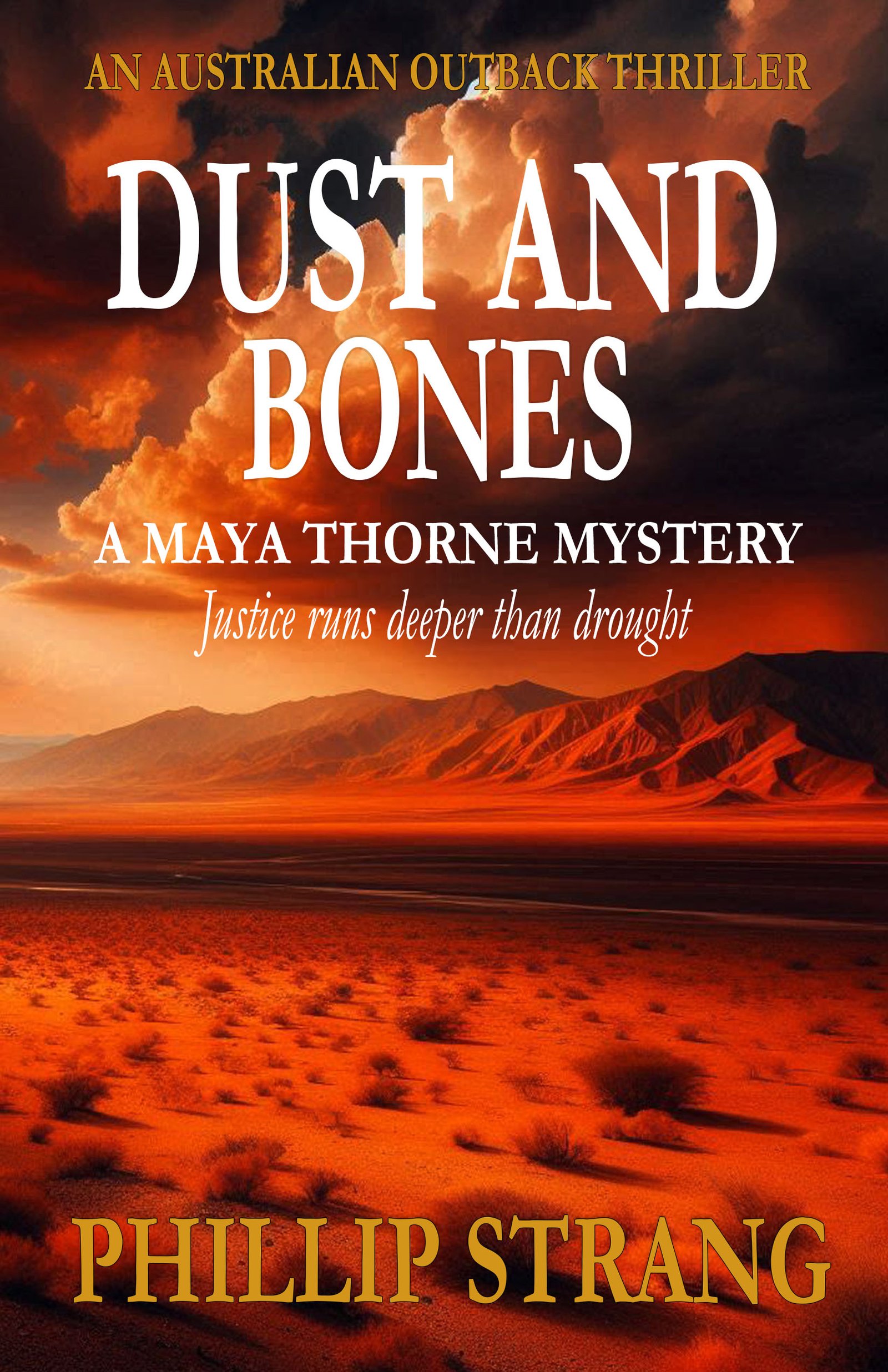
A MAYA THORNE MYSTERY
Get Dust and Bones Free
Justice runs deeper than drought.
Red dust. Shallow graves. A detective who hunts killers where the law runs thin and the nearest help is two hundred miles away.
Send Me the BookYou'll also receive occasional new release emails. Unsubscribe anytime. No spam, ever.
As an Amazon Associate, Phillip Strang earns from qualifying purchases. This page contains affiliate links — buying through them costs you nothing extra.