
Crime fiction thrives on violence, but the genre’s most compelling moments often emerge not from the act itself, but from the wreckage it leaves behind. The true test of a crime writer isn’t crafting the perfect murder or chase sequence—it’s capturing the authentic weight of loss that follows, the way grief reshapes every character it touches.
Across eighteen series and more than 150 novels, I’ve found that writing grief in crime fiction requires a delicate balance between raw emotional truth and narrative momentum. Too little, and your story feels hollow; too much, and you risk drowning the plot in sentiment.
The Immediate Shock vs Long-Term Devastation
Grief operates on multiple timelines, and crime fiction demands both immediate visceral impact and sustained emotional consequence. The moment a character discovers a body or learns of a death creates one kind of dramatic tension—sharp, immediate, often physical in its manifestation. But the weeks and months that follow reveal character in ways that action sequences never can.
In my DCI Isaac Cook series, I learned early that showing Cook’s reaction to finding his first murder victim was only the beginning. The real character work happened in subsequent chapters, watching him struggle with routine tasks, seeing how the image intruded during unrelated conversations. This long-term approach distinguishes serious crime fiction from purely plot-driven thrillers.
The key is understanding that grief isn’t a single emotion—it’s a complex system of responses that includes anger, guilt, confusion, and unexpected moments of normalcy that can feel more disturbing than the pain itself. Your characters need to experience this full spectrum, not just the obvious sadness.
Physical Manifestations of Emotional Trauma
Amateur writers often rely on tears and dramatic outbursts to signal grief, but experienced crime writers know that authentic sorrow expresses itself in subtler, more specific ways. Grief lives in the body as much as the mind—the detective who suddenly can’t stomach coffee, the victim’s spouse who compulsively reorganizes kitchen drawers, the witness who develops a nervous tic when approaching the crime scene street.
These physical details anchor abstract emotions in concrete reality. They also provide opportunities for other characters to notice and respond, creating natural dialogue and interaction that feels organic rather than forced. When writing my Maya Thorne books set in the Australian outback, I found that the harsh landscape amplified these physical responses—characters squinting not just against sun glare, but against memories, their bodies naturally reflecting their psychological state.
The most effective approach involves layering these physical responses throughout scenes rather than front-loading them. A character might seem composed during official questioning, only to reveal their distress through small actions: drumming fingers, avoiding eye contact, or unconsciously touching a piece of jewelry connected to the deceased.
How I Actually Approach Writing Grief
My process begins with understanding each character’s relationship to loss before the current crime occurs. Everyone processes grief differently based on previous experiences, personality, and cultural background. I create what I call a ‘loss inventory’ for major characters—previous deaths they’ve encountered, how they handled those situations, what unresolved feelings they carry.
This groundwork pays dividends when violence strikes in the current story. A detective who lost a parent young will respond differently to a child victim than one who experienced a relatively protected upbringing. These aren’t necessarily dramatic backstory reveals—often they manifest as subtle differences in approach, the questions asked, the assumptions made.
I also map the grief timeline alongside the investigation timeline. While the plot moves forward with clues and revelations, the emotional story follows its own logic. Some characters need space to process; others throw themselves into action. Both responses can serve the story, but they need to feel authentic to each individual character rather than convenient to the plot.
When writing scenes involving fresh grief, I focus on specific details rather than general emotions. Instead of ‘Sarah felt devastated,’ I show Sarah noticing that her husband’s coffee mug still sits in the sink, or that she automatically set two plates for dinner. These concrete details carry more emotional weight than abstract descriptions and give readers something tangible to connect with.
Avoiding the Grief Trap: Common Mistakes
The biggest error I see involves using grief as a plot device rather than treating it as genuine human experience. Characters who conveniently overcome their trauma exactly when the story needs them active, or who display picture-perfect stages of grief in textbook order, feel manipulative rather than moving.
Another frequent problem is the ‘grief tourist’ approach—writers who seem fascinated by emotional pain but lack the depth to explore its real consequences. These stories linger on dramatic mourning scenes but skip the mundane reality of living with loss. Real grief includes boring moments, practical concerns about funeral arrangements, and awkward social interactions with people who don’t know what to say.
Timing presents another challenge. Some writers front-load all the emotional response immediately after the traumatic event, then move on as if it’s resolved. Others spread the grief so evenly throughout the story that it loses impact and becomes wallpaper. The most effective approach varies grief’s intensity—sometimes overwhelming, sometimes manageable, sometimes surprisingly absent when characters expect to feel something.
I’ve also noticed writers who make every character respond to violence with the same general sadness. In reality, people facing the same loss might experience guilt, relief, anger, fear, or numbness. A murder victim’s business partner might grieve the loss while simultaneously worrying about financial implications. These mixed responses feel more authentic and create richer story possibilities than uniform sorrow.
Integrating Grief with Investigation
Crime fiction’s unique challenge involves balancing emotional authenticity with narrative momentum. Readers expect forward plot movement, but realistic grief often involves circular thinking, repetitive behaviors, and processing delays that can stall story progress.
The solution lies in making grief an active part of the investigation rather than an obstacle to it. Grieving characters make different choices than rational ones—they take risks, overlook obvious dangers, or pursue leads that logical thinking would dismiss. In my DI Tremayne series, I often use a character’s emotional state to drive plot developments that pure logic couldn’t justify.
Grief also affects how characters perceive and interpret information. A detective dealing with loss might miss crucial details or conversely, become hypervigilant about threats. These altered perceptions can create natural misdirection and red herrings that feel organic to the story rather than artificially inserted.
Consider how grief impacts different aspects of the investigation: witness reliability changes when people are traumatized, suspects might confess to crimes they didn’t commit out of guilt or despair, and family members may withhold information to protect the deceased’s reputation. These complications serve both emotional authenticity and plot complexity.
The Ripple Effect: Secondary Characters and Community Impact
Effective crime writers understand that violence doesn’t occur in isolation—it sends shockwaves through entire communities. The grocery clerk who served the victim every Tuesday, the neighbor who heard unusual sounds but didn’t investigate, the child who discovered the scene—each carries their own version of traumatic response.
These secondary grief reactions serve multiple story functions. They provide opportunities for information gathering that feels natural rather than forced, create a sense of realistic community response, and offer relief from the intensity of primary characters’ emotions. Sometimes a brief scene showing how the local bartender struggles to process the news carries more impact than another lengthy sequence with the main detective.
I’ve found that community grief also establishes stakes more effectively than abstract danger. When readers see how violence affects ordinary people going about daily life, the crime becomes personal rather than academic. This emotional investment drives page-turning as effectively as any action sequence.
The key involves selecting which secondary characters to develop and which to treat briefly. Not every person touched by the crime needs deep exploration, but chosen examples should feel specific and authentic rather than generic.
Conclusion
Writing grief in crime fiction demands the same attention to craft as plotting twists or building suspense. It requires research, observation, and commitment to emotional honesty even when convenient shortcuts present themselves. The writers who master this balance create stories that resonate long after readers close the book, because they’ve captured something true about how people respond to violence and loss.
About Phillip Strang
Phillip Strang is an Australian crime and thriller novelist. Across eighteen series and more than 150 novels, his work spans London police procedurals (DCI Isaac Cook), UK investigations (DI Tremayne), Australian outback crime (Maya Thorne), FBI thrillers (Alex Harlan), Scottish Highland mysteries (DI Sarah Lynch), and espionage (Steve Case). Learn more about Phillip or browse his complete catalogue on Amazon.
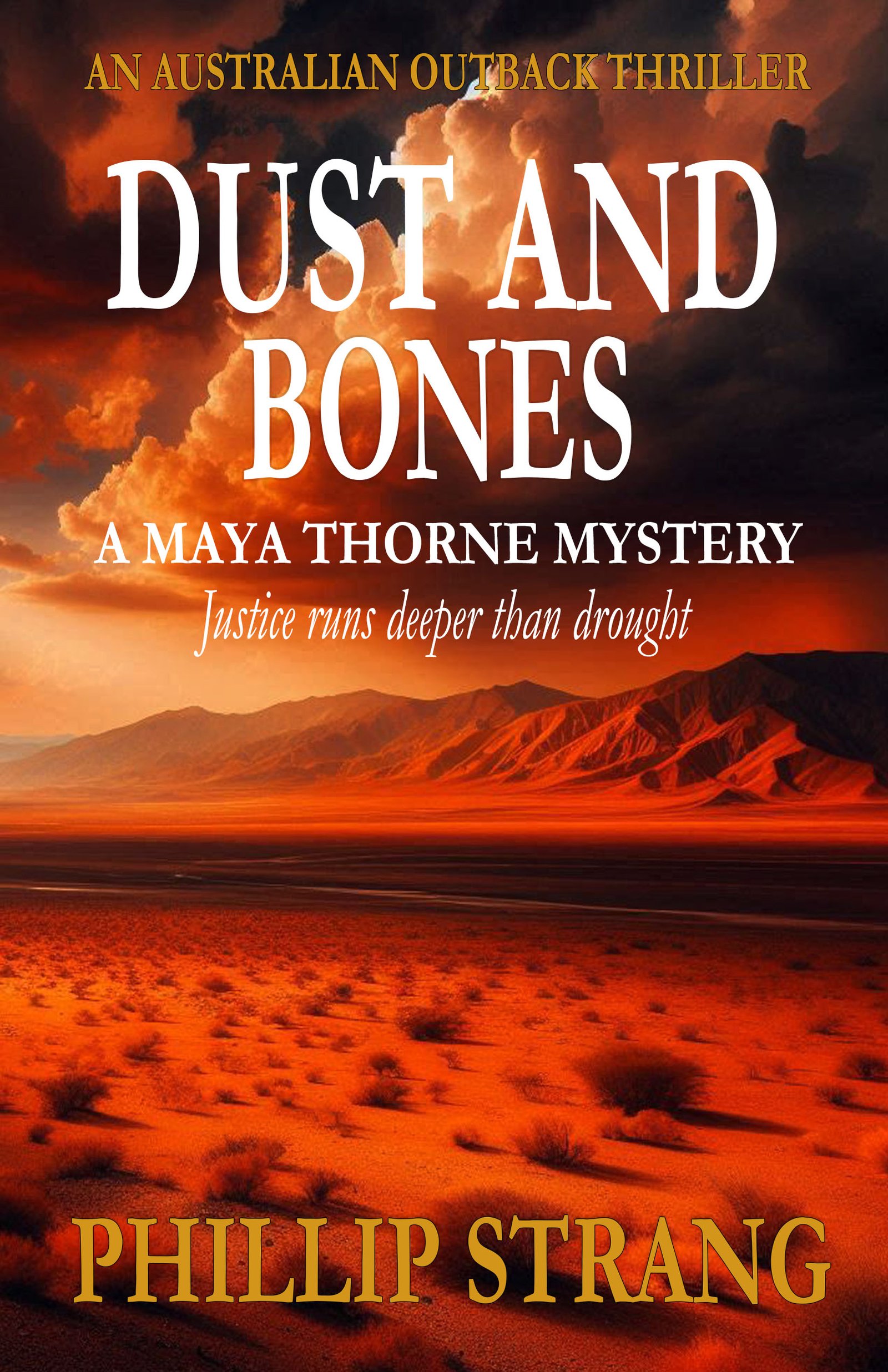
A MAYA THORNE MYSTERY
Get Dust and Bones Free
Justice runs deeper than drought.
Red dust. Shallow graves. A detective who hunts killers where the law runs thin and the nearest help is two hundred miles away.
Send Me the BookYou'll also receive occasional new release emails. Unsubscribe anytime. No spam, ever.
As an Amazon Associate, Phillip Strang earns from qualifying purchases. This page contains affiliate links — buying through them costs you nothing extra.