
The moment your crime thriller’s action sequence reads like stage directions, you’ve crossed the line from novelist into frustrated screenwriter. Action in crime fiction demands a delicate balance between visceral momentum and literary depth, creating scenes that pulse with energy while maintaining the psychological complexity that separates great novels from mere transcribed fight scenes.
This tension between kinetic storytelling and prose craft becomes particularly acute in crime and thriller writing, where action often serves as the climactic release of built tension. Across eighteen series and more than 150 novels, I’ve found that the most effective action sequences function as character revelations disguised as physical confrontations, where every punch thrown and every tactical decision made illuminates something essential about who these people truly are under pressure.
The Inner Landscape During Outer Chaos
The fundamental error most crime writers make is treating action as a break from character development rather than its most intense expression. When DCI Isaac Cook faces a suspect wielding a knife in a narrow London alley, the physical choreography matters far less than what’s happening in his mind—the split-second calculations, the weight of past failures, the muscle memory of police training conflicting with human instinct. The reader doesn’t need to know exactly which foot he leads with; they need to feel the convergence of his entire professional and personal history in that moment of decision.
Effective action writing in crime fiction operates on multiple temporal layers simultaneously. The immediate present of fists and gunshots unfolds in real time, but the protagonist’s consciousness darts between tactical assessment, emotional response, and involuntary memory. This isn’t literary pretension—it’s psychological realism. When adrenaline floods the system, the mind doesn’t become a simple recording device; it becomes a chaotic mixture of hyperawareness and selective blindness, crystal clarity and complete confusion.
Choreography Through Consequence, Not Movement
The screenplay approach to action focuses on what happens—he throws a left hook, she ducks, he stumbles forward. Novel action succeeds by emphasizing why it matters and what it costs. Every physical action should carry emotional weight and forward narrative momentum. When I write confrontations for characters in my espionage series, the tactical details serve the story, not the other way around. The precise mechanics of how Steve Case disarms an opponent matter less than why he chooses a particular method, what it reveals about his training, and how it affects his relationship with violence.
The key lies in understanding that readers of crime fiction aren’t seeking instruction manuals for combat techniques—they’re seeking insight into how extraordinary circumstances reveal ordinary humanity. The best action thriller novels understand that choreography exists to serve character, not replace it. Instead of documenting every physical movement, focus on the decisions that drive those movements and their immediate consequences on both plot and psyche.
How I Actually Approach Writing Action Sequences
My process for crafting action begins with the emotional stakes, not the physical ones. Before I consider who throws the first punch, I establish what each character has to lose and why they’re willing to risk everything in this moment. In the Maya Thorne series, when my protagonist faces dangerous situations in the Australian outback, the environmental challenges aren’t just obstacles—they’re mirrors reflecting her resourcefulness, determination, and the particular way her mind works under pressure.
I write action scenes in layers, starting with the emotional throughline and gradually adding physical detail only as it serves that emotional arc. First draft focuses on the psychological experience—fear, determination, the strange clarity that comes with mortal danger. Second draft adds the sensory details that ground the reader in the scene’s reality. Third draft refines the pacing, ensuring that sentence rhythm matches the scene’s energy without sacrificing clarity or depth.
The crucial technique involves varying sentence structure to control pacing. Short sentences create urgency and impact. Longer sentences with embedded clauses allow for the complex thoughts and sensations that occur even in split-second decisions. The rhythm of the prose becomes part of the action’s choreography, guiding the reader through peaks of intensity and valleys of tactical consideration.
Common Pitfalls That Turn Novels Into Bad Scripts
The most frequent mistake involves what I call ‘camera direction syndrome’—writing as if positioning actors for optimal visual impact rather than creating an authentic human experience. Phrases like ‘he spun around’ or ‘she whirled to face him’ sound cinematic but feel hollow on the page because they prioritize visual drama over psychological truth. Real people in crisis don’t perform choreographed spins; they react with whatever movement serves their immediate need for survival or advantage.
Another trap lies in abandoning the protagonist’s voice during action sequences. If your detective has a particular way of observing and processing information throughout the novel, that voice shouldn’t disappear the moment fists start flying. Consistency of perspective becomes even more important during high-stakes scenes, not less. The character’s unique way of thinking and reacting is what makes generic action sequences feel specific to your story and your protagonist.
The dialogue problem presents another challenge—characters spouting one-liners or exposition during life-threatening situations. Real people under extreme stress don’t become more articulate; they become more primal. The best police procedural novels understand that professional training affects how officers communicate during crisis, but even then, the communication is functional, not decorative. Every word spoken during action must serve an immediate practical or emotional purpose.
Integrating Action With Plot Architecture
Action sequences in crime fiction function as pressure valves in the story’s overall architecture, releasing tension that’s been building through investigation, character development, and escalating stakes. The most effective scenes don’t exist as isolated set pieces but as inevitable culminations of everything that’s come before. When properly integrated, the action feels both surprising and inevitable—readers sense the confrontation approaching but can’t predict its exact nature or outcome.
The aftermath of action requires as much attention as the event itself. Physical confrontations leave characters changed, not just by injury or victory, but by what they’ve learned about themselves and others. The quiet moments following violence often provide the most powerful opportunities for character development, as protagonists process not just what happened, but what they were capable of doing and feeling. These reflective beats distinguish literary crime fiction from purely commercial ventures, adding psychological depth that resonates beyond the immediate thrill.
Consider how the action serves the broader themes of your work. In crime fiction, violence often represents the breakdown of social order, the failure of civilization’s restraints, or the price of justice. The way your characters engage with and recover from physical confrontation should illuminate these larger questions rather than simply provide excitement. The most memorable action sequences comment on the nature of justice, revenge, protection, or survival while delivering visceral thrills.
Conclusion
Writing compelling action in crime thrillers requires treating physical confrontation as emotional revelation, where every movement serves character development and every tactical decision illuminates the human cost of violence. The choreography that matters isn’t the mechanics of combat, but the dance between character, consequence, and the relentless forward momentum that distinguishes novels from scripts.
About Phillip Strang
Phillip Strang is an Australian crime and thriller novelist. Across eighteen series and more than 150 novels, his work spans London police procedurals (DCI Isaac Cook), UK investigations (DI Tremayne), Australian outback crime (Maya Thorne), FBI thrillers (Alex Harlan), Scottish Highland mysteries (DI Sarah Lynch), and espionage (Steve Case). Learn more about Phillip or browse his complete catalogue on Amazon.
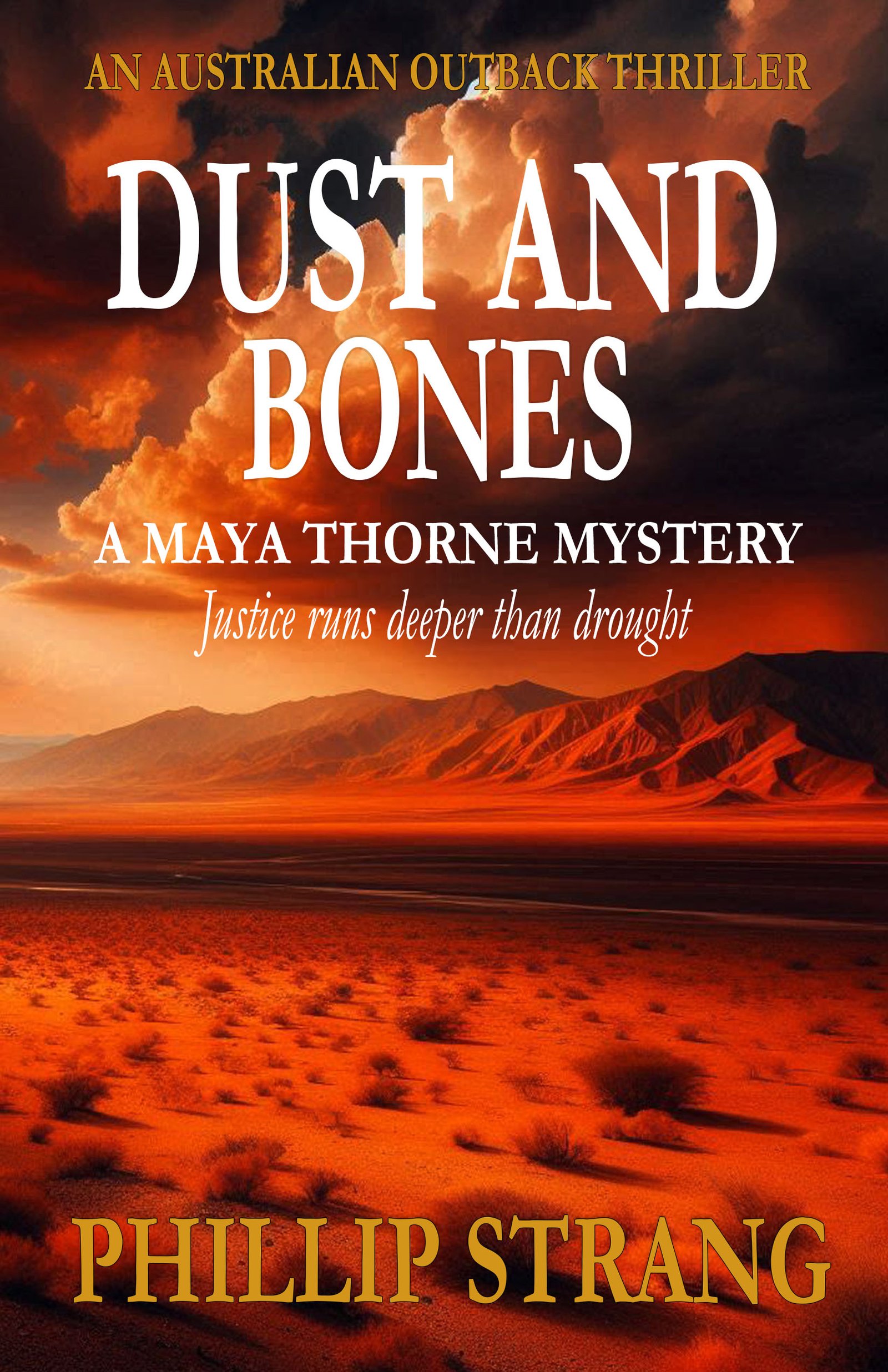
A MAYA THORNE MYSTERY
Get Dust and Bones Free
Justice runs deeper than drought.
Red dust. Shallow graves. A detective who hunts killers where the law runs thin and the nearest help is two hundred miles away.
Send Me the BookYou'll also receive occasional new release emails. Unsubscribe anytime. No spam, ever.
As an Amazon Associate, Phillip Strang earns from qualifying purchases. This page contains affiliate links — buying through them costs you nothing extra.