
The twist that leaves readers gasping yet nodding in recognition represents the holy grail of crime fiction writing. Too many contemporary thrillers sacrifice reader trust for shock value, pulling solutions from thin air rather than the carefully planted evidence that makes fair play possible. The best crime fiction respects the reader’s intelligence while still delivering that satisfying punch of surprise.
Across eighteen series and more than 150 novels, I have found that the most memorable twists emerge from meticulous groundwork rather than authorial sleight of hand. Fair play in crime fiction demands that every clue necessary to solve the mystery exists within the narrative, accessible to any careful reader willing to piece together the puzzle alongside the protagonist.
The Foundation of Fair Play
Fair play crime fiction operates on a simple principle: the reader must have access to the same information as the detective, even if they lack the experience to interpret it correctly. This doesn’t mean telegraphing your solution or making the mystery easy to solve. Instead, it requires embedding genuine clues within the narrative fabric while surrounding them with enough complexity to maintain uncertainty.
In my DCI Isaac Cook series, I plant crucial evidence in seemingly mundane details that gain significance only in retrospect. A witness’s nervous gesture during questioning might reveal their knowledge of the victim’s secret life. The specific time a suspect claims to have left work becomes vital when cross-referenced with CCTV timestamps three chapters later. These details feel natural within the scene’s context but provide the foundation for logical deduction.
The key lies in presentation rather than concealment. Every clue should serve multiple narrative purposes beyond its role in the solution. A bloodstained shirt reveals character backstory while advancing the plot and providing forensic evidence. This layered approach prevents clues from feeling artificially planted while ensuring they remain genuinely available to observant readers.
My Working Method for Twist Construction
I approach twist construction by working backwards from the solution, mapping every piece of evidence the revelation requires and determining how to present each element naturally within the story flow. This reverse engineering ensures nothing appears from nowhere in the final chapters.
For complex twists involving hidden identities or false assumptions, I create detailed timelines tracking what each character knows and when they learn it. This prevents the common error of having characters act on information they shouldn’t possess or fail to react to obvious implications. In my Maya Thorne outback crime novels, where isolation amplifies every character interaction, these consistency checks become even more critical.
I also maintain what I call a ‘clue register’ throughout the writing process, noting where each piece of evidence appears and how it connects to the final revelation. This document helps ensure proper distribution of information across the narrative and prevents clustering all crucial details in the final act. The best police procedural novels demonstrate this even pacing of revelation and discovery.
Common Mistakes That Break Reader Trust
The most damaging error involves introducing crucial information only during the solution’s revelation. When the detective suddenly announces that the murder weapon was found in a location never previously mentioned, or reveals a witness statement that contradicts earlier testimony without explanation, reader trust evaporates instantly. These violations of fair play feel like authorial cheating because they are exactly that.
Another frequent mistake involves red herrings that mislead through false information rather than misinterpretation. A character who lies about their whereabouts creates a legitimate red herring, but fabricating evidence that later proves irrelevant violates fair play principles. The distinction matters because readers should be able to identify deception through character analysis and behavioral cues, not authorial misdirection.
Psychological profiling errors also undermine credibility when characters act inconsistently with their established personalities to serve plot requirements. A methodical killer who suddenly becomes careless, or a truthful character who lies without psychological justification, signals authorial manipulation rather than natural story development. Modern action thrillers often sacrifice character consistency for plot convenience, weakening their overall impact.
The Art of Misdirection Within Fair Play
Legitimate misdirection guides reader attention toward incorrect conclusions while keeping all relevant facts visible. This technique requires understanding how readers process information and what assumptions they make based on genre conventions and character archetypes.
In my DI Tremayne investigations, I often present suspects whose obvious motives and suspicious behavior draw focus away from less apparent candidates. The key lies in ensuring that while readers notice the obvious suspect’s guilt indicators, they also encounter subtle evidence pointing toward the actual perpetrator. The art involves calibrating these competing information streams so the real solution remains possible but not obvious.
Effective misdirection also exploits reader expectations about story structure and character roles. The helpful witness who provides crucial testimony might be the killer, but their assistance must serve a logical purpose within their criminal plan. This approach maintains psychological realism while subverting expected narrative patterns.
Satisfying Resolution Without Betrayal
The moment of revelation should feel both surprising and inevitable, confirming reader suspicions they didn’t realize they harbored. This dual response emerges from proper clue placement and character development throughout the narrative. Readers should be able to trace the solution’s logic backwards through the story, recognizing how each piece of evidence supports the conclusion.
Strong twists also recontextualize earlier scenes without invalidating them. When readers discover that the grieving widow orchestrated her husband’s murder, her earlier emotional displays should read differently but not feel false. Her grief might be real despite her guilt, or her performance might reveal previously hidden acting ability. This layered interpretation enriches rather than contradicts the original reading experience.
The revelation scene itself requires careful handling to maintain credibility. Long exposition dumps explaining complex criminal schemes often feel artificial and slow pacing at the story’s climax. Instead, the most effective espionage thrillers reveal information through action and dialogue that feels natural within the confrontation scene.
Conclusion
Fair play in crime fiction ultimately serves both writer and reader by creating stories that reward careful attention while delivering genuine surprise. The discipline required to construct fair play mysteries improves plotting skills and character development, while readers develop deeper engagement with stories that respect their intelligence and observation.
About Phillip Strang
Phillip Strang is an Australian crime and thriller novelist. Across eighteen series and more than 150 novels, his work spans London police procedurals (DCI Isaac Cook), UK investigations (DI Tremayne), Australian outback crime (Maya Thorne), FBI thrillers (Alex Harlan), Scottish Highland mysteries (DI Sarah Lynch), and espionage (Steve Case). Learn more about Phillip or browse his complete catalogue on Amazon.
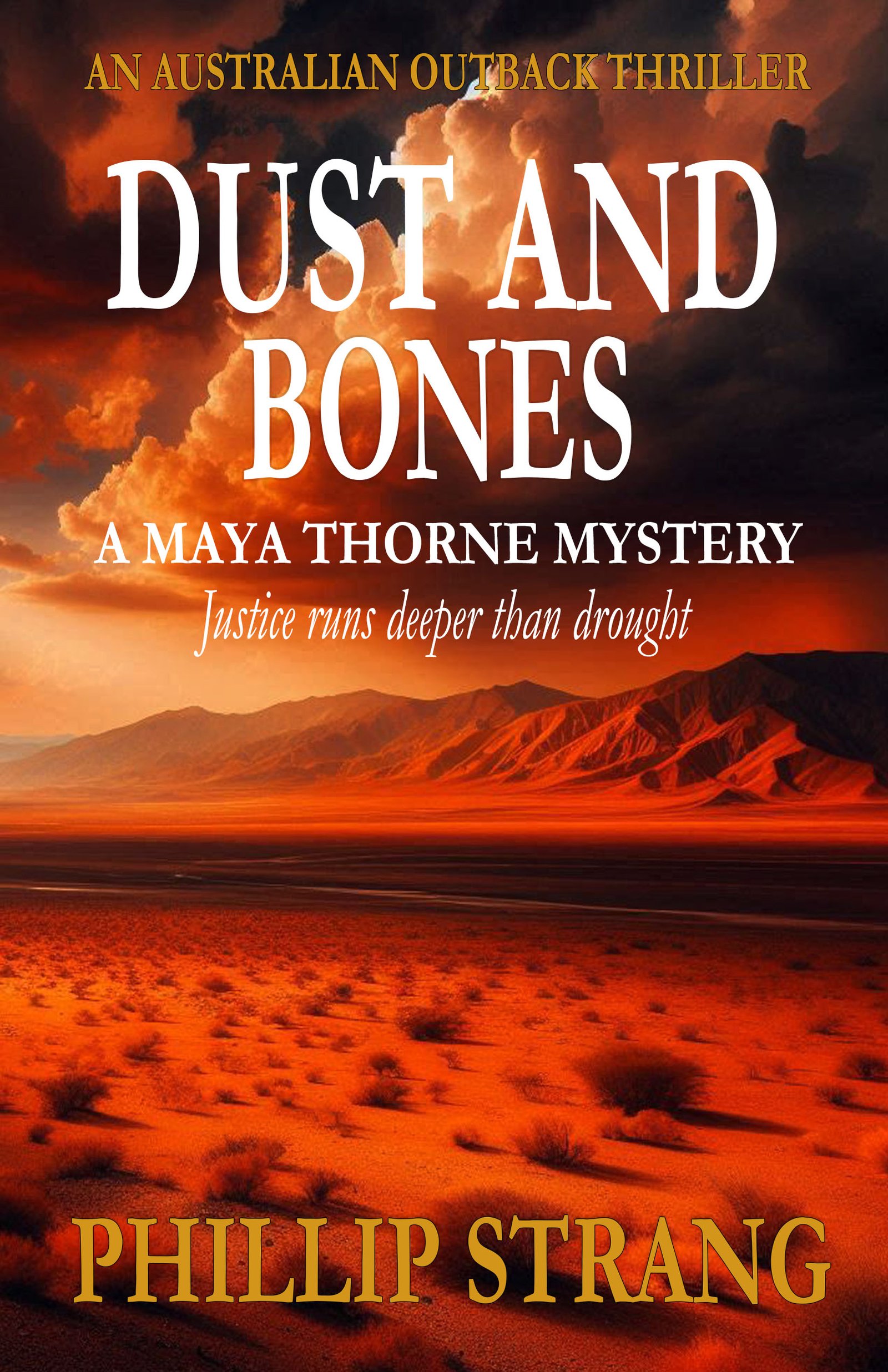
A MAYA THORNE MYSTERY
Get Dust and Bones Free
Justice runs deeper than drought.
Red dust. Shallow graves. A detective who hunts killers where the law runs thin and the nearest help is two hundred miles away.
Send Me the BookYou'll also receive occasional new release emails. Unsubscribe anytime. No spam, ever.
As an Amazon Associate, Phillip Strang earns from qualifying purchases. This page contains affiliate links — buying through them costs you nothing extra.