
The false solution sits at the heart of sophisticated crime writing—that moment roughly two-thirds through your novel when your detective confidently arrests the wrong suspect, backed by compelling evidence that satisfies both character logic and reader expectation. Getting this technique right separates competent mystery writers from masters of misdirection. The false solution must feel absolutely correct in the moment while leaving just enough structural space for the real killer to emerge without betraying your readers’ intelligence.
Across eighteen series and more than 150 novels, I’ve found that the false solution works best when it grows organically from your plot architecture rather than being bolted on as an afterthought. The key lies in understanding that you’re not simply lying to readers—you’re creating a logical conclusion based on incomplete information, then systematically revealing why that logic, however sound, led to the wrong destination.
Building Evidence That Convinces Without Lying
The foundation of any successful false solution rests on evidence that genuinely points toward your decoy suspect. This isn’t about fabricating clues or withholding crucial information from readers—both cardinal sins in police procedural writing. Instead, you’re presenting accurate evidence that supports a logical but incorrect conclusion.
In my DI Tremayne series, I often plant genuine circumstantial evidence around secondary characters who have legitimate motives and opportunity. The evidence isn’t false—it’s incomplete. When Tremayne discovers that the victim’s business partner had been embezzling funds and was facing exposure, that’s real motive backed by real evidence. The partner’s inability to provide an alibi for the crucial time period isn’t contrived—it reflects the messy reality that most people can’t account for every moment of their day.
The crucial distinction lies in the difference between incomplete truth and deliberate deception. Your false solution suspect should have genuine reasons to want the victim dead, real connections to the crime scene, and authentic behavioral patterns that suggest guilt. What they lack isn’t fabricated innocence—they lack the specific combination of means, motive, and opportunity that actually created the murder.
Timing the False Solution for Maximum Impact
The placement of your false solution determines whether it enhances or undermines your novel’s pacing. Drop it too early, and you’ve got a sagging middle section where readers lose investment in the outcome. Leave it too late, and the real resolution feels rushed and unconvincing.
I typically position the false solution around the seventy percent mark, giving my detective enough investigation time to build a compelling case while leaving sufficient space for the genuine solution to unfold. This timing creates what I call the ‘conviction plateau’—a period where both detective and readers feel satisfied with the answer, allowing tension to rebuild around the growing evidence that something isn’t quite right.
The false solution also serves as a crucial plot accelerator. When DCI Isaac Cook arrests the wrong suspect in one of my London procedurals, that arrest creates new pressures and reveals information that ultimately leads to the real killer. The false solution isn’t a dead end—it’s a redirection that moves the story forward while appearing to conclude it.
How I Structure the False Solution in Practice
My approach to crafting false solutions begins during the plotting phase, not during the writing. I identify my real killer first, then work backward to create a secondary character who could logically appear guilty based on surface evidence and reasonable investigation.
The process involves three distinct layers. First, I establish the surface case—the evidence any competent detective would uncover through standard investigation. This includes financial records, witness statements, physical evidence, and behavioral observations that create a coherent narrative pointing toward the false suspect.
Second, I plant the contradiction seeds—small inconsistencies that don’t immediately register as significant but become crucial when viewed in hindsight. In my Maya Thorne outback crime series, these might be timing discrepancies that initially seem like normal human error but later reveal alibis that don’t quite align with the physical evidence.
Third, I construct the revelation pathway—the specific sequence of discoveries that will ultimately expose why the false solution, despite its logical foundation, missed the real killer. This pathway must feel inevitable once revealed while remaining genuinely surprising during the false solution phase.
The key lies in making your detective’s reasoning process transparent to readers. When your investigator builds the case against the wrong suspect, readers should be able to follow that logic step by step. The satisfaction comes not from trick reveals but from the recognition that both detective and reader reached a reasonable conclusion based on available evidence.
Common Pitfalls That Destroy Reader Trust
The most damaging mistake in writing false solutions involves withholding information that would obviously point readers toward a different conclusion. When you deliberately hide crucial evidence only to reveal it later as a ‘gotcha’ moment, you break the implicit contract between crime writer and reader.
Equally problematic is the tendency to make your false suspect too obviously innocent in hindsight. If readers can look back and see that the character had no realistic way to commit the crime, the false solution feels manipulative rather than cleverly constructed. I’ve seen writers create elaborate scenarios where their decoy suspect would have needed superhuman abilities or impossible knowledge to pull off the murder as initially theorized.
Another common error involves emotional inconsistency in your false suspect’s reactions. A genuinely innocent person falsely accused of murder would display specific behavioral patterns—shock, confusion, desperate attempts to provide alternative explanations. These responses differ markedly from the calculated denials of an actual guilty party, and experienced crime readers notice when characters don’t react authentically to their circumstances.
The pacing mistake that kills false solutions involves rushing the transition from false arrest to real solution. You need time for the false solution to breathe, for characters and readers to absorb the apparent resolution before new evidence begins undermining that conclusion. Skip this crucial pause, and your misdirection feels like a cheap plot trick rather than sophisticated storytelling.
Making the Real Solution Feel Inevitable
The transition from false solution to genuine resolution requires careful calibration of reader expectations. Your real killer must have been present throughout the story without being obviously suspicious, and the evidence pointing toward them must have been available but overshadowed by the more apparent case against your decoy suspect.
This is where action and investigation must merge seamlessly. The discovery that undermines your false solution should simultaneously point toward the real perpetrator through evidence that was always there but interpreted differently. Perhaps the timing that seemed to eliminate one suspect actually provides the perfect window for another. Maybe the motive that appeared personal was actually professional, or the random crime was carefully planned to look spontaneous.
I find that the most satisfying transitions occur when the false solution’s weakness becomes the real solution’s strength. The very reason your decoy suspect couldn’t have committed the murder exactly as initially theorized becomes the clue that reveals how the real killer actually accomplished it.
Conclusion
Writing effective false solutions demands respect for both your characters’ intelligence and your readers’ investment in logical problem-solving. The technique succeeds when it emerges from genuine story logic rather than authorial manipulation, creating moments of satisfying misdirection that enhance rather than undermine the overall mystery experience.
About Phillip Strang
Phillip Strang is an Australian crime and thriller novelist. Across eighteen series and more than 150 novels, his work spans London police procedurals (DCI Isaac Cook), UK investigations (DI Tremayne), Australian outback crime (Maya Thorne), FBI thrillers (Alex Harlan), Scottish Highland mysteries (DI Sarah Lynch), and espionage (Steve Case). Learn more about Phillip or browse his complete catalogue on Amazon.
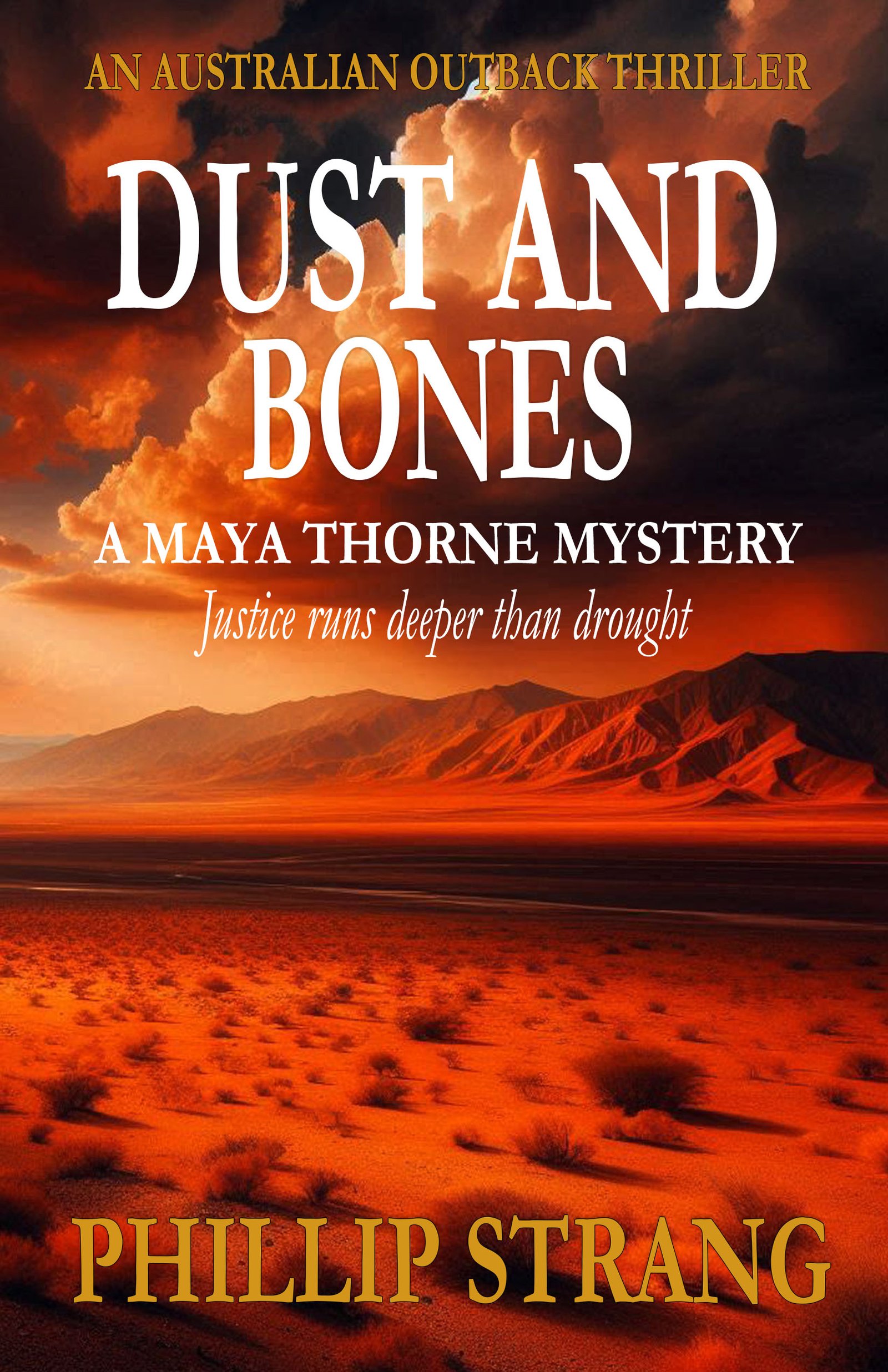
A MAYA THORNE MYSTERY
Get Dust and Bones Free
Justice runs deeper than drought.
Red dust. Shallow graves. A detective who hunts killers where the law runs thin and the nearest help is two hundred miles away.
Send Me the BookYou'll also receive occasional new release emails. Unsubscribe anytime. No spam, ever.
As an Amazon Associate, Phillip Strang earns from qualifying purchases. This page contains affiliate links — buying through them costs you nothing extra.