
Bondi Beach presents crime writers with a deceptive challenge: how do you transform Australia’s most photographed stretch of sand into authentic criminal territory without falling into tourist brochure territory? The iconography is so embedded in global consciousness that writers often mistake surface familiarity for genuine setting mastery.
Across eighteen series and more than 150 novels I have found that successful crime fiction locations require layers beneath the postcard image. Bondi offers these layers in abundance, but only if you dig past the Instagram filters and examine what makes this place genuinely dangerous, genuinely complex, and genuinely suited to criminal narratives.
The Underbelly Architecture of Bondi
Bondi’s criminal potential lies not in its famous crescent of sand but in its vertical density and economic stratification. The high-rise apartments create natural surveillance blind spots and escape routes that savvy crime writers can exploit. In my Campbell series set in Sydney, I’ve used the contrast between beachfront penthouses and cramped backpacker hostels three blocks inland to illustrate the economic tensions that fuel criminal enterprise.
The Bondi Junction shopping complex and transport hub provides natural congregation points where different criminal elements intersect. Drug dealers serving the party crowd, pickpockets working the tourist flows, and white-collar criminals laundering money through beachfront businesses all operate within walking distance of each other. This proximity creates the kind of criminal ecosystem that drives authentic police procedural narratives.
The beach itself becomes secondary to these structural elements. Smart crime writers use the surf and sand as contrast, not centerpiece. The beautiful setting makes the criminal activity more disturbing, not less relevant.
Seasonal Rhythms and Criminal Opportunity
Bondi’s character changes dramatically with Australia’s seasons and international tourist patterns, creating natural plot opportunities that many writers ignore. Summer brings the obvious crowds and chaos, but winter Bondi offers different criminal possibilities: empty short-term rentals perfect for criminal operations, reduced police presence, and locals who notice strangers immediately.
The backpacker hostels that define much of Bondi’s economy operate on seasonal staff turnover that creates perfect cover for criminals seeking temporary anonymity. Transient populations don’t build the community relationships that might expose criminal behavior. When someone disappears from Bondi, it might be weeks before anyone realizes they didn’t simply move on to Byron Bay or Melbourne.
School holidays bring family money and distracted parents – different criminal opportunities than the international party scene that dominates summer evenings. Each demographic shift changes the criminal landscape in ways that experienced crime writers can exploit for authentic plot development.
How I Actually Use Bondi in Crime Fiction
When I write Bondi into crime scenes, I start with the infrastructure, not the scenery. Where are the CCTV cameras? Which businesses stay open late enough to provide witnesses? How do the one-way streets affect escape routes? The Bondi Beach Road bottleneck creates natural chokepoints that can trap criminals or victims depending on your plot needs.
I pay attention to the social geography: backpackers congregate in certain areas, locals avoid others, drug activity follows predictable patterns based on police patrol schedules. The outdoor gym equipment and skateboard areas attract regular communities whose absence or presence signals danger to characters who understand the location’s rhythms.
The surf lifesaving culture provides natural authority figures who aren’t police but maintain surveillance and intervention capabilities. These volunteers become perfect witnesses, suspects, or victims because their community standing makes their involvement more shocking. In my experience, readers respond more strongly to crimes that corrupt trusted community institutions.
Fatal Mistakes Writers Make With Bondi
The worst Bondi crime fiction treats the location as interchangeable beach resort rather than specific place with particular criminal opportunities. Writers describe ‘golden sand and rolling waves’ without understanding that Bondi’s criminal geography depends on the Campbell Parade traffic, the backpacker hostel density, and the economic desperation that drives service workers to supplement tourist-industry wages.
Another common error involves misunderstanding Australian beach culture and law enforcement. American writers often impose Californian lifeguard stereotypes or assume beach crimes follow Florida patterns. Australian surf culture, police procedures, and legal frameworks operate differently. Characters who behave like they’re in Miami Beach destroy credibility immediately.
Writers also underestimate the sophistication of criminal operations in high-value real estate areas. Bondi’s property prices attract money laundering, fraud, and organized crime operations that require more complex plotting than simple beach muggings. The most interesting crimes happen in penthouses and investment properties, not on the sand. Action thriller narratives work better when they acknowledge this economic reality rather than defaulting to surfer-versus-criminal stereotypes.
Making Bondi Authentically Dangerous
Real criminal danger at Bondi comes from its function as a pressure point where different populations intersect: international tourists with cash and poor judgment, local residents protecting property values, transient workers seeking opportunity, and criminals exploiting all three groups. The beach becomes a stage where these tensions play out, not the source of conflict itself.
The rip currents and surf conditions provide natural cover for deaths that might or might not be accidental. Experienced crime writers understand that ambiguous deaths create better plot tension than obvious murders. Did the victim get caught in a rip, or did someone ensure they couldn’t make it back to shore?
The 24-hour party atmosphere means witnesses are often intoxicated, sleep-deprived, or distracted, creating natural unreliability that complicates police investigations. Unlike rural locations where you might have no witnesses, Bondi gives you multiple witnesses whose contradictory accounts drive investigation plots forward. This witness complexity works particularly well in noir crime narratives where truth emerges gradually through conflicting perspectives.
Conclusion
Bondi Beach succeeds as crime fiction location when writers treat it as complex urban environment rather than scenic backdrop. The criminal opportunities emerge from population density, economic disparity, and social intersection – not from the surf and sand that dominate tourist photography.
About Phillip Strang
Phillip Strang is an Australian crime and thriller novelist. Across eighteen series and more than 150 novels, his work spans London police procedurals (DCI Isaac Cook), UK investigations (DI Tremayne), Australian outback crime (Maya Thorne), FBI thrillers (Alex Harlan), Scottish Highland mysteries (DI Sarah Lynch), and espionage (Steve Case). Learn more about Phillip or browse his complete catalogue on Amazon.
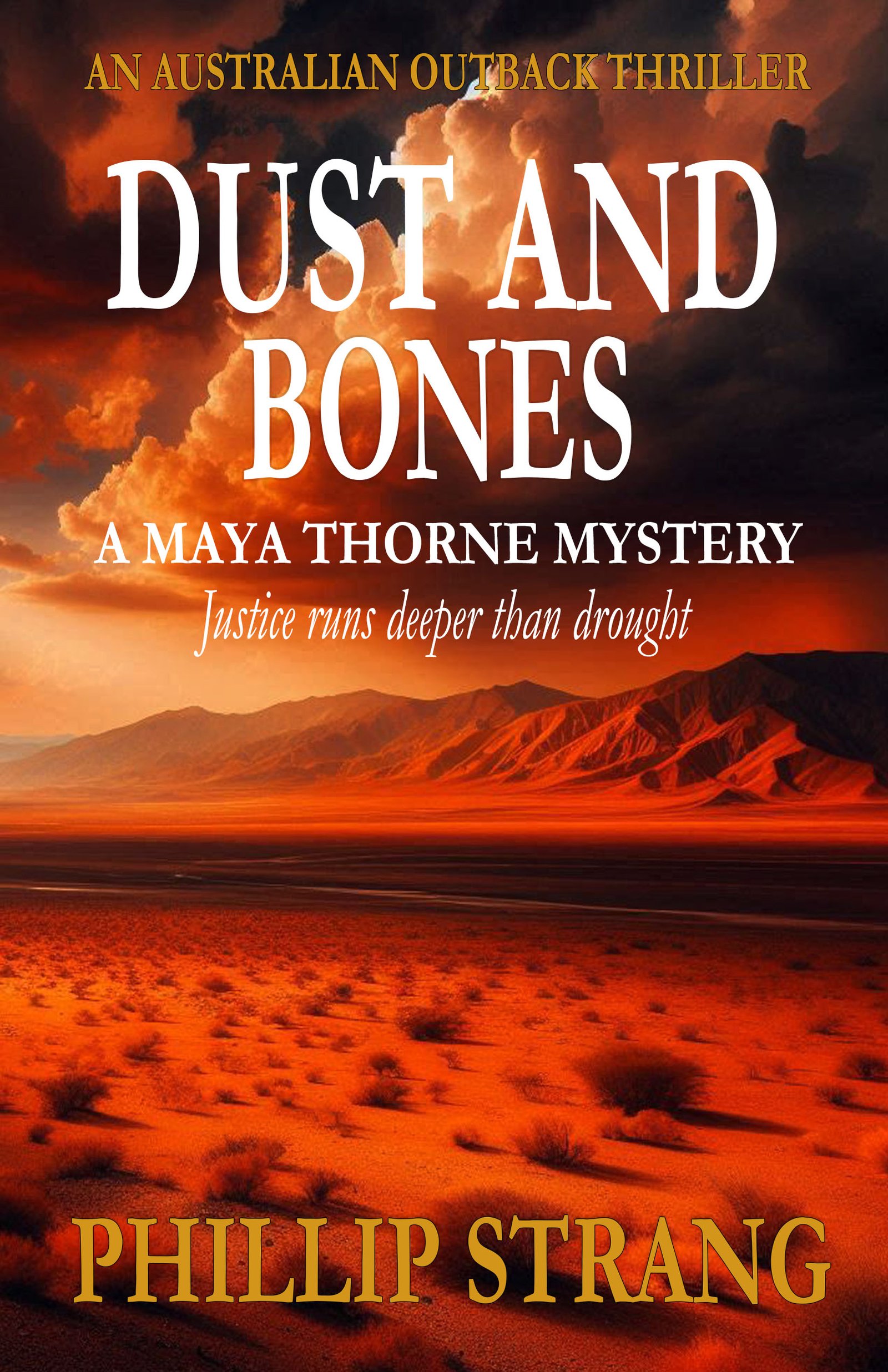
A MAYA THORNE MYSTERY
Get Dust and Bones Free
Justice runs deeper than drought.
Red dust. Shallow graves. A detective who hunts killers where the law runs thin and the nearest help is two hundred miles away.
Send Me the BookYou'll also receive occasional new release emails. Unsubscribe anytime. No spam, ever.
As an Amazon Associate, Phillip Strang earns from qualifying purchases. This page contains affiliate links — buying through them costs you nothing extra.