
The team investigation represents one of crime fiction’s most complex narrative challenges, demanding the writer juggle multiple character perspectives while maintaining procedural authenticity and narrative momentum. Unlike the lone detective archetype, ensemble investigations require careful orchestration of competing voices, professional hierarchies, and conflicting methodologies. Most writers either create indistinguishable team members who blur together or allow one dominant voice to overshadow the supposed ensemble dynamic.
Across eighteen series and more than 150 novels, I have found that successful team investigations depend not on democratic character distribution but on strategic role differentiation and authentic conflict. The key lies in understanding that real investigative teams function through specialization, tension, and often grudging cooperation rather than harmonious collaboration.
Establishing Clear Operational Roles
Every team member must serve a distinct investigative function that drives plot forward rather than merely providing personality variety. In my DCI Isaac Cook series, I learned early that assigning specific operational roles prevents characters from becoming interchangeable voices. Cook handles strategic overview and political navigation, while DS Larry Hill manages street-level intelligence and witness intimidation. DI Sara Marshall brings forensic methodology and systematic analysis. Each role creates natural story entry points and prevents the dreaded committee-by-consensus investigation scenes.
The mistake lies in thinking roles equal rigid job descriptions. Effective team members occasionally step outside their primary function, creating productive friction and character development opportunities. When Hill attempts strategic thinking or Marshall gets her hands dirty with street work, the resulting scenes reveal character depth while advancing the investigation through unexpected angles.
Avoid the television trap of having the tech specialist only handle computers or the forensic expert only discuss evidence. Real investigators wear multiple hats, and fictional teams work best when members occasionally encroach on each other’s territory, creating both conflict and investigative breakthroughs.
Managing Information Flow and Revelation
Team investigations create unique challenges for information management since multiple characters can discover crucial evidence simultaneously or independently. The writer must choreograph revelations to maintain suspense while respecting the logic of collaborative investigation. I structure information flow around what I call ‘discovery ownership’ – each major breakthrough belongs to a specific character whose background, methodology, or personal investment makes them the logical discoverer.
This approach serves dual purposes: it prevents the confusion of multiple characters stumbling onto the same clues, and it ensures each team member contributes meaningfully to the solution. In my DI Tremayne series, I often have Tremayne uncover psychological motivations while his sergeant, Clare Yarwood, discovers physical evidence that supports or contradicts Tremayne’s theories. The tension between their different discovery styles creates natural conflict and prevents either character from solving the case single-handedly.
The cardinal sin in team investigations is having characters withhold crucial information from each other without compelling reason. Professional investigators share intelligence as a matter of survival and effectiveness. When team members keep secrets, the motivation must stem from character psychology or plot necessity, never from authorial convenience to stretch out revelations.
How I Structure Team Dynamics in Practice
My working method focuses on creating what I call ‘productive disharmony’ among team members. I begin by establishing each character’s investigative philosophy and personal stake in the case, then engineer situations where these elements clash productively. This isn’t about creating artificial personality conflicts but about exploiting the natural tensions that arise when different professional approaches meet high-pressure situations.
I map out each character’s emotional journey separately before weaving them together in scenes. Cook might be fighting political pressure from above while Hill deals with informant reliability issues and Marshall struggles with inconclusive forensic evidence. When they meet to discuss the case, their different pressures create authentic conflict that drives both character development and plot advancement.
The practical writing challenge involves maintaining distinct voices in group scenes without resorting to obvious dialogue tags or behavioral tics. I achieve this through what each character prioritizes in discussions – Cook focuses on broader implications, Hill emphasizes street-level consequences, Marshall insists on evidential support. Their professional priorities naturally differentiate their speech patterns and concerns.
Scene construction requires careful attention to who leads, who challenges, and who mediates in team discussions. I rotate these roles based on case developments and character arcs rather than maintaining static hierarchies. When Marshall discovers crucial forensic evidence, she temporarily leads the discussion regardless of rank. This creates dynamic team relationships that evolve throughout the investigation.
Avoiding Common Ensemble Pitfalls
The most frequent mistake in team investigations involves creating false democracy where every character gets equal screen time and input regardless of their relevance to specific developments. This leads to bloated scenes where characters speak just to remind readers they exist. In one early Isaac Cook manuscript, I had five team members discussing a breakthrough when only two had relevant expertise. The scene dragged because three characters were essentially spectators with occasional commentary.
Another common error is the exposition relay race, where team members take turns delivering information to bring each other up to speed. Real investigators don’t summarize entire cases for colleagues who should already know the basics. Instead, they discuss new developments, conflicting theories, and next steps. When characters must share information, it should reveal something about their investigative priorities or personal investment in the case.
The harmonious team represents perhaps the greatest threat to compelling team investigations. While mutual respect among professional colleagues is realistic, constant agreement eliminates the productive tension that drives both plot and character development. Even compatible team members should disagree on methodology, priority, and interpretation. These disagreements, when grounded in professional expertise rather than personality quirks, create the kind of authentic procedural tension that distinguishes superior crime fiction from generic mystery solving.
Writers often fall into the trap of having team members represent different demographics rather than different investigative approaches. Diversity matters, but when characters exist primarily to check representation boxes rather than serve specific story functions, the ensemble becomes mechanical rather than organic.
Building Authentic Professional Relationships
Successful team investigations require understanding how professional relationships actually function under investigative pressure. Real detective teams develop complex dynamics based on competence, reliability, and complementary skills rather than personal friendship. I focus on professional respect, which can coexist with personal dislike or indifference, creating more interesting character interactions than simple camaraderie.
The relationship evolution throughout a case provides crucial character development opportunities. Team members who clash initially might develop mutual respect through shared discoveries or dangerous situations. Conversely, apparently solid partnerships can fracture under case pressure or ethical disagreements. These relationship shifts must serve the investigation narrative rather than existing as separate character subplots.
In my experience, the most compelling team dynamics arise from what I call ‘competence attraction’ – characters who appreciate each other’s professional abilities despite personal differences. Cook and Hill work effectively together not because they’re friends but because each recognizes the other’s investigative strengths. This professional foundation creates more stable and interesting long-term series dynamics than partnerships based primarily on personal compatibility.
Modern team investigations must also address contemporary realities like inter-agency cooperation, technological communication, and media pressure. These elements affect team dynamics in ways that pure character interaction cannot address. When writing action-driven investigations, I consider how external pressures influence internal team relationships and decision-making processes.
Maintaining Individual Character Arcs
Each team member requires a personal journey that intersects with but doesn’t depend entirely on the central investigation. The challenge lies in weaving individual character development through the collective case without creating distracting subplots that slow investigative momentum. I achieve this by connecting character growth to professional challenges within the case rather than introducing external personal drama.
For example, in my Maya Thorne series, while the focus remains on Thorne’s investigations in the Australian outback, supporting characters face professional dilemmas that arise directly from case developments. A junior officer might struggle with ethical boundaries when dealing with corrupt local officials, or a forensic specialist might question established procedures when they prove inadequate for unusual evidence. These personal conflicts serve the investigation while developing individual characters.
The key principle involves ensuring that character growth enhances rather than competes with investigative progress. When team members learn something about themselves through case work, that revelation should also advance understanding of the crime or criminal. This integration prevents the stop-start rhythm that occurs when investigation scenes alternate with unrelated character development sequences.
Long-term series considerations require balancing character evolution with consistent team dynamics. Team members can grow and change, but their fundamental professional competencies and interpersonal patterns should remain recognizable to readers. I view this as similar to real professional relationships that deepen over time while maintaining core characteristics that made them functional initially.
Conclusion
Effective team investigations succeed through strategic role differentiation, authentic professional conflict, and careful information choreography rather than democratic character distribution or artificial harmony. The goal is productive disharmony that drives both investigation and character development through professionally grounded tension. When team members clash over methodology rather than personality, when they share information strategically rather than comprehensively, and when their individual competencies create natural story entry points, the ensemble investigation becomes a sophisticated narrative machine that generates both procedural authenticity and compelling character dynamics.
About Phillip Strang
Phillip Strang is an Australian crime and thriller novelist. Across eighteen series and more than 150 novels, his work spans London police procedurals (DCI Isaac Cook), UK investigations (DI Tremayne), Australian outback crime (Maya Thorne), FBI thrillers (Alex Harlan), Scottish Highland mysteries (DI Sarah Lynch), and espionage (Steve Case). Learn more about Phillip or browse his complete catalogue on Amazon.
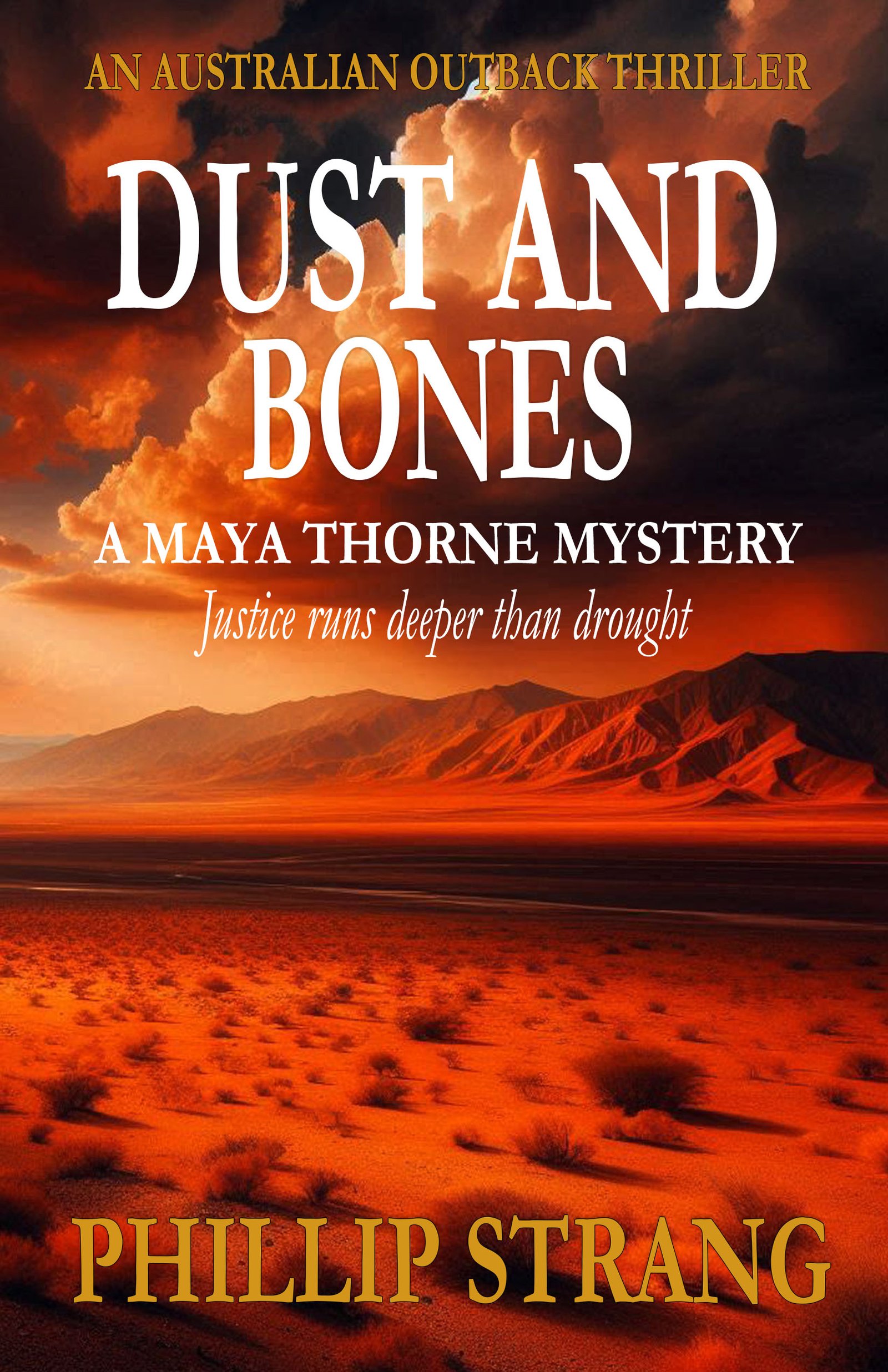
A MAYA THORNE MYSTERY
Get Dust and Bones Free
Justice runs deeper than drought.
Red dust. Shallow graves. A detective who hunts killers where the law runs thin and the nearest help is two hundred miles away.
Send Me the BookYou'll also receive occasional new release emails. Unsubscribe anytime. No spam, ever.
As an Amazon Associate, Phillip Strang earns from qualifying purchases. This page contains affiliate links — buying through them costs you nothing extra.