
Urban crime fiction demands more than placing a detective in a city and letting them solve cases. The metropolis itself must breathe, corrupt, and complicate every investigation, becoming as vital to your story as any human character.
Across eighteen series and more than 150 novels, I have found that the most compelling urban crime stories emerge when the city becomes an active participant in both the crimes and their resolution. The streets, neighbourhoods, and urban rhythms should influence every plot decision and character choice.
The City’s Criminal DNA
Every city carries its own criminal signature, shaped by geography, history, and social structure. London’s labyrinthine history creates layers of old and new crime, from ancient tunnels used by smugglers to modern financial districts perfect for white-collar corruption. In my DCI Isaac Cook series, London’s complexity allows for crimes that span centuries—a Roman artifact becomes the motive for murder in a Canary Wharf boardroom, connecting past and present through the city’s archaeological memory.
Understanding your city’s criminal ecosystem requires moving beyond tourist attractions to examine how crime actually flows through urban arteries. Financial districts breed different crimes than industrial areas. Gentrification creates specific tensions that generate particular types of violence. The key is recognising that police procedurals work best when they reflect genuine urban realities rather than generic crime templates.
Neighbourhood Authenticity Without Tourism
The worst urban crime fiction reads like a guidebook with corpses. Authentic neighbourhood portrayal requires understanding daily rhythms, local concerns, and unspoken social rules that outsiders miss. I spend considerable time walking areas before writing about them, not photographing landmarks but observing how people move, where they gather, what makes them suspicious of strangers.
When writing the Campbell series set in Sydney, I discovered that each suburb maintains distinct criminal patterns influenced by demographics, proximity to transport, and local economic pressures. Bondi’s crime differs fundamentally from Redfern’s, not just in type but in how locals respond to police presence, how witnesses behave, and what motivates silence or cooperation.
Authentic dialogue matters enormously here. People speak differently across urban areas, using localised slang, referring to places by names only residents know, carrying assumptions shaped by their particular urban experience. Your detective’s language should reflect their background while adapting to whatever neighbourhood they’re investigating.
How I Research Urban Crime Settings
My research process begins with police contacts and court records rather than internet searches or travel guides. Real crime patterns reveal how cities actually function criminally, showing connections between apparently unrelated areas and crimes. I study local newspapers for months before writing in a new city, tracking not just major crimes but community concerns, council debates, and business developments that create criminal opportunities.
Walking remains essential, but strategic walking with purpose. I follow transport routes criminals would use, identify escape paths and surveillance gaps, test how long certain journeys actually take. For action thriller novels, this research becomes crucial when choreographing pursuits or establishing realistic timelines for criminal activities.
I also cultivate relationships with locals who work in relevant industries—security guards, taxi drivers, late-night retail workers—people who observe urban patterns invisible to casual visitors. Their insights often provide the authentic details that separate convincing urban crime fiction from generic city-based stories.
Common Urban Crime Writing Failures
Many writers treat cities as interchangeable backdrops, dropping identical crimes into different locations without considering how urban specifics would alter criminal behaviour. A drug operation in Liverpool requires different logistics, faces different challenges, and attracts different law enforcement responses than the same operation in Miami or Manchester. Generic urban crime ignores these crucial differences.
Another frequent mistake involves romanticising urban decay or poverty as atmospheric crime settings without understanding the social realities involved. Authentic urban crime acknowledges that real people live in these areas, with complex motivations beyond serving as witnesses or victims. When I write about Sydney’s grittier areas in the Campbell series, I focus on how economic pressures create specific criminal opportunities rather than treating disadvantaged areas as convenient crime scenery.
Poor research shows immediately in urban crime fiction. Writers who rely on outdated information or superficial observation create cities that feel hollow. Claiming expertise about police procedures, local politics, or criminal hierarchies without proper research undermines credibility. Readers familiar with your urban setting will notice geographical errors, implausible travel times, or misrepresented neighbourhood characteristics.
Weather and seasonal elements often get overlooked, yet they significantly impact urban crime patterns. Criminal activity adapts to climate, daylight hours, and seasonal social patterns. Ignoring these factors creates unrealistic crime scenarios that sophisticated urban crime readers will immediately question.
The final common failure involves letting research overwhelm storytelling. Including excessive urban detail to demonstrate authenticity can slow pacing and distract from plot development. The goal is seamless integration where city knowledge serves story requirements rather than showcasing research effort. In effective urban crime fiction, readers should feel the city’s presence without noticing the author’s technique.
Building Urban Criminal Networks
Urban crime rarely operates in isolation. Cities create complex criminal ecosystems where different illegal activities intersect, compete, and collaborate. Understanding these networks allows writers to create more sophisticated plots that reflect urban criminal reality. Street-level drug dealing connects to money laundering operations, which touch legitimate businesses, which involve corrupt officials—urban crime fiction works best when acknowledging these interconnections.
Professional criminals adapt to urban opportunities and constraints. They exploit city infrastructure, use legitimate urban activities as cover, and develop relationships across different criminal specialties. Noir crime thriller novels particularly benefit from exploring these shadowy urban relationships where legal and illegal activities blur together.
Your detective characters must understand these networks to solve crimes realistically. Urban investigators develop informant relationships, recognise criminal hierarchies, and know which crimes signal larger organisational involvement. Single-case solutions rarely satisfy in urban settings where every crime connects to broader criminal patterns.
Conclusion
Urban crime fiction succeeds when writers master their city’s criminal geography, social patterns, and authentic voice. The city must actively participate in your story, influencing how crimes develop and how investigations proceed, rather than merely providing an exotic backdrop for generic criminal plots.
About Phillip Strang
Phillip Strang is an Australian crime and thriller novelist. Across eighteen series and more than 150 novels, his work spans London police procedurals (DCI Isaac Cook), UK investigations (DI Tremayne), Australian outback crime (Maya Thorne), FBI thrillers (Alex Harlan), Scottish Highland mysteries (DI Sarah Lynch), and espionage (Steve Case). Learn more about Phillip or browse his complete catalogue on Amazon.
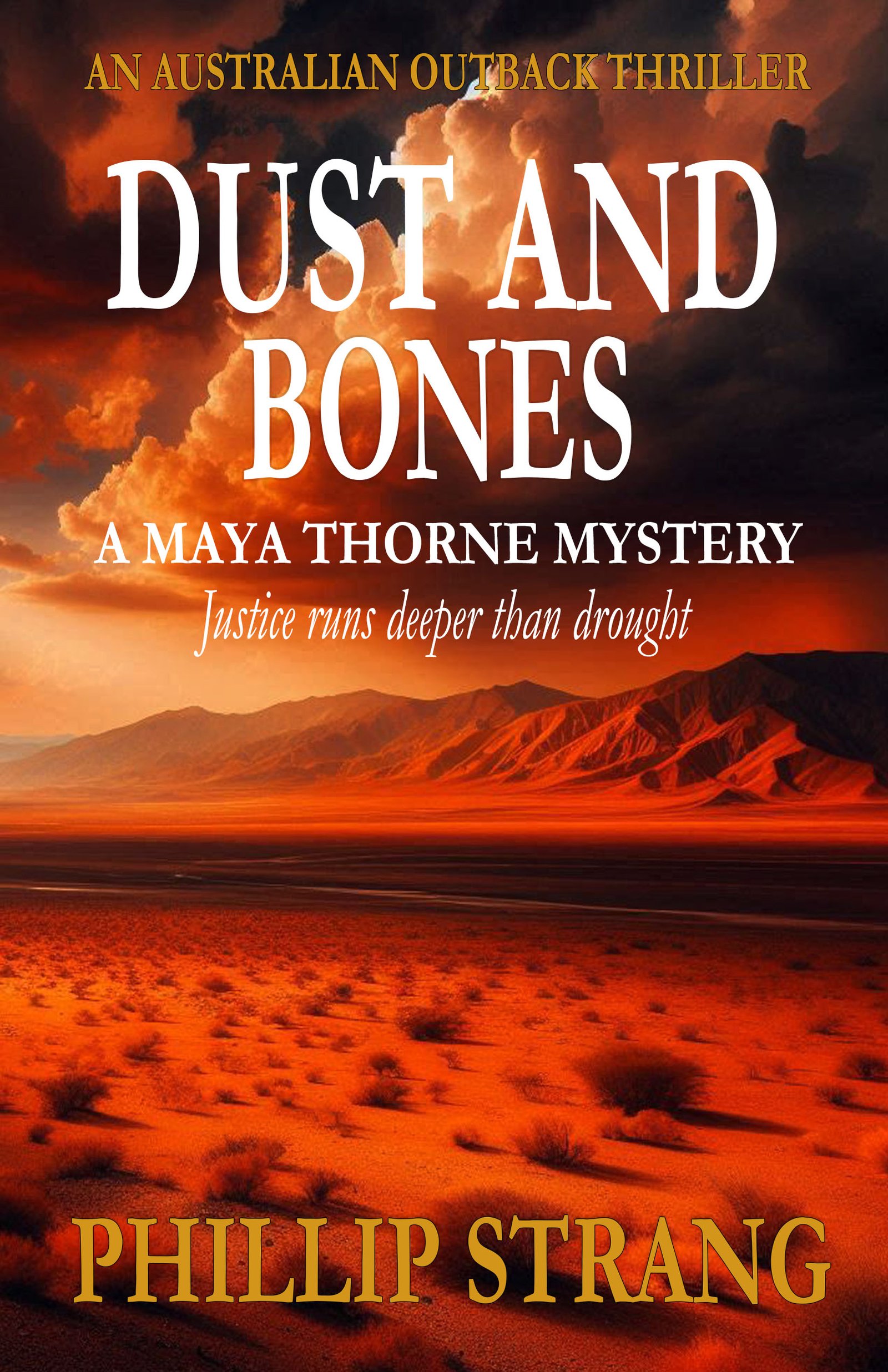
A MAYA THORNE MYSTERY
Get Dust and Bones Free
Justice runs deeper than drought.
Red dust. Shallow graves. A detective who hunts killers where the law runs thin and the nearest help is two hundred miles away.
Send Me the BookYou'll also receive occasional new release emails. Unsubscribe anytime. No spam, ever.
As an Amazon Associate, Phillip Strang earns from qualifying purchases. This page contains affiliate links — buying through them costs you nothing extra.