
Rural crime fiction presents unique narrative challenges that urban settings simply cannot replicate. The isolation inherent in small towns and remote locations creates both opportunity and constraint for the crime writer, demanding careful balance between the claustrophobic intimacy of tight-knit communities and the vast emptiness that can swallow secrets whole.
The rural crime novel succeeds or fails on how effectively the writer exploits these environmental tensions. Across eighteen series and more than 150 novels, I have found that the most compelling rural mysteries emerge when the landscape itself becomes an active participant in both the crime and its investigation, not merely scenic backdrop.
The Geography of Guilt: Making Isolation Work for Your Plot
Isolation in rural crime fiction must serve the story mechanically, not just atmospherically. The remote location that makes murder easier to commit also makes investigation harder to conduct. This creates natural plot tension that urban settings struggle to match. When I developed the Maya Thorne series set in the Australian outback, the vast distances between settlements became integral to how crimes unfold and how investigations must adapt.
The key is understanding that rural isolation operates on multiple levels simultaneously. Physical isolation limits access to forensic resources, backup, and witnesses. Communication isolation restricts information flow and creates lag time that killers can exploit. Social isolation means everyone knows everyone else’s business, except when they deliberately choose not to. The effective rural crime writer weaves all three types into their narrative structure, using each to create specific plot complications rather than generic atmosphere.
Distance also changes the rhythm of investigation. Urban detectives can interview three witnesses in an hour; rural investigators might spend half a day reaching a single remote property. This pacing shift affects both plot structure and reader expectation. The investigation cannot rely on rapid-fire revelations but must build tension through accumulated detail and mounting dread.
Community Dynamics: The Double-Edged Sword of Everyone Knowing Everyone
Rural communities operate on unwritten codes that city dwellers never encounter. These social contracts become weapons in the hands of skilled crime writers. The same neighbor who will drive fifty miles to help with a medical emergency will also maintain absolute silence about domestic violence next door if family loyalty demands it.
Secrets in rural settings have different properties than urban secrets. In cities, anonymity protects secrets through sheer numbers—who cares what strangers do? In small towns, secrets survive through active conspiracy. Everyone knows, but everyone agrees not to know officially. This creates investigating conditions unlike anything urban crime can offer, particularly when combined with the methodical approach that police procedurals demand.
The crime writer must understand local power structures that have nothing to do with official authority. The bank president might defer to the farming family that has worked the same land for four generations. The sheriff might look the other way because his daughter is married to the suspect’s son. These informal hierarchies create investigation obstacles that feel organic to the setting rather than artificially imposed.
Economic interdependence also shapes how communities respond to crime. When the main employer in town becomes a murder suspect, protecting the suspect might matter more than seeking justice, especially if conviction means economic collapse. The crime writer can exploit these tensions to create moral complexity that pure urban settings cannot replicate.
The Outsider Investigator: My Approach to Credible Character Placement
The outsider investigator remains the most effective protagonist for rural crime fiction, but only if their outsider status serves genuine narrative purpose beyond convenience. I have used this approach repeatedly because it allows the investigation to mirror the reader’s own discovery process. When DI Sarah Lynch arrives in remote Scottish Highland communities, her unfamiliarity with local customs and relationships creates natural exposition opportunities while maintaining investigative credibility.
The outsider investigator must have legitimate reason to be present and legitimate authority to investigate. Random private citizens stumbling across rural murders strain credibility unless the setup provides compelling justification. Law enforcement transfers, consulting assignments, or professional obligations that place urban experts in rural settings work better than coincidental discoveries.
The outsider’s disadvantages must be real and consequential. Local contacts provide misleading information. Cultural misunderstandings create false leads. The investigator’s urban assumptions prove counterproductive. But the outsider’s advantages must be equally real—fresh perspective, lack of local bias, and freedom from community pressure that might compromise local law enforcement.
I prefer investigators who possess some rural background themselves, even if distant or forgotten. This provides enough cultural literacy to function while maintaining enough distance to see clearly. The completely urban detective transplanted to farm country becomes fish-out-of-water comedy rather than serious crime fiction. The balance requires careful character development that acknowledges both limitations and capabilities.
Technical Challenges: Crime Scene Investigation in Remote Locations
Rural crime scenes present logistical problems that urban crime fiction rarely addresses. Forensic teams cannot arrive within the hour. Crime scene preservation becomes problematic when the nearest backup is two hours away. Evidence collection must adapt to locations without electricity, cellular service, or paved roads.
Weather becomes a factor in ways urban settings rarely experience. The crime scene exposed to elements changes hour by hour. Seasonal access issues mean some locations become unreachable for months. The crime writer must either work within these constraints or explain convincingly why they do not apply.
Jurisdiction complications multiply in rural settings. County lines, state boundaries, federal land management, and tribal authority can all intersect at single crime scenes. These legal complexities create legitimate plot opportunities when handled correctly, but require research to avoid basic errors that destroy credibility among readers familiar with actual rural law enforcement.
Communication limitations affect every aspect of investigation. Cell towers serve limited areas. Landline service may be unreliable. Internet access can be sporadic. These technology gaps create authentic obstacles for modern investigators while opening opportunities for criminals. The contemporary rural crime novel must acknowledge how technology shapes investigation while recognizing where technology fails in remote locations, much like the environmental factors that define action thrillers in urban settings.
Common Mistakes: What Destroys Credibility in Rural Crime Fiction
The most frequent error in rural crime fiction is treating rural locations as simplified versions of urban settings. Writers assume small-town investigations work like city investigations but with fewer people and more trees. This misses entirely how rural communities function and how crimes develop within them.
Stereotypical characterization ruins rural crime fiction faster than any plot weakness. The backwards sheriff, the wise old farmer, the corrupt local politician—these cardboard figures signal amateur writing instantly. Real rural communities contain the same range of intelligence, education, and sophistication as anywhere else, distributed differently but not diminished. The crime writer who assumes otherwise produces fiction that condescends to both characters and readers.
Technology errors also destroy credibility. GPS does not work everywhere. Cell phones do not connect reliably in mountainous or heavily forested areas. Satellite internet has weather-related interruptions. Writers who ignore these realities produce crime fiction that feels artificially convenient. Conversely, writers who eliminate technology entirely create period pieces inadvertently, since most rural areas have adapted modern technology to local conditions rather than remaining frozen in earlier decades.
The pastoral fallacy—assuming rural settings are inherently peaceful until crime intrudes—misses the economic and social tensions that make rural crime compelling. Family land disputes, water rights conflicts, and resource extraction controversies provide crime motivations that organic to rural settings rather than imported from elsewhere. Writers who overlook these authentic conflict sources resort to generic urban crime motivations that feel transplanted rather than indigenous, unlike the deeply rooted tensions that drive compelling noir crime narratives.
Conclusion
Rural crime fiction succeeds when it exploits the unique conditions of remote locations rather than simply relocating urban crime to scenic settings. The isolation, community dynamics, and investigative challenges must serve the story structurally, not just atmospherically, creating narrative opportunities that urban settings cannot replicate.
About Phillip Strang
Phillip Strang is an Australian crime and thriller novelist. Across eighteen series and more than 150 novels, his work spans London police procedurals (DCI Isaac Cook), UK investigations (DI Tremayne), Australian outback crime (Maya Thorne), FBI thrillers (Alex Harlan), Scottish Highland mysteries (DI Sarah Lynch), and espionage (Steve Case). Learn more about Phillip or browse his complete catalogue on Amazon.
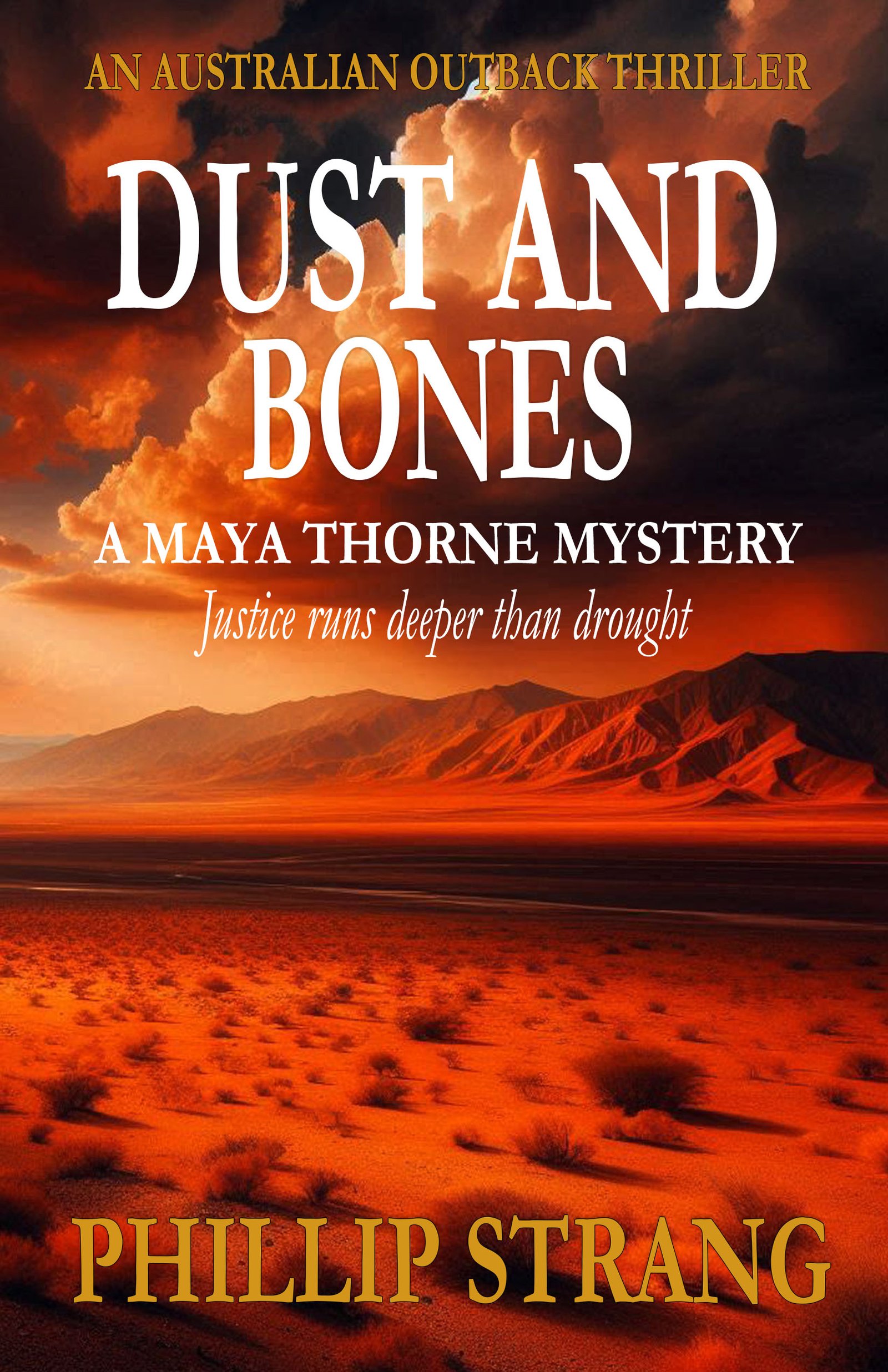
A MAYA THORNE MYSTERY
Get Dust and Bones Free
Justice runs deeper than drought.
Red dust. Shallow graves. A detective who hunts killers where the law runs thin and the nearest help is two hundred miles away.
Send Me the BookYou'll also receive occasional new release emails. Unsubscribe anytime. No spam, ever.
As an Amazon Associate, Phillip Strang earns from qualifying purchases. This page contains affiliate links — buying through them costs you nothing extra.