
The third draft represents the crucial transition from storytelling to precision craftsmanship. Most crime writers rush this phase, treating it as mere proofreading when it should be the stage where your narrative voice crystallizes and every sentence earns its place on the page.
Across eighteen series and more than 150 novels, I have found that the third draft separates competent crime fiction from compelling reads. This is where you move beyond plot mechanics to refine the voice that will carry readers through dark alleys, police interviews, and those critical moments when your detective pieces together the final clue.
The Distinction Between Line Editing and Copy Editing
Line editing operates at the sentence level, examining flow, rhythm, and clarity. Copy editing catches grammar and consistency errors. Understanding this distinction prevents you from diluting your focus during the third draft. When I line edit, I read every sentence aloud, testing whether it serves both meaning and momentum. A sentence like ‘Detective Morrison walked slowly down the corridor, his footsteps echoing in the empty hallway’ becomes ‘Morrison’s footsteps echoed through the empty corridor.’ The revision eliminates redundancy while maintaining atmosphere.
Voice refinement works hand in glove with line editing. Every character should speak distinctively, but more importantly, your narrative voice must remain consistent throughout. In my DCI Isaac Cook series, the narrative voice reflects London’s gritty realism without falling into parody. This consistency developed through multiple drafts where I eliminated sentences that felt forced or inauthentic to the established tone.
My Practical Approach to the Third Draft
I print the entire manuscript. Reading on screen encourages skimming; paper forces deliberate attention to each line. I work with three colored pens: red for cuts, blue for voice inconsistencies, green for rhythm problems. This system prevents me from trying to fix everything simultaneously, which leads to paralysis.
My process begins with reading the opening chapter aloud, marking every sentence that makes me stumble. These stumbles indicate rhythm problems or unnecessary complexity. Then I examine dialogue separately, ensuring each character maintains distinct speech patterns. Finally, I focus on transitions between scenes and chapters, areas where voice often becomes uncertain as writers shift between different story elements.
The key insight from writing across multiple series is that voice refinement requires understanding your protagonist’s worldview. When writing Maya Thorne in the Australian outback versus DCI Cook in London, the narrative voice must reflect different environments and cultural perspectives. This isn’t just about setting description; it affects sentence structure, word choice, and the underlying attitude toward crime and justice.
Common Mistakes That Weaken Voice
Writers often confuse voice with style, leading them to impose artificial techniques that feel grafted onto their natural writing. I see manuscripts where authors force short, staccato sentences throughout because they believe this creates tension, resulting in prose that sounds like a telegram rather than compelling narrative. The opposite extreme involves writers who equate sophistication with complexity, producing sentences like ‘The detective, having considered the implications of the witness’s testimony regarding the defendant’s whereabouts, concluded that further investigation would be necessary.’ This muddles rather than clarifies.
Another frequent error involves inconsistent point of view filtering. Writers slip between close third person and omniscient perspective within single scenes, weakening the connection between reader and protagonist. In crime fiction, this connection proves crucial during investigation scenes where readers should experience discovery alongside the detective. When examining police procedural novels, the most engaging examples maintain consistent perspective throughout key scenes.
Dialogue attribution represents another common stumbling point. Writers often believe that varying attribution verbs adds sophistication, but ‘he hissed,’ ‘she interjected,’ and ‘he growled’ usually distract from the actual conversation. Strong dialogue carries its own emotional weight without elaborate attribution.
Techniques for Strengthening Narrative Voice
Sentence variation creates rhythm, but this variation must feel organic rather than mechanical. I alternate between short, punchy sentences during action sequences and longer, more complex structures during reflective moments. The key lies in matching sentence structure to content rather than following arbitrary patterns.
Word choice reveals character perspective more effectively than direct description. Instead of writing ‘The expensive car pulled up to the curb,’ consider how your protagonist would actually perceive the vehicle. A working-class detective might see ‘a car worth more than my annual salary,’ while a wealthy character might simply note ‘a decent sedan.’ These choices accumulate throughout the manuscript, building voice through consistency rather than obvious technique.
Metaphors and comparisons should arise from your protagonist’s background and experience. A former military operative like those in action thriller novels thinks in tactical terms, while a small-town detective draws comparisons from local experience. Forcing inappropriate metaphors breaks the voice you’ve established.
Managing Voice Across Series
Series writing presents unique challenges for voice consistency. Each book must maintain the established narrative voice while avoiding repetition. I maintain series bibles that include not just plot details but also voice characteristics: preferred sentence structures, recurring phrases that define the protagonist’s thinking, and words or constructions to avoid because they don’t fit the established tone.
The evolution of voice across multiple books requires careful management. Characters develop, but their fundamental perspective should remain recognizable. When writing the later books in my Steve Case series, I deliberately reference earlier voice patterns while allowing for character growth. This balance prevents staleness without confusing readers who expect consistency.
Reading previous books in the series before beginning the third draft of a new manuscript helps recalibrate your ear to the established voice. This practice prevents unconscious drift that occurs when significant time passes between writing installments.
Conclusion
Line editing and voice refinement demand patience and systematic attention to craft details that readers experience subconsciously but that determine whether they continue reading. The third draft represents your opportunity to transform competent storytelling into compelling crime fiction through deliberate attention to how every sentence serves both meaning and voice.
About Phillip Strang
Phillip Strang is an Australian crime and thriller novelist. Across eighteen series and more than 150 novels, his work spans London police procedurals (DCI Isaac Cook), UK investigations (DI Tremayne), Australian outback crime (Maya Thorne), FBI thrillers (Alex Harlan), Scottish Highland mysteries (DI Sarah Lynch), and espionage (Steve Case). Learn more about Phillip or browse his complete catalogue on Amazon.
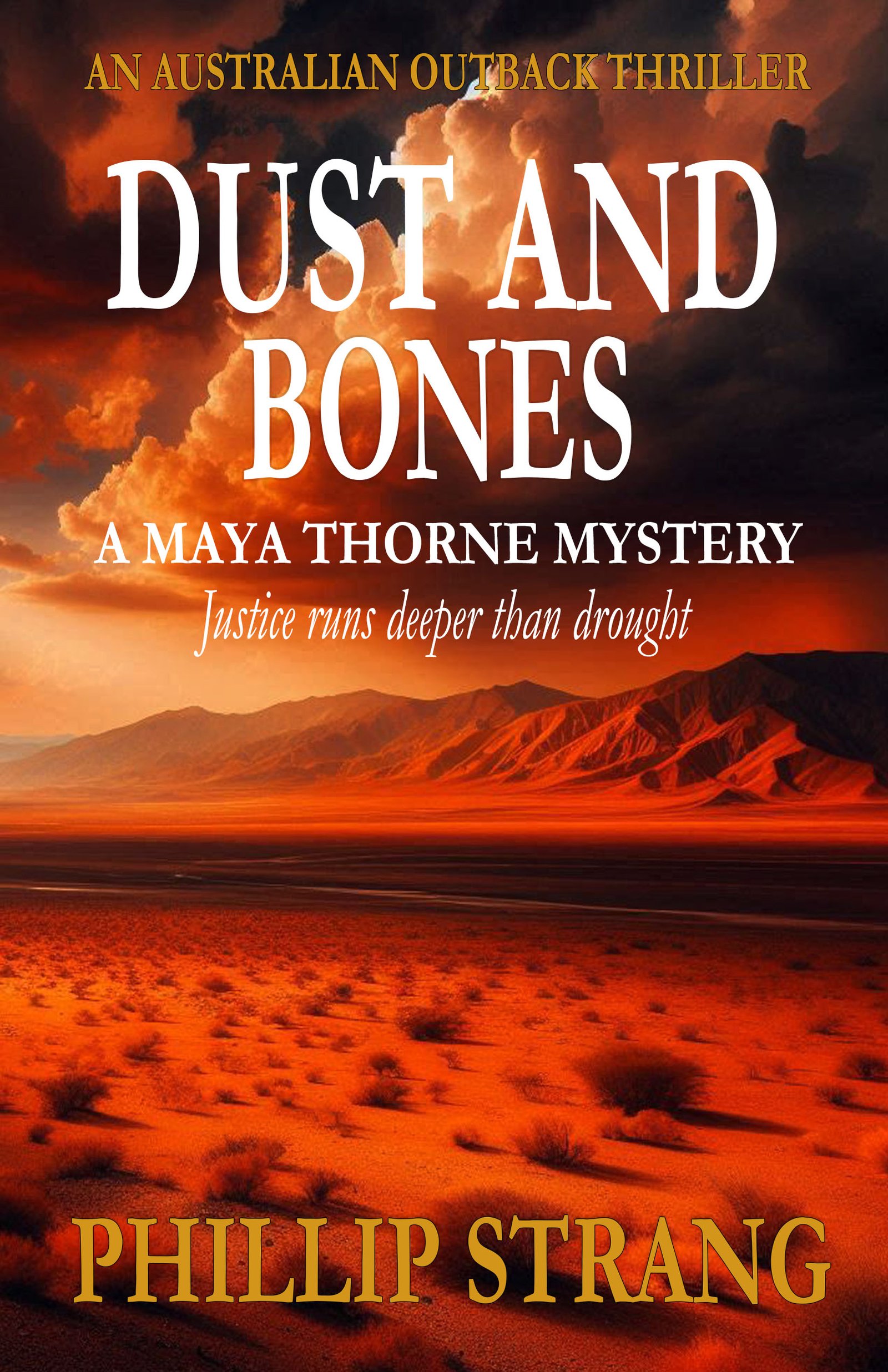
A MAYA THORNE MYSTERY
Get Dust and Bones Free
Justice runs deeper than drought.
Red dust. Shallow graves. A detective who hunts killers where the law runs thin and the nearest help is two hundred miles away.
Send Me the BookYou'll also receive occasional new release emails. Unsubscribe anytime. No spam, ever.
As an Amazon Associate, Phillip Strang earns from qualifying purchases. This page contains affiliate links — buying through them costs you nothing extra.