
Collaborating with other crime writers sounds appealing in theory—shared workload, combined readerships, creative synergy. The reality is that most co-authored crime novels fail spectacularly, not because the individual writers lack talent, but because crime fiction demands a singular voice and uncompromising narrative control that partnerships dilute.
Across eighteen series and more than 150 novels, I’ve seen countless collaborations crash against the rocks of conflicting creative visions. The crime genre, more than any other, requires precision in pacing, consistency in procedural detail, and an unwavering commitment to the protagonist’s voice—elements that become exponentially harder to maintain when two writers attempt to share the wheel.
The Voice Problem That Destroys Crime Fiction
Crime fiction lives or dies on voice consistency. Readers bond with detectives like Isaac Cook or Maya Thorne because they recognize the specific rhythm of how these characters think, speak, and process evidence. When two writers attempt to split chapters or alternate books in a series, that voice inevitably fractures. I’ve read co-authored police procedural novels where you can pinpoint exactly where one writer hands off to another—the dialogue shifts, the investigative approach changes, and suddenly the protagonist feels like a different person entirely.
The most common mistake is believing that extensive character bibles and style guides can solve this problem. They cannot. Voice isn’t just about vocabulary choices or speech patterns; it’s about the unconscious rhythms that emerge from a writer’s relationship with their protagonist. When I write DCI Isaac Cook, his responses to crime scenes flow from hundreds of thousands of words I’ve spent inside his head. No amount of documentation can transfer that intuitive understanding to another writer.
How I Actually Approach Collaborative Projects
The few times I’ve considered collaboration, I’ve insisted on maintaining complete control over one element while ceding another entirely. For instance, when exploring the possibility of expanding the Maya Thorne series into a shared world, I would retain absolute authority over Maya’s voice and cases while allowing another writer to develop peripheral characters in separate storylines that occasionally intersect. This isn’t true collaboration—it’s controlled expansion with clear territorial boundaries.
The key is recognizing that crime fiction readers are forensic about consistency. They notice when a detective suddenly uses different interrogation techniques or when procedural protocols shift between books. Rather than attempting to blend voices, successful crime collaborations require what I call ‘narrative apartheid’—complete separation of responsibilities with minimal overlap. One writer handles the investigation, another manages the forensics, but never should both attempt to write the same character’s dialogue.
The Mechanics of Shared Crime Worlds That Actually Work
Shared worlds succeed only when each writer maintains complete autonomy within clearly defined parameters. The most effective approach treats the shared elements—police department, geographical location, supporting cast—as stage dressing rather than collaborative writing opportunities. Each protagonist operates independently, with crossover events planned like diplomatic summits rather than organic story developments.
Technical coordination becomes crucial in ways that don’t apply to other genres. When working within shared crime universes, writers must maintain forensic continuity, legal procedure accuracy, and geographical consistency that readers will scrutinize. I’ve seen promising shared world projects collapse because one writer had their detective using investigative techniques that contradicted established departmental protocols from another writer’s books. Crime readers are unforgiving about procedural errors, and collaborative projects multiply the opportunities for such mistakes.
Why Most Crime Writing Partnerships Fail Spectacularly
The primary failure point occurs when writers attempt to divide creative control rather than creative territory. I’ve witnessed partnerships where writers alternate chapters, believing this creates seamless integration. Instead, it produces jarring tonal shifts that destroy narrative momentum. Crime fiction depends on building tension through accumulating evidence and psychological pressure—elements that require sustained authorial control to execute effectively.
Another common disaster involves splitting the workload by having one writer handle dialogue while another manages description and action. This approach fails because effective crime writing integrates these elements inseparably. When my detectives examine crime scenes, their dialogue emerges from their observations, their actions reflect their deductive processes, and their internal monologue connects evidence to theory. Separating these components produces mechanical prose that reads like committee writing.
The worst collaborative mistake involves attempting to merge different writers’ established series. Readers invest in specific detective personalities and investigative styles. When writers try to force their existing protagonists into shared cases, the result typically satisfies neither fan base while creating logical inconsistencies that damage both series. Unlike action thriller novels where protagonist crossovers can generate excitement, crime fiction readers prefer their detectives to maintain distinct territories and methods.
When Collaboration Becomes Creative Compromise
Successful crime writing requires making dozens of micro-decisions about pacing, revelation timing, and character development that reflect personal creative instincts developed over many books. Collaboration forces these instincts through committee approval, diluting the very elements that make crime fiction compelling. When I structure reveals in my Steve Case espionage stories, I’m drawing on accumulated understanding of how tension builds through incremental disclosure—knowledge that can’t be transferred to a writing partner without losing its effectiveness.
The compromise inherent in collaboration also affects risk-taking. Crime writers build readership by occasionally subverting genre expectations or exploring controversial themes. Partnership projects tend toward conservative choices that both writers can accept, resulting in safe, forgettable books that advance neither writer’s career. The most memorable crime fiction emerges from singular creative vision willing to alienate some readers in service of compelling storytelling.
Conclusion
Collaborating with other crime writers requires abandoning the illusion of true creative partnership in favor of clearly defined territorial divisions. The genre’s demands for voice consistency, procedural accuracy, and sustained tension make shared writing nearly impossible, but controlled expansion of fictional universes can work when each writer maintains complete autonomy within their designated sphere.
About Phillip Strang
Phillip Strang is an Australian crime and thriller novelist. Across eighteen series and more than 150 novels, his work spans London police procedurals (DCI Isaac Cook), UK investigations (DI Tremayne), Australian outback crime (Maya Thorne), FBI thrillers (Alex Harlan), Scottish Highland mysteries (DI Sarah Lynch), and espionage (Steve Case). Learn more about Phillip or browse his complete catalogue on Amazon.
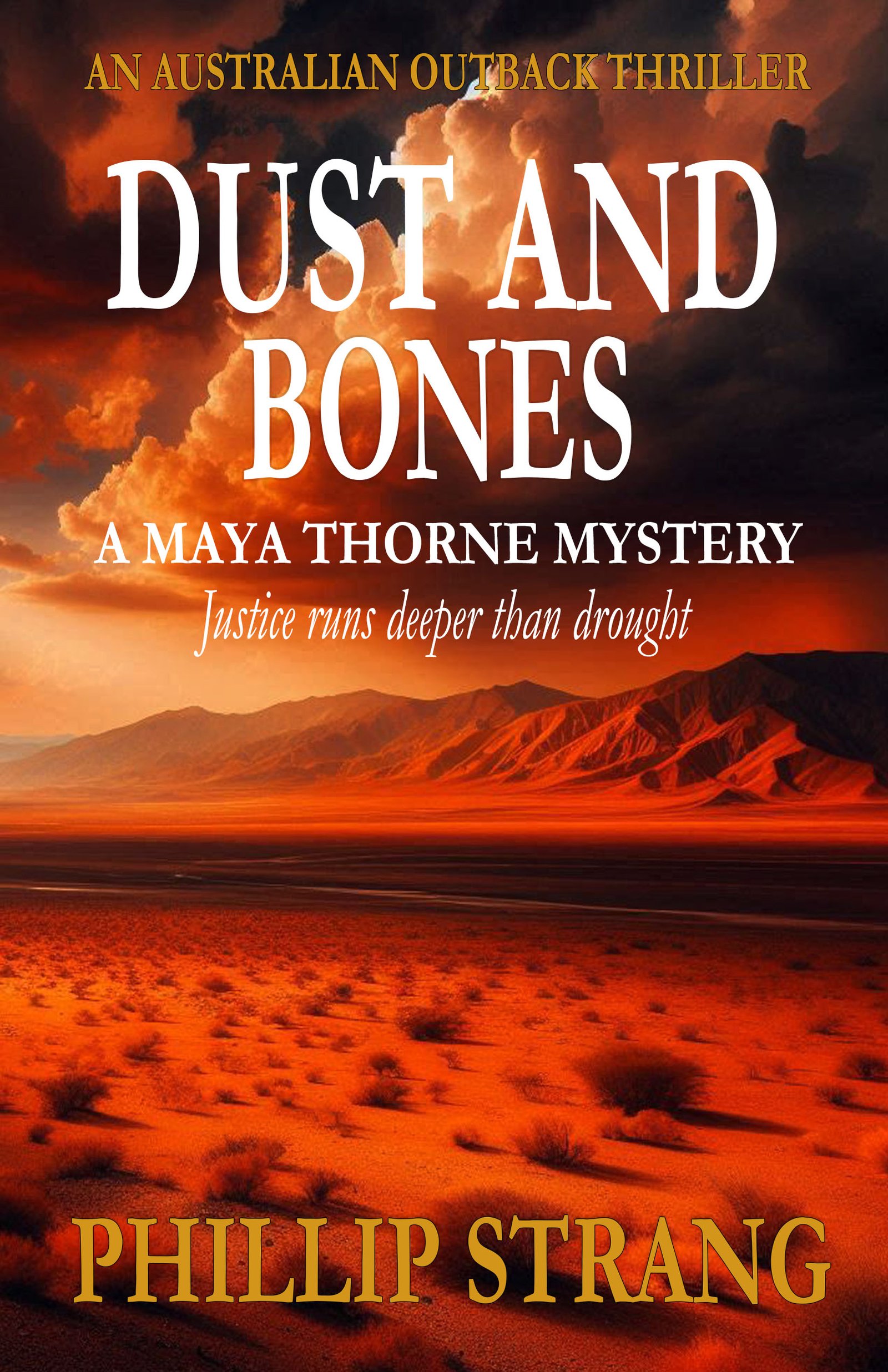
A MAYA THORNE MYSTERY
Get Dust and Bones Free
Justice runs deeper than drought.
Red dust. Shallow graves. A detective who hunts killers where the law runs thin and the nearest help is two hundred miles away.
Send Me the BookYou'll also receive occasional new release emails. Unsubscribe anytime. No spam, ever.
As an Amazon Associate, Phillip Strang earns from qualifying purchases. This page contains affiliate links — buying through them costs you nothing extra.