
Golden Age mystery conventions endure because they solve fundamental narrative problems that plague every crime writer: how to sustain reader engagement while delivering satisfying resolution, and how to balance complexity with clarity. These aren’t antiquated formulas but proven structural tools that remain as relevant in contemporary thrillers as they were in the drawing rooms of Agatha Christie’s era.
The temptation among modern crime writers is to dismiss these conventions as outdated, yet across eighteen series and more than 150 novels I have found that the core principles of Golden Age mysteries provide the strongest foundation for any crime narrative, whether it’s a gritty police procedural or a high-stakes espionage thriller. The key lies in understanding why these conventions work, not merely copying their surface elements.
The Closed Circle: Creating Pressure and Focus
The Golden Age convention of the closed circle—a limited group of suspects contained within a specific location or circumstance—remains one of the most powerful tools in crime fiction because it creates natural pressure and narrative focus. Modern writers often mistake this for literal confinement, missing the deeper structural purpose: establishing clear parameters that force both detective and reader to work within defined boundaries.
In my DCI Isaac Cook series, I frequently employ closed circles that aren’t physical locations but professional or social networks. When a murder occurs within London’s financial district, the ‘circle’ becomes the interconnected web of traders, analysts, and executives whose careers and secrets create the containment necessary for sustained tension. This approach maintains the Golden Age principle while feeling entirely contemporary.
The convention works because it prevents the narrative from sprawling into endless possibilities. Without this focus, crime novels become investigative odysseys where readers lose track of suspects and motivations. The closed circle forces writers to develop each suspect thoroughly rather than introducing new characters whenever the plot stalls.
Fair Play: The Contract with Your Reader
Golden Age mysteries established the ‘fair play’ principle: readers must have access to the same clues as the detective. This isn’t about following arbitrary rules but about respecting your reader’s intelligence and maintaining narrative trust. Modern crime writers who abandon this principle often resort to information dumps or convenient revelations that undermine the entire reading experience.
Fair play doesn’t mean making solutions obvious or avoiding red herrings. It means ensuring that when readers reach the revelation, they can trace the logical path backward and recognize that the answer was achievable. This requires disciplined plotting and careful clue placement—skills that separate competent crime writers from exceptional ones.
The principle applies equally to contemporary police procedurals and psychological thrillers. Whether your detective uses forensic science or psychological profiling, readers need to understand the methodology and have access to the key discoveries. Withholding crucial evidence until the final chapters isn’t clever plotting; it’s cheating your audience.
How I Apply Golden Age Structure in Modern Crime Writing
When developing any crime novel, I begin with Golden Age fundamentals regardless of the contemporary setting or modern investigative techniques. The process starts with establishing the victim’s connections—who had motive, means, and opportunity—then constraining those suspects within a logical framework that prevents the investigation from becoming unwieldy.
For my Maya Thorne outback crime series, the isolated Australian setting provides natural containment, but the Golden Age structure goes deeper. Each novel establishes a community of interconnected characters whose relationships and secrets mirror the classic country house mystery, just transplanted to mining towns and cattle stations. The conventions adapt seamlessly because they address universal narrative needs.
The key lies in understanding that Golden Age conventions are frameworks, not formulas. The locked room becomes the impossible crime in a surveilled office building. The gathering of suspects becomes the final briefing where the detective explains the case to colleagues and superiors. These adaptations honor the original purpose while serving contemporary storytelling needs.
I also find that police procedural novels benefit enormously from Golden Age pacing, where revelations are carefully timed and each chapter advances both plot and character understanding. Modern procedurals often get bogged down in forensic detail or bureaucratic process, losing the momentum that classic mysteries maintained through disciplined structure.
The Red Herring: Misdirection Without Deception
Golden Age mysteries perfected the art of the red herring—false clues that mislead without lying to readers. This technique remains essential because crime fiction without misdirection becomes a straightforward problem-solving exercise rather than an engaging puzzle. The challenge lies in creating red herrings that feel organic rather than manipulative.
Effective red herrings arise naturally from character motivations and circumstances. If a suspect has legitimate reasons to conceal information unrelated to the murder, their evasiveness becomes a natural red herring. When characters lie about their whereabouts to hide an affair rather than a murder, the misdirection serves both plot and character development.
The Golden Age principle here is that red herrings should illuminate character and advance plot even when they don’t point toward the killer. Modern crime writers often create false clues that serve no purpose beyond confusion, missing the opportunity to deepen the story while maintaining suspense. Every red herring should reveal something meaningful about the world or characters, making it valuable regardless of its relationship to the solution.
Common Mistakes: Where Modern Writers Abandon What Works
The most frequent error I observe is writers who equate Golden Age conventions with simplistic plotting, leading them to create unnecessarily convoluted mysteries that prioritize shocking twists over logical development. A murder plot involving seventeen suspects with interconnected revenge motives spanning three decades isn’t sophisticated; it’s self-indulgent. The Golden Age principle of elegant simplicity—one solid motive clearly executed—creates far more satisfying resolutions.
Another common mistake is abandoning the closed circle concept in favor of sprawling investigations that introduce new suspects and locations throughout the narrative. While this might seem more realistic, it diffuses tension and overwhelms readers with information. A murder investigation that expands from a family dispute to international conspiracy to corporate corruption lacks the focus that makes crime fiction compelling.
Modern writers also frequently violate fair play principles by withholding key information to create artificial suspense. Having the detective discover crucial evidence off-page or revealing that a seemingly innocent character was actually the victim’s secret enemy destroys reader trust. The most effective action thriller novels maintain Golden Age honesty even within high-stakes contemporary plots.
Perhaps the most damaging error is treating Golden Age conventions as restrictive rules rather than flexible tools. Writers who rigidly apply surface elements—the butler, the library, the gathered suspects—miss the underlying structural principles that make these conventions powerful. The goal isn’t to recreate 1930s British mysteries but to understand why those structural choices created lasting engagement.
Conclusion
Golden Age mystery conventions endure because they address fundamental challenges in crime fiction: maintaining focus, building trust with readers, and creating satisfying resolutions. Modern crime writers who understand and adapt these principles rather than rejecting them as outdated create stronger, more engaging narratives that honor both classic traditions and contemporary expectations.
About Phillip Strang
Phillip Strang is an Australian crime and thriller novelist. Across eighteen series and more than 150 novels, his work spans London police procedurals (DCI Isaac Cook), UK investigations (DI Tremayne), Australian outback crime (Maya Thorne), FBI thrillers (Alex Harlan), Scottish Highland mysteries (DI Sarah Lynch), and espionage (Steve Case). Learn more about Phillip or browse his complete catalogue on Amazon.
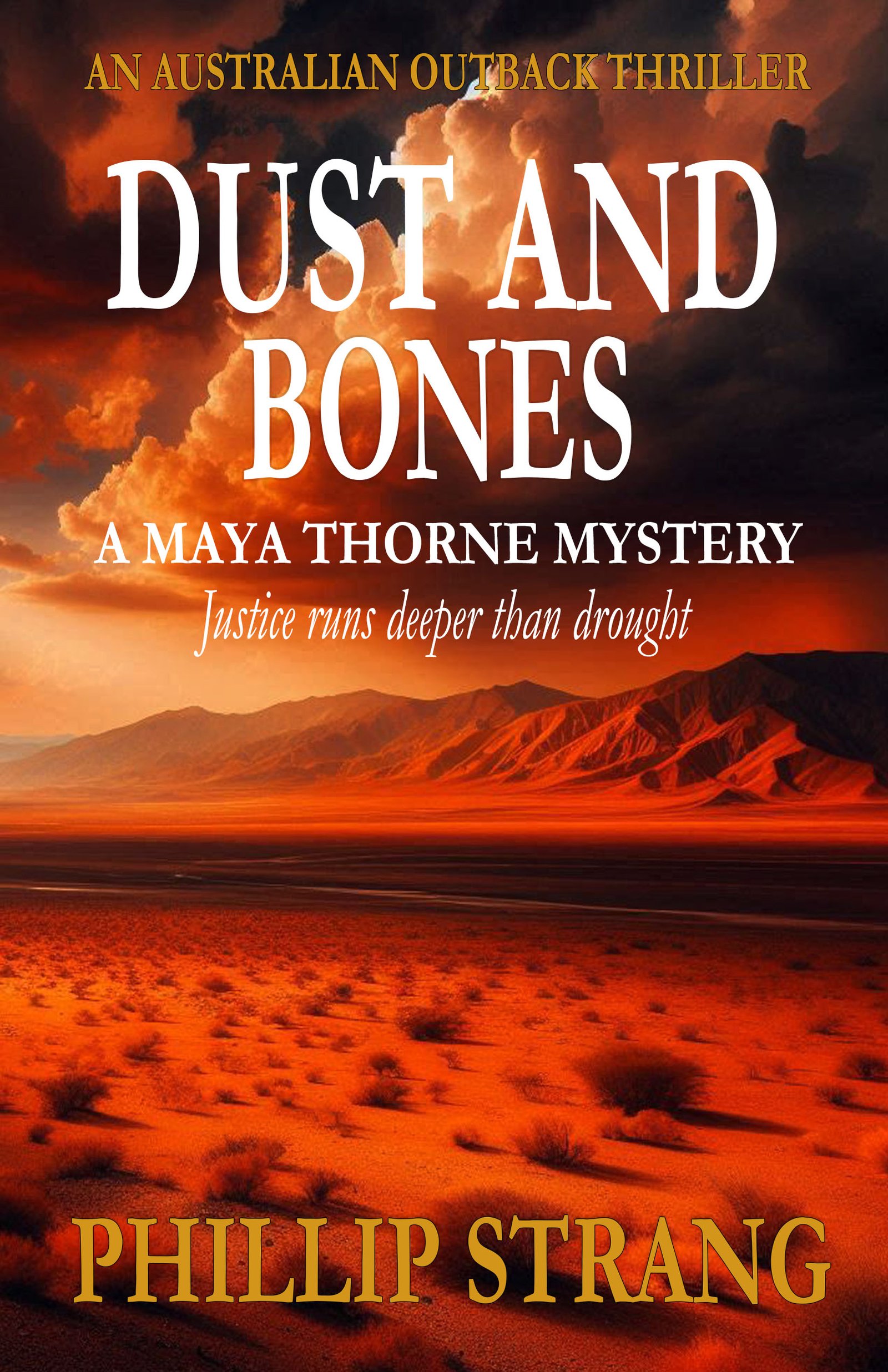
A MAYA THORNE MYSTERY
Get Dust and Bones Free
Justice runs deeper than drought.
Red dust. Shallow graves. A detective who hunts killers where the law runs thin and the nearest help is two hundred miles away.
Send Me the BookYou'll also receive occasional new release emails. Unsubscribe anytime. No spam, ever.
As an Amazon Associate, Phillip Strang earns from qualifying purchases. This page contains affiliate links — buying through them costs you nothing extra.