
The most forgettable crime novels are those that mistake procedural mechanics for storytelling depth. A murder happens, clues emerge, the detective follows leads, the killer is caught – but nothing resonates beyond the final page because the story never asked why any of it mattered beyond solving the immediate puzzle.
Across eighteen series and more than 150 novels, I have found that the most compelling crime fiction uses murder as a lens to examine larger truths about human nature, society, or institutional failure. The crime becomes a catalyst that exposes deeper rot, whether in a community, a system, or the human condition itself.
Finding Your Thematic Foundation
Theme in crime fiction emerges from the questions that drive you as a writer, not from abstract concepts you think might sell books. When I developed my Maya Thorne series, I wasn’t setting out to write about environmental destruction or indigenous rights in the abstract. I was fascinated by how isolated communities survive when the outside world encroaches, and how violence erupts when old ways collide with new pressures. The murders in Maya’s cases become windows into these larger tensions.
Your thematic foundation should feel personal and urgent to you. If you’re writing about police corruption, what specific aspect of institutional failure keeps you awake at night? If you’re exploring small-town secrets, what particular form of collective denial or complicity interests you? The specificity matters because generic themes produce generic stories.
The key is embedding theme from the earliest stages of plotting, not retrofitting meaning onto an existing murder mystery. When you understand what larger question you’re exploring, every choice – from victim selection to the killer’s motivation to the detective’s personal stakes – can serve both plot and thematic purpose.
Grounding Abstract Themes in Concrete Crime
The challenge with theme in crime fiction is making abstract concepts feel visceral and immediate through the mechanics of investigation. Readers come for the mystery, not the sociology lecture, so your thematic exploration must be inseparable from the story’s forward momentum.
I approach this by ensuring that my larger themes manifest in specific, observable details within the crime itself. In my DCI Isaac Cook series, when I’m exploring themes around urban inequality and social mobility, I don’t have characters deliver speeches about economic disparity. Instead, the crimes themselves reflect these tensions – a murder in a gentrifying neighborhood where the victim and killer exist on opposite sides of London’s changing economy, where the method of killing or disposal of the body reveals something about class assumptions and access to resources.
The investigation process should naturally uncover your thematic material. As your detective digs into the victim’s background, questions witnesses, and follows leads, they should be excavating the social, psychological, or institutional context that made the crime possible. The best police procedural novels understand that solving the case means understanding not just who pulled the trigger, but why that particular trigger existed to be pulled.
How I Structure Theme Around Character Investigation
When I’m working on a new novel, I start with three interconnected questions: What crime am I investigating? What larger problem does this crime illuminate? And what personal stake does my protagonist have in both the specific case and the broader issue?
The third question is crucial because theme without personal stakes becomes academic. Your detective needs to be changed by their encounter with whatever larger truth the case reveals. This doesn’t mean they need to solve society’s problems, but they should be forced to confront their own assumptions or limitations in ways that feel earned by the specific details of the investigation.
I structure my plotting so that revelations about the case parallel revelations about the theme. Each major development in the investigation should deepen both the mystery and the thematic exploration. When a witness contradicts earlier testimony, what does that reveal about the social pressures that shaped their initial lie? When a piece of physical evidence emerges, how does it illuminate the power dynamics or institutional failures that enabled the crime?
The climax should resolve both the procedural question of who committed the murder and the thematic question of what that murder represents. The satisfaction comes from understanding not just the mechanics of guilt, but the meaning of those mechanics.
Avoiding Heavy-Handed Social Commentary
The fastest way to kill momentum in crime fiction is to let your thematic concerns overwhelm your storytelling instincts. I’ve seen too many manuscripts where characters become mouthpieces for the author’s opinions rather than authentic people responding to extraordinary circumstances.
Theme works best when it emerges from character behavior under pressure, not from dialogue that feels like editorial commentary. If you’re exploring corruption in local government, don’t have your detective explain the problem to a colleague over coffee. Instead, show how that corruption manifests in specific obstruction of the investigation, in evidence that disappears, in witnesses who suddenly become uncooperative after certain phone calls are made.
Another common mistake is assuming that thematic depth requires expanding beyond crime into other genres. Your exploration of environmental destruction doesn’t need science fiction elements. Your examination of technological surveillance doesn’t need to become a tech thriller with unrealistic capabilities. The power of noir crime thriller novels comes from finding the extraordinary implications hidden within ordinary criminal acts.
Resist the urge to provide solutions to the larger problems your crime fiction explores. Your job is to illuminate the problem through the specific lens of your case, not to propose policy changes or moral lessons. The most effective thematic crime fiction raises questions rather than answering them, leaving readers to wrestle with implications long after they’ve closed the book.
Sustaining Theme Across a Series
When you’re writing a continuing series, theme becomes both an opportunity and a challenge. You can explore different facets of your core concerns across multiple books, but you risk becoming repetitive if you approach the same thematic territory in identical ways.
I’ve found success by treating each book in a series as a different angle on related questions. My DI Sarah Lynch series consistently explores themes around isolation and community in the Scottish Highlands, but each case examines different aspects of how geography shapes human behavior. One book might focus on how physical isolation enables domestic violence, while another explores how community loyalty can protect killers, and a third investigates how outsiders are perceived and treated in insular communities.
The key is ensuring that your detective’s relationship to these themes evolves across the series. They should be learning and changing, developing new insights or confronting new aspects of familiar problems. This character growth provides the thread that connects thematically related cases without making them feel repetitive.
Series also allow you to show the long-term consequences of the issues you explore. Characters introduced in early books can reappear, showing how the crimes and their revelations have affected the community over time. This creates a sense of genuine stakes and ongoing relevance for your thematic explorations.
Conclusion
Effective theme in crime fiction transforms murder mysteries into examinations of what makes murder possible, necessary, or inevitable within specific contexts. When done well, it creates stories that satisfy both as procedural puzzles and as explorations of deeper human truths, leaving readers with more to consider than just the identity of the killer.
About Phillip Strang
Phillip Strang is an Australian crime and thriller novelist. Across eighteen series and more than 150 novels, his work spans London police procedurals (DCI Isaac Cook), UK investigations (DI Tremayne), Australian outback crime (Maya Thorne), FBI thrillers (Alex Harlan), Scottish Highland mysteries (DI Sarah Lynch), and espionage (Steve Case). Learn more about Phillip or browse his complete catalogue on Amazon.
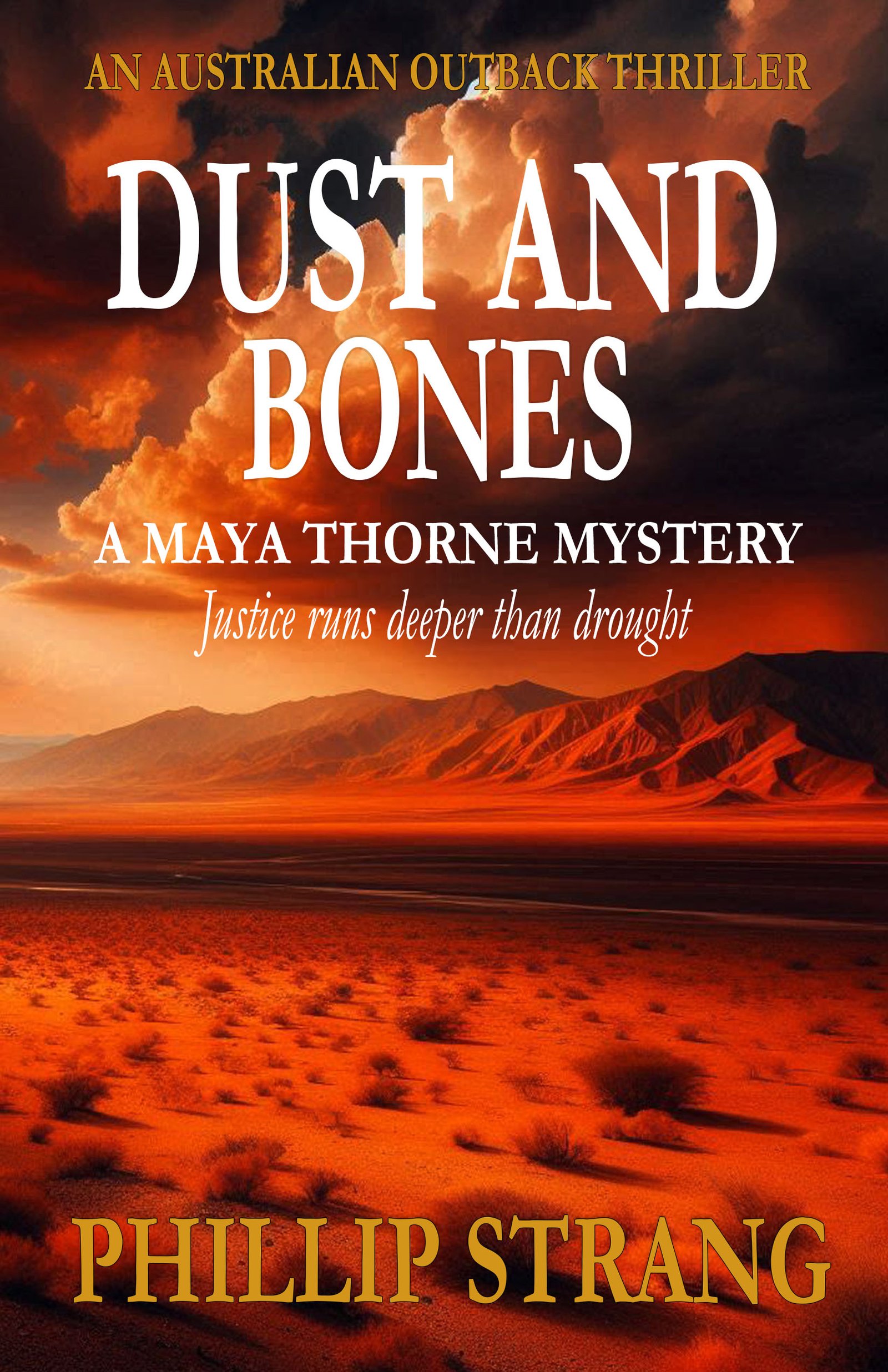
A MAYA THORNE MYSTERY
Get Dust and Bones Free
Justice runs deeper than drought.
Red dust. Shallow graves. A detective who hunts killers where the law runs thin and the nearest help is two hundred miles away.
Send Me the BookYou'll also receive occasional new release emails. Unsubscribe anytime. No spam, ever.
As an Amazon Associate, Phillip Strang earns from qualifying purchases. This page contains affiliate links — buying through them costs you nothing extra.