
The challenge of embedding morality in crime fiction lies not in deciding what’s right or wrong, but in allowing characters to wrestle with ethical complexity without turning your novel into a sermon. When a detective faces corruption within their own ranks or a criminal discovers an innocent victim in their crosshairs, the moral weight must emerge naturally from character and circumstance. The moment readers sense the author’s heavy hand pushing a particular ethical agenda, the story’s authenticity crumbles.
Across eighteen series and more than 150 novels, I’ve found that morality works best when it complicates rather than simplifies your plot. Characters who face genuine ethical dilemmas create tension that drives narrative forward, while those who simply choose between obvious good and evil generate little more than predictable outcomes.
Character-Driven Moral Complexity
The most effective approach to morality in crime fiction starts with characters who possess authentic moral frameworks that don’t always align with legal or social conventions. A police officer who bends rules to protect victims operates from a different ethical foundation than one who follows procedure regardless of consequences. Neither is inherently right or wrong—they’re human beings making choices based on their personal moral compass.
In my DCI Isaac Cook series, Cook frequently confronts situations where legal justice and moral justice diverge. Rather than presenting clear-cut answers, I allow him to struggle with these contradictions, making decisions that feel right to him while acknowledging the potential consequences. This approach creates characters who feel real because they grapple with the same moral ambiguity we face in actual life.
The key is avoiding characters who always make the ‘correct’ moral choice. Perfect moral paragons aren’t interesting—they’re insufferable. Give your protagonist ethical blind spots, personal biases, and moments where they choose the expedient path over the righteous one. These flaws don’t make them villains; they make them human.
Integrating Ethics Through Plot Structure
Morality shouldn’t be an add-on to your crime plot—it should be woven into the story’s DNA. The most compelling ethical dilemmas arise when doing the right thing actively conflicts with achieving the protagonist’s goals. A detective who must choose between saving a victim and capturing a killer faces a moral crossroads that advances plot while exploring ethical territory.
Consider structuring scenes so that moral choices have immediate plot consequences. When a character makes an ethical decision, that choice should ripple through subsequent events, creating new complications or opportunities. This technique ensures that morality serves the story rather than interrupting it. The best police procedural novels demonstrate this integration by making ethical choices plot drivers rather than philosophical sidebars.
Avoid the temptation to pause narrative flow for moral reflection. Characters can wrestle with ethics through action and dialogue without stopping to deliver internal monologues about right and wrong. Show moral struggle through behavior, through the weight of decisions, through consequences that unfold in real time.
How I Approach Moral Dilemmas
When crafting moral conflicts, I start by identifying what each character values most deeply, then create situations where those values clash with each other or with external pressures. A character who values loyalty above all else becomes interesting when loyalty to family conflicts with loyalty to justice. The tension between competing moral imperatives generates authentic drama.
I avoid telegraphing moral lessons or guiding readers toward specific ethical conclusions. Instead, I present complex situations and allow characters to navigate them according to their established moral frameworks. In my Maya Thorne series, the harsh realities of outback life often force characters into moral gray areas where survival trumps conventional ethics. Rather than judging these choices, I explore their consequences and let readers draw their own conclusions.
The most effective moral dilemmas emerge from character history and motivation rather than external moral codes. A former criminal turned private investigator faces different ethical challenges than a career police officer, and their responses should reflect those different backgrounds. Authenticity comes from characters acting according to their established moral DNA, not from conforming to universal ethical standards.
Common Pitfalls to Avoid
The greatest mistake writers make when incorporating morality into crime fiction is allowing their personal beliefs to override character authenticity. When every sympathetic character shares the author’s moral perspective while every antagonist embodies opposing views, the result feels manipulative rather than organic. A corrupt police captain might genuinely believe their actions protect the greater good, while a principled detective might make choices that harm innocent people.
Another trap involves creating scenarios where moral choices feel artificial or contrived. When characters face ethical dilemmas that exist solely to illustrate moral points, readers sense the authorial manipulation. Effective moral conflicts arise naturally from plot circumstances and character relationships, not from situations designed to prove philosophical points.
Beware of moral resolution that feels too neat or satisfying. Real ethical dilemmas rarely resolve cleanly, and crime fiction benefits from acknowledging this messiness. Characters who learn clear moral lessons or who find perfect ethical solutions undermine the complexity that makes morality compelling in the first place. The most powerful moral moments often involve characters making difficult choices without clear right answers.
Perhaps most importantly, resist the urge to punish characters for morally ambiguous choices through plot contrivances. If a detective bends rules to catch a killer, don’t immediately punish them with career consequences unless those consequences arise naturally from the story. Heavy-handed moral correction destroys the nuanced approach that makes character-driven novels effective.
Balancing Justice and Moral Ambiguity
Crime fiction often revolves around the pursuit of justice, but justice itself is morally complex. Legal justice, personal justice, and moral justice don’t always align, creating rich territory for exploration. A character who achieves legal justice through morally questionable means faces different challenges than one who pursues moral justice outside legal boundaries.
The most compelling crime fiction acknowledges that justice takes multiple forms and that achieving one type might preclude others. A detective who follows procedure might allow a dangerous criminal to escape, while one who breaks rules might compromise the entire investigation. Neither approach is inherently superior, but each carries distinct moral weight.
This complexity works best when it reflects the specific world you’ve created for your characters. The moral landscape of a small-town police department differs from that of a major crimes unit or international espionage agency. Characters should navigate ethical terrain appropriate to their professional and personal environment.
Conclusion
Effective morality in crime fiction emerges from character authenticity and plot integration rather than authorial messaging. When ethical dilemmas arise naturally from character motivation and story circumstances, they enhance rather than interrupt the narrative flow, creating the kind of moral complexity that keeps readers engaged long after they’ve finished your book.
About Phillip Strang
Phillip Strang is an Australian crime and thriller novelist. Across eighteen series and more than 150 novels, his work spans London police procedurals (DCI Isaac Cook), UK investigations (DI Tremayne), Australian outback crime (Maya Thorne), FBI thrillers (Alex Harlan), Scottish Highland mysteries (DI Sarah Lynch), and espionage (Steve Case). Learn more about Phillip or browse his complete catalogue on Amazon.
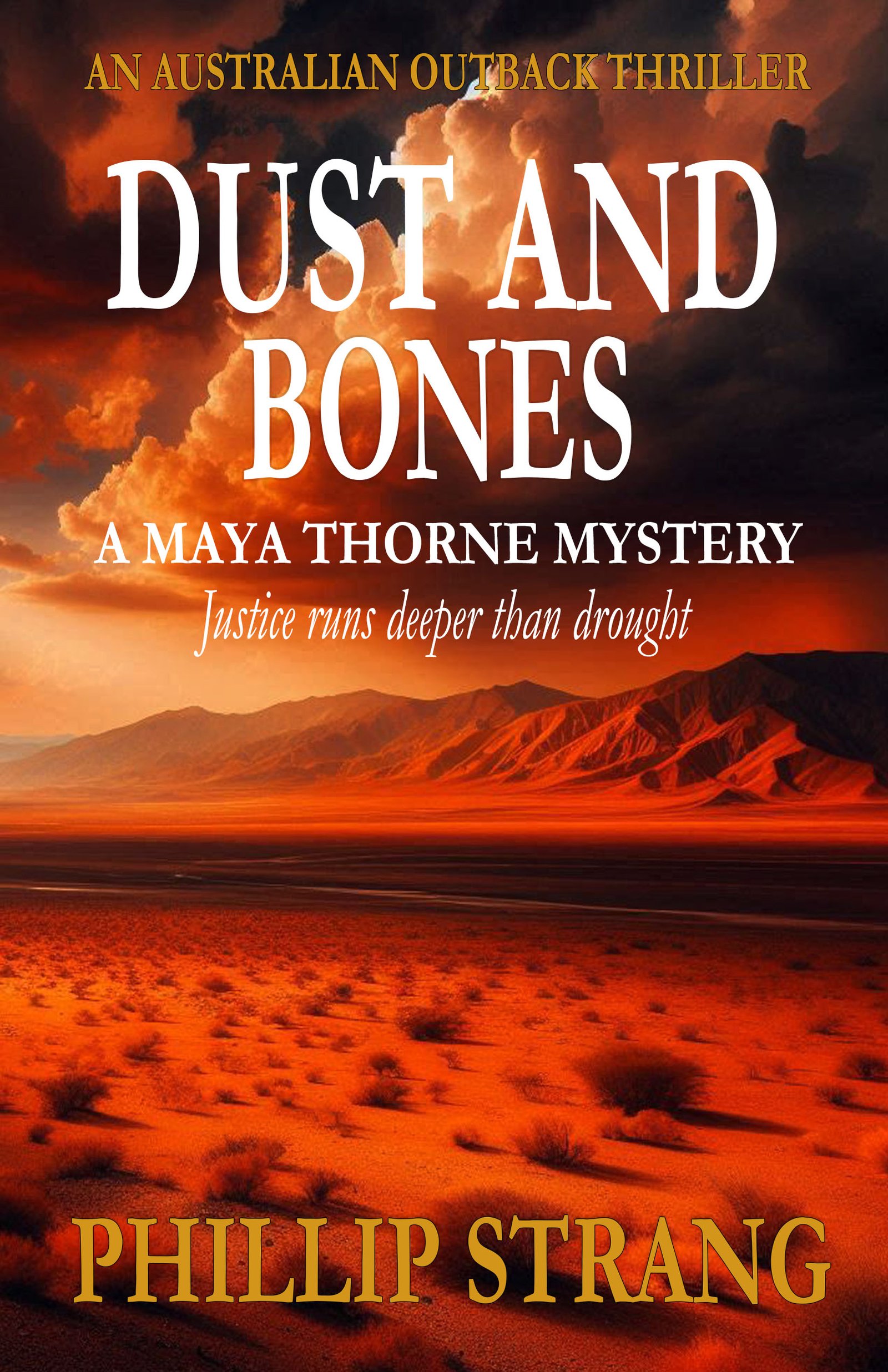
A MAYA THORNE MYSTERY
Get Dust and Bones Free
Justice runs deeper than drought.
Red dust. Shallow graves. A detective who hunts killers where the law runs thin and the nearest help is two hundred miles away.
Send Me the BookYou'll also receive occasional new release emails. Unsubscribe anytime. No spam, ever.
As an Amazon Associate, Phillip Strang earns from qualifying purchases. This page contains affiliate links — buying through them costs you nothing extra.