
The line between crime fiction and literary fiction isn’t disappearing—it’s being deliberately erased by writers who refuse to choose between compelling plots and elevated prose. This isn’t about literary authors slumming it in genre territory or crime writers putting on airs, but about recognising that the best crime fiction has always borrowed from literary tradition while maintaining its essential narrative drive.
Across eighteen series and more than 150 novels, I’ve found that the most satisfying crime fiction emerges when you stop treating literary techniques as foreign imports and start seeing them as natural tools for deepening character motivation, enriching atmosphere, and creating the kind of psychological complexity that makes readers return to your work long after they’ve forgotten whodunnit.
Character Psychology Over Plot Mechanics
The fundamental difference between purely commercial crime fiction and work that straddles literary territory lies in how you approach character psychology. Instead of creating investigators who exist primarily to move the plot forward, you’re building people whose internal contradictions and unresolved conflicts drive the investigation in unexpected directions.
In my DI Sarah Lynch series, set in the Scottish Highlands, Lynch’s complicated relationship with her own past becomes as central to each investigation as the crimes themselves. Her personal demons aren’t subplot decoration—they actively influence how she interprets evidence, which witnesses she trusts, and where her instincts lead her astray. This isn’t about adding backstory for its own sake, but about recognising that flawed perception creates both character depth and investigative complexity.
The key is ensuring that psychological exploration never stops the forward momentum. Every moment of introspection, every exploration of a character’s deeper motivations, must also advance our understanding of the central mystery. When done properly, character psychology and plot mechanics become indistinguishable.
Language That Serves Both Atmosphere and Information
Literary fiction’s emphasis on language quality doesn’t mean purple prose or showing off your vocabulary—it means every sentence pulls double duty. Your descriptions of crime scenes need to establish mood while conveying crucial evidence. Your dialogue must reveal character while advancing the investigation.
Consider how you handle exposition. Commercial crime fiction often delivers information through straightforward dialogue or internal monologue. Work that crosses into literary territory embeds the same information in sensory detail, metaphor, and subtext. When your detective examines a murder scene, the way they perceive and describe what they’re seeing tells us as much about their state of mind as it does about the victim’s final moments.
This approach demands more from your prose, but it also creates opportunities for deeper reader engagement. Instead of simply absorbing facts about the investigation, readers are interpreting layers of meaning, making them active participants in both the mystery and the character study unfolding alongside it.
How I Approach the Genre Blend
When I’m developing a new story, I start with the crime but immediately ask what larger human questions the investigation will illuminate. In the Maya Thorne series, set in the Australian outback, each mystery becomes a lens for examining how isolation affects human behaviour, how community secrets fester across generations, and how the harsh landscape shapes the people who choose to live there.
The trick is building these themes into the investigation itself rather than layering them on top. The isolation isn’t just atmospheric background—it directly affects how crimes are committed, how evidence is preserved or destroyed, and how witnesses behave. The generational secrets don’t just provide context—they’re often the motive, the method, or the means of covering up contemporary crimes.
I’ve learned to trust that readers of police procedural novels are capable of handling complexity. They don’t need every psychological insight spelled out or every thematic connection made explicit. In fact, some of the most powerful moments come when readers make those connections themselves, when they suddenly understand not just what happened but why it was inevitable given the characters and circumstances you’ve established.
Avoiding Common Pitfalls
The biggest mistake I see writers make when attempting this blend is treating literary elements as optional extras rather than integral components. They’ll write a straightforward procedural and then try to add depth through lengthy flashbacks or philosophical musings that stop the story dead. This approach satisfies neither crime fiction readers nor literary fiction enthusiasts.
Another trap is overcompensating with deliberately obscure prose or unnecessarily complex narrative structures. I’ve read manuscripts where writers seem to believe that literary credibility requires making their work difficult to follow. The best examples of crime fiction that achieves literary recognition do so through clarity of vision and precision of language, not through obfuscation.
Pacing presents its own challenges. Literary fiction traditionally allows for a more leisurely pace, more time for reflection and internal exploration. Crime fiction demands forward momentum. The solution isn’t to split the difference but to find ways to maintain tension even during quieter, more introspective moments. Every scene of character development should also create new questions about the central mystery or complicate our understanding of what we think we already know.
Writers also struggle with the question of resolution. Character-driven novels often end with emotional rather than plot resolution, while crime fiction traditionally provides clear answers to its central questions. The most successful blend does both—solving the immediate mystery while leaving readers with deeper questions about human nature and moral complexity that extend beyond the final page.
The Reader’s Role in Genre Evolution
Publishers and critics may still maintain rigid category boundaries, but readers have moved beyond them. They’re equally comfortable with a literary novel that happens to involve a crime and a crime novel that happens to achieve literary depth. What they won’t tolerate is work that fails to deliver on its implicit promises, whether that’s a compelling mystery or meaningful character development.
This shift creates opportunities for writers willing to work harder on every aspect of their craft. Instead of choosing between plot and character, between entertainment and insight, between commercial appeal and artistic ambition, you can pursue all of these goals simultaneously. It requires more skill and more revision, but it also creates the possibility of reaching readers across traditional genre boundaries.
The key is understanding that literary quality isn’t about following particular conventions or avoiding genre elements—it’s about bringing depth, precision, and genuine insight to whatever story you’re telling. A well-crafted murder mystery that illuminates something true about human nature has as much claim to literary consideration as any other form of serious fiction.
Conclusion
The boundaries between crime fiction and literary fiction blur most successfully when writers stop seeing them as opposing forces and start treating them as complementary tools for creating deeper, more engaging stories that satisfy both our need for narrative resolution and our hunger for genuine insight into human nature.
About Phillip Strang
Phillip Strang is an Australian crime and thriller novelist. Across eighteen series and more than 150 novels, his work spans London police procedurals (DCI Isaac Cook), UK investigations (DI Tremayne), Australian outback crime (Maya Thorne), FBI thrillers (Alex Harlan), Scottish Highland mysteries (DI Sarah Lynch), and espionage (Steve Case). Learn more about Phillip or browse his complete catalogue on Amazon.
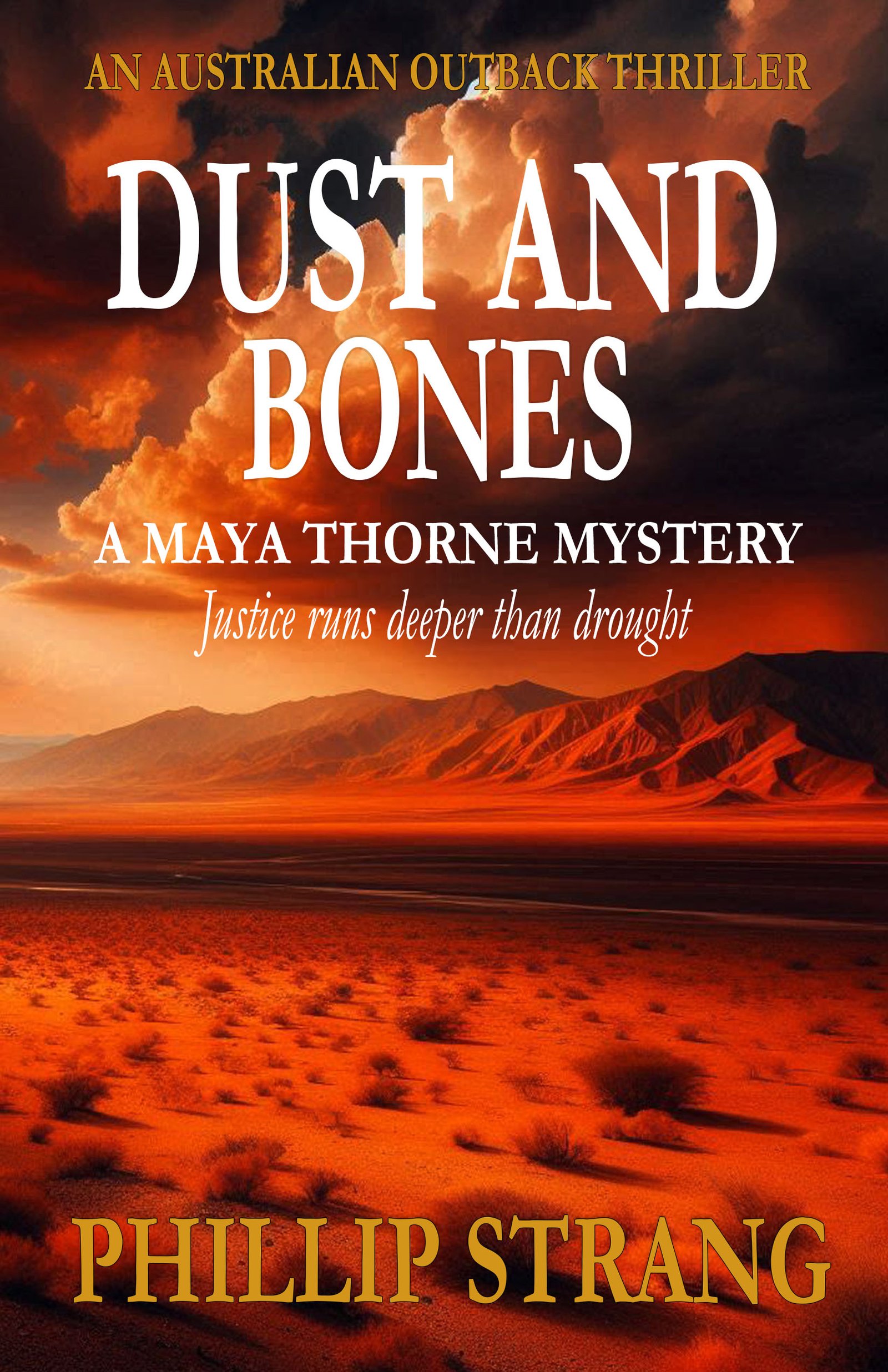
A MAYA THORNE MYSTERY
Get Dust and Bones Free
Justice runs deeper than drought.
Red dust. Shallow graves. A detective who hunts killers where the law runs thin and the nearest help is two hundred miles away.
Send Me the BookYou'll also receive occasional new release emails. Unsubscribe anytime. No spam, ever.
As an Amazon Associate, Phillip Strang earns from qualifying purchases. This page contains affiliate links — buying through them costs you nothing extra.