
Crime short stories operate under fundamentally different narrative physics than novels, yet most crime writers approach them as miniaturized versions of their longer work. This assumption destroys more promising short fiction than any other single mistake. The compressed timeframe, singular focus, and immediate impact required in short crime fiction demand techniques that would cripple a novel.
Across eighteen series and more than 150 novels, I have found that the writers who excel at both forms understand they are crafting entirely different creatures. When I shifted from writing my DCI Isaac Cook novels to developing crime short stories, I had to unlearn half of what made my longer fiction successful.
The Economics of Revelation
Novels thrive on the gradual accumulation of evidence, character development across multiple scenes, and the luxury of misdirection. Crime short stories demand what I call ‘revelation economics’ – every sentence must either advance the mystery or deepen character in service of the central crime. You cannot afford the leisurely establishment that opens most novels. The reader must understand the stakes, the crime, and care about the outcome within the first two paragraphs.
In novel-length fiction, particularly in police procedural novels, you can spend chapters building the investigative team’s dynamics. In short crime fiction, character relationships must be established through action and dialogue that simultaneously drives the plot. There is no time for backstory unless it directly illuminates the current crime. This constraint forces precision that many novelists find uncomfortable.
The Single Twist Architecture
Novels can support multiple plot reversals, red herrings, and complex investigative threads. Crime short stories live or die on what I call single twist architecture. You have space for one major revelation, and everything in the story must serve that moment. The twist cannot be arbitrary – it must recontextualize everything the reader has experienced while feeling inevitable in hindsight.
This architectural difference affects every structural choice. Where my Maya Thorne novels can explore multiple suspects across the Australian outback, weaving together various motives and alibis, a crime short story must focus laser-tight on the elements that serve the singular revelation. Every character introduced must contribute to either the setup or the payoff of that central twist.
Dialogue as Primary Investigation Tool
In novels, you can balance dialogue with extensive internal monologue, detailed scene-setting, and lengthy investigative sequences. Crime short stories compress investigation into dialogue and immediate action. Characters must reveal crucial information, establish relationships, and advance the mystery through what they say and how they say it, not through lengthy exposition or investigative montages.
The dialogue in short crime fiction carries triple duty: character development, plot advancement, and clue delivery. This intensity means every conversation must crackle with subtext. Characters cannot simply exchange information – they must reveal personality, motivation, and crucial plot points simultaneously. This compression creates a different rhythm than novel dialogue, which can afford more naturalistic pacing.
How I Actually Approach Crime Short Stories
My process for short crime fiction reverses my novel approach entirely. With novels like my Alex Harlan series, I begin with character and setting, then develop the crime around those elements. For crime short stories, I start with the twist – the single moment of revelation that will reframe everything. I work backwards from that moment, ensuring every element serves it.
I write the ending first, then craft the opening to plant exactly the right expectations. The middle exists solely to maintain tension while delivering the clues the reader needs for the ending to feel earned. This reverse engineering approach prevents the wandering that kills short crime fiction. When working within action thriller constraints, every paragraph must justify its existence.
I also read my short crime fiction aloud more than my novels. The compressed form demands immediate rhythm and pace that becomes obvious when spoken. Clunky transitions, overwrought descriptions, or dialogue that does not advance the central mystery reveal themselves quickly through audio testing.
Fatal Mistakes That Destroy Crime Short Stories
The most common error is treating short crime fiction as a novel’s opening chapter. Writers establish elaborate settings, introduce multiple suspects, and begin complex investigative procedures that require novel-length space to resolve satisfyingly. A crime short story beginning with ‘Detective Morrison had seen thirty years of homicides in the precinct’ signals a writer thinking in novel rhythms rather than short fiction compression.
Another destroyer is the multiple revelation structure. Writers attempt to layer several twists or red herrings, creating confusion rather than clarity. A story that reveals the victim was having an affair, the business partner was embezzling, and the neighbor had a grudge simply cannot develop any of these elements sufficiently in short form. The result feels rushed and unsatisfying rather than tightly plotted.
Overwriting descriptions kills momentum in short crime fiction. While novels can afford atmospheric establishment, crime short stories must integrate setting details into action. Instead of ‘The abandoned warehouse stretched across three city blocks, its broken windows reflecting the gray afternoon light,’ effective short crime fiction embeds setting: ‘Sarah stepped through the warehouse window frame, glass crunching under her feet as she followed the blood trail.’ The setting serves the immediate mystery rather than existing for atmospheric effect.
The Intensity Advantage
Despite these constraints, crime short stories offer advantages unavailable to novels. The compressed timeframe creates natural urgency that novels must work to establish and maintain. Readers expect immediate engagement and resolution, allowing writers to maintain high-tension pacing throughout. The single-sitting reading experience means every element remains vivid in the reader’s mind, making subtle clues and callbacks more effective than in novels where weeks might pass between chapters.
Short crime fiction also allows experimentation with narrative techniques that might feel gimmicky across novel length. Unusual points of view, compressed timeframes, or experimental structures work effectively in short form because they only need to sustain reader engagement for minutes rather than hours. This flexibility makes crime short stories excellent laboratories for developing techniques that might later expand into novel-length approaches.
Conclusion
Crime short stories and novels are distinct art forms requiring different skills, different structures, and different approaches to character, plot, and pacing. Success in one form does not guarantee success in the other. Understanding and embracing these differences, rather than fighting them, separates effective short crime fiction from failed attempts at miniaturized novels.
About Phillip Strang
Phillip Strang is an Australian crime and thriller novelist. Across eighteen series and more than 150 novels, his work spans London police procedurals (DCI Isaac Cook), UK investigations (DI Tremayne), Australian outback crime (Maya Thorne), FBI thrillers (Alex Harlan), Scottish Highland mysteries (DI Sarah Lynch), and espionage (Steve Case). Learn more about Phillip or browse his complete catalogue on Amazon.
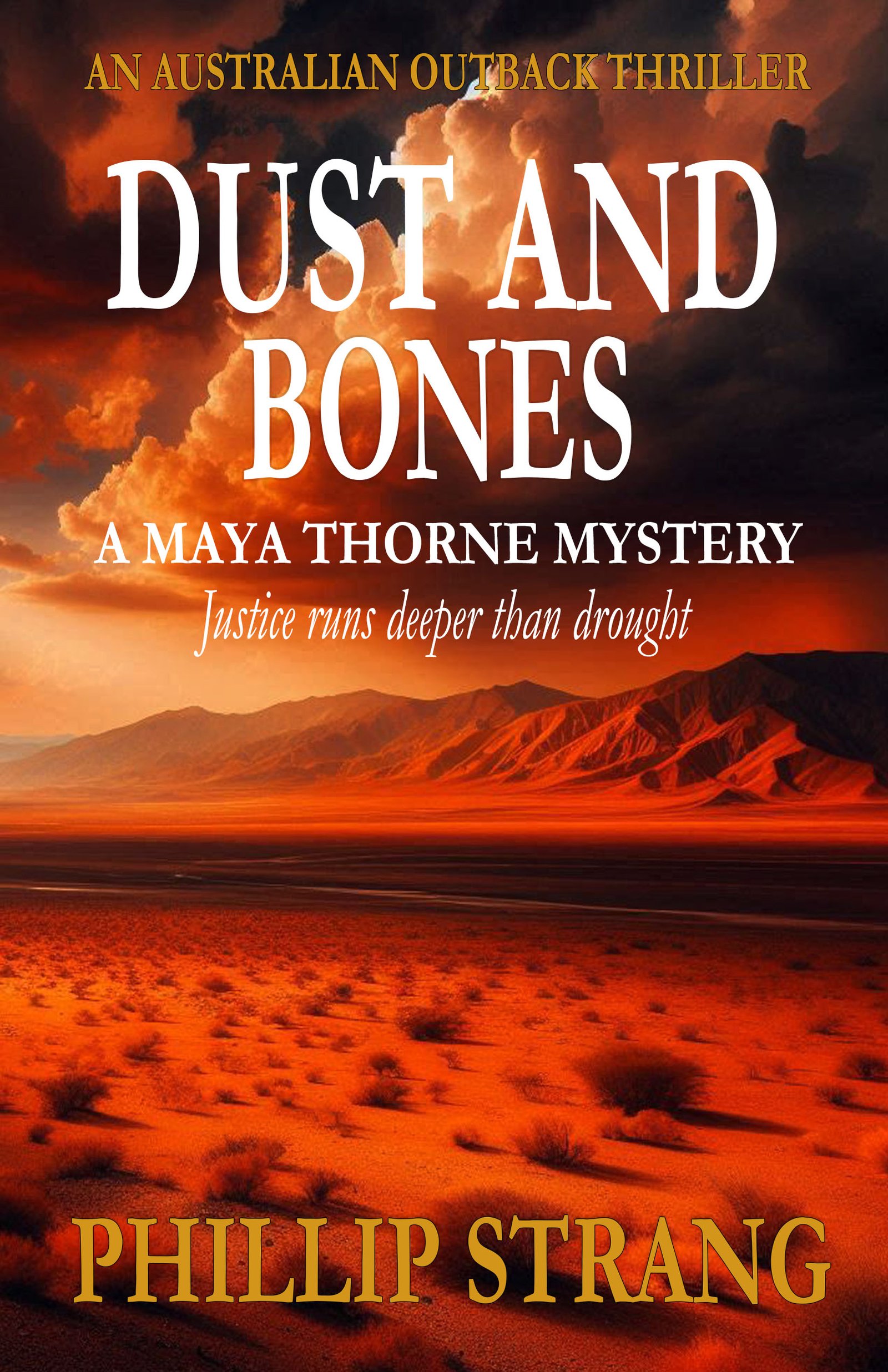
A MAYA THORNE MYSTERY
Get Dust and Bones Free
Justice runs deeper than drought.
Red dust. Shallow graves. A detective who hunts killers where the law runs thin and the nearest help is two hundred miles away.
Send Me the BookYou'll also receive occasional new release emails. Unsubscribe anytime. No spam, ever.
As an Amazon Associate, Phillip Strang earns from qualifying purchases. This page contains affiliate links — buying through them costs you nothing extra.