
Crime fiction operates within unspoken boundaries that authors cross at their peril. Understanding which taboos readers will tolerate—and which will send them fleeing—determines whether your psychological thriller becomes compelling or simply repulsive.
Across eighteen series and more than 150 novels, I’ve discovered that reader tolerance isn’t about moral squeamishness but about emotional investment and narrative purpose. The moment a taboo feels gratuitous rather than essential, you’ve lost your audience permanently.
The Hierarchy of Acceptable Violence
Violence against different victim types exists within a strict hierarchy of reader acceptance. Adults murdering other adults remains the bread and butter of crime fiction, but step outside these bounds and tolerance drops dramatically. Violence against children sits at the absolute bottom of acceptability, requiring extraordinary narrative justification and extreme delicacy in execution.
I’ve found that readers will accept child endangerment when it serves character development or plot advancement, but graphic depictions cross an unforgivable line. In my DI Tremayne series, I’ve dealt with cases involving missing children, but the violence always occurs off-page, with emotional aftermath driving the investigation rather than explicit detail driving shock value.
Animal cruelty presents another minefield. Readers who’ll happily consume detailed human autopsy scenes will abandon a book over graphic animal abuse. The emotional response differs fundamentally—humans chose their dangerous lives, but animals remain innocent victims. This applies equally to domestic pets and wildlife, though readers show marginally more tolerance for violence against predatory animals when survival is at stake.
Sexual Violence and the Trust Contract
Sexual assault remains perhaps the most challenging taboo to navigate successfully. Reader acceptance depends entirely on purpose, execution, and aftermath treatment. When sexual violence serves as mere plot device or character backstory without proper exploration of consequences, readers revolt. When it drives genuine character development and receives thoughtful treatment, readers will engage.
The key lies in understanding that depicting sexual violence creates a trust contract with readers. They’re trusting you to handle traumatic subject matter responsibly, not exploitatively. This means focusing on emotional aftermath rather than graphic detail, showing genuine consequences rather than miraculous recovery, and ensuring the violence serves the story rather than sensationalizing trauma.
Many successful police procedural novels handle sexual assault cases by concentrating on investigative procedure and victim advocacy rather than assault details. The crime’s impact matters more than its explicit depiction.
How I Navigate Controversial Territory
When I’m writing scenes that approach taboo territory, I apply a three-question test that’s served me well across multiple series. First: does this scene advance plot or character development in ways that couldn’t be achieved through less controversial means? If the answer is no, I cut it immediately. Shock value alone never justifies crossing reader boundaries.
Second: am I treating the subject matter with appropriate gravity and respect for real-world victims? Crime fiction draws from genuine human tragedy, and authors carry responsibility not to trivialize that suffering. In my Alex Harlan series, dealing with FBI cases involving serious crimes, I constantly balance authenticity with sensitivity.
Third: will this scene enhance or diminish reader investment in my characters? Readers must maintain emotional connection to protagonists, and certain actions can permanently sever that bond. A detective who shows callousness toward victims, or worse, who crosses ethical lines without consequences, loses reader sympathy irretrievably.
I’ve learned to trust my instinctive discomfort as a warning signal. When I feel uneasy writing a scene, that usually indicates I’m approaching territory that requires extra justification and careful handling. Sometimes that discomfort signals I should push forward thoughtfully; other times it warns me to pull back entirely.
Common Mistakes That Kill Reader Trust
The most damaging mistake involves using taboo subjects as cheap emotional manipulation. Authors who throw in sexual assault, child endangerment, or extreme violence purely for shock value always get caught. Readers recognize manipulation immediately, and they punish it by abandoning not just the current book but the entire series.
Another frequent error is underestimating the emotional aftermath of traumatic events. Characters who experience or witness horrific crimes yet continue functioning normally break the believability contract. Real trauma has lasting consequences, and fiction that ignores this reality feels hollow and insensitive.
Perhaps the worst mistake is creating victims who exist solely to suffer. When characters lack agency, personality, or purpose beyond experiencing violence, they become objects rather than people. This objectification particularly affects female victims in crime fiction, where women sometimes appear only to be murdered, assaulted, or rescued.
Many authors also misjudge their audience’s tolerance for graphic description. Readers’ imaginations often create more powerful impact than explicit detail. Describing a crime scene’s emotional atmosphere rather than its physical gore frequently proves more effective. The detective’s reaction to horror can convey more than cataloguing that horror in clinical detail.
Finally, some authors mistake controversy for depth. Pushing boundaries doesn’t automatically create meaningful fiction. The best action thriller novels achieve impact through character development and plot sophistication, not through increasingly extreme content.
Cultural and Genre Expectations
Reader tolerance for taboo subjects varies significantly across crime fiction subgenres. Cozy mystery readers expect entirely different boundaries than psychological thriller audiences. Nordic noir enthusiasts accept darker material than traditional British detective story fans. Understanding your specific readership’s expectations prevents catastrophic miscalculations.
Cultural context also affects acceptance levels. American readers show different tolerance patterns than British, Australian, or European audiences. Religious themes, political corruption, and social issues that seem acceptable in one market can cause offense in another. This becomes particularly relevant for authors publishing internationally or writing series set in different countries.
Historical crime fiction operates under modified rules, where period-appropriate attitudes must be balanced against contemporary reader sensibilities. Depicting historical prejudices accurately while maintaining modern reader engagement requires delicate navigation. The key lies in neither excusing historical attitudes nor judging them by contemporary standards, but in presenting them as authentic products of their time.
In my Maya Thorne series, set in the Australian outback, I must balance authentic regional attitudes with broader reader expectations. Local customs and social dynamics that feel natural to Australian readers might require additional context for international audiences.
Conclusion
Successfully navigating crime fiction taboos requires understanding that reader boundaries exist for emotional, not moral reasons. Respect those boundaries by ensuring controversial content serves genuine narrative purpose, treating traumatic subjects with appropriate gravity, and maintaining character believability throughout. When you honor these principles, readers will follow you into surprisingly dark territory.
About Phillip Strang
Phillip Strang is an Australian crime and thriller novelist. Across eighteen series and more than 150 novels, his work spans London police procedurals (DCI Isaac Cook), UK investigations (DI Tremayne), Australian outback crime (Maya Thorne), FBI thrillers (Alex Harlan), Scottish Highland mysteries (DI Sarah Lynch), and espionage (Steve Case). Learn more about Phillip or browse his complete catalogue on Amazon.
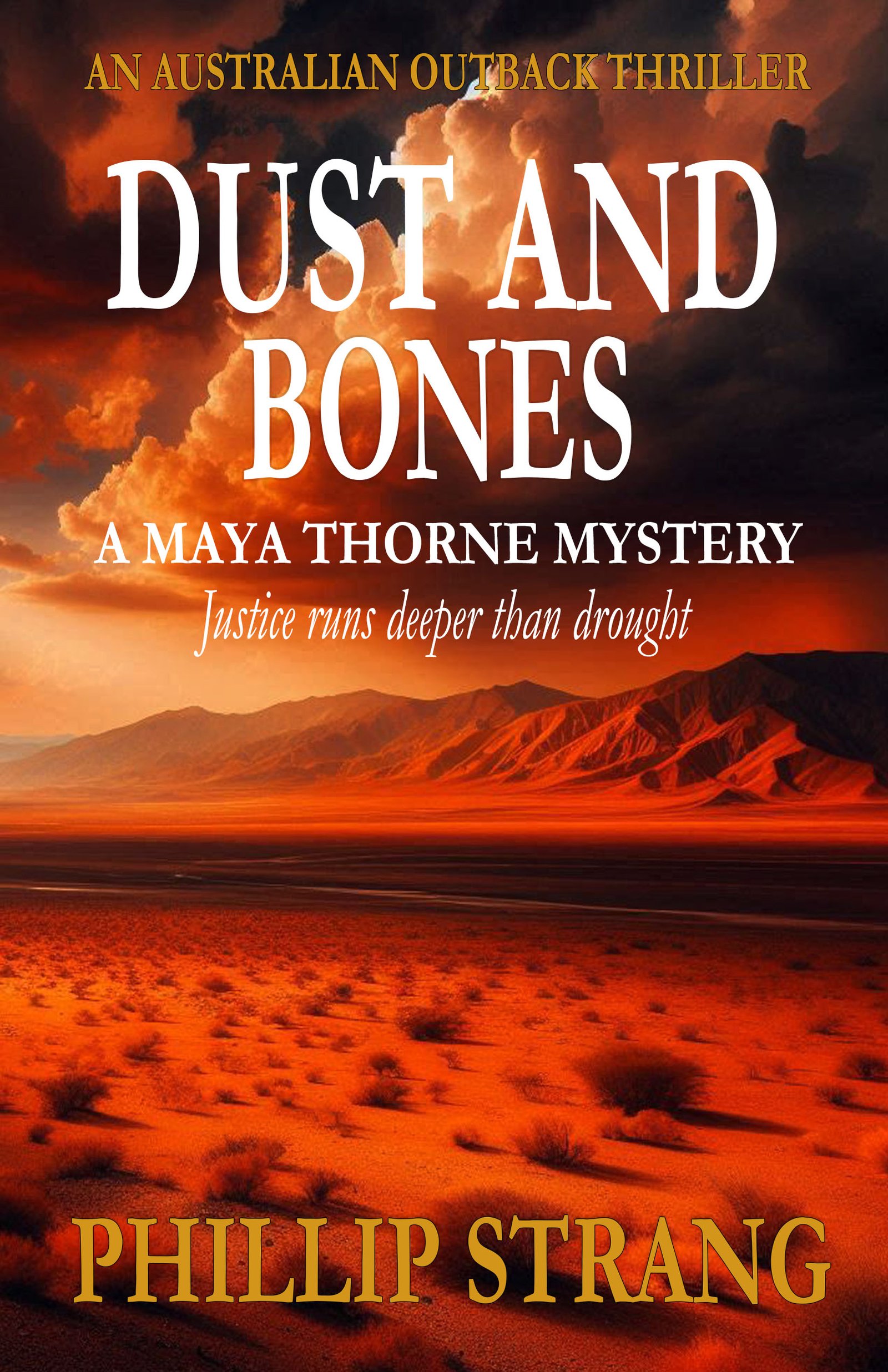
A MAYA THORNE MYSTERY
Get Dust and Bones Free
Justice runs deeper than drought.
Red dust. Shallow graves. A detective who hunts killers where the law runs thin and the nearest help is two hundred miles away.
Send Me the BookYou'll also receive occasional new release emails. Unsubscribe anytime. No spam, ever.
As an Amazon Associate, Phillip Strang earns from qualifying purchases. This page contains affiliate links — buying through them costs you nothing extra.