
Seaside towns possess an inherent duality that makes them irresistible to crime writers. The postcard veneer of holiday charm conceals undercurrents of transience, seasonal desperation, and moral ambiguity that can drive the darkest narratives. When wielded skillfully, coastal settings become more than backdrop—they transform into active participants in the crime itself.
The question isn’t whether to use a seaside town, but how to exploit its unique characteristics without falling into tired clichés. Across eighteen series and more than 150 novels, I’ve found that coastal settings demand a specific approach to character motivation, plot structure, and atmospheric tension that differs markedly from urban or rural crime fiction.
The Economics of Coastal Crime
Seaside towns operate on boom-bust cycles that create natural pressure points for criminal activity. Tourist seasons bring cash flows, temporary workers, and transient populations that can disappear without notice. The off-season reveals economic desperation, empty properties, and tight-knit communities turned inward. This economic volatility provides ready-made motives that feel organic rather than contrived.
In developing my DI Sarah Lynch series, I discovered that Highland coastal communities possess their own version of this dynamic. The tension between tourism revenue and local resentment creates conflicts that simmer beneath polite surfaces. Your fictional seaside town needs its own economic reality—fishing industry decline, gentrification pressure, seasonal employment struggles—that drives character decisions beyond simple greed or passion.
The key is understanding that effective police procedurals require believable social structures. Seaside economics create natural hierarchies: property developers, established families, service workers, and seasonal migrants. Each group has different stakes in maintaining or disrupting the status quo.
Seasonal Architecture of Suspense
Coastal settings offer built-in temporal frameworks that urban crime fiction must work harder to achieve. Peak season brings crowds, witnesses, and constant activity that can hide crimes in plain sight. Shoulder seasons create uncertainty—half-empty towns where strangers are noticed but not necessarily remembered. Winter isolation strips away pretense and forces confrontations.
I structure many of my coastal investigations around these seasonal shifts. A murder discovered in October carries different implications than one found in July. Evidence preservation changes with weather patterns. Witness availability fluctuates with tourist calendars. These aren’t mere atmospheric details—they’re plot mechanics that seaside settings provide naturally.
The mistake many writers make is treating seasons as mood lighting rather than structural elements. Weather affects forensics, tides alter crime scenes, and seasonal business cycles change who’s present and what they’re doing. Your plot timeline must account for these realities or risk feeling disconnected from its setting.
Community Dynamics and Insider Knowledge
Seaside communities develop distinct social hierarchies based on longevity, local knowledge, and seasonal survival skills. Multi-generational families hold unofficial authority through property ownership and historical knowledge. Recent arrivals—whether wealthy retirees or economic refugees—occupy uncertain positions that create natural tension.
This social complexity serves crime fiction particularly well because it provides multiple layers of secrets and loyalties. Local law enforcement often finds itself caught between protecting tourism revenue and investigating crimes that might damage the town’s reputation. The resulting conflicts feel authentic because they reflect real coastal community dynamics.
When writing my Maya Thorne series set in Australia’s remote coastal regions, I’ve learned that isolation amplifies these community tensions. Everyone knows everyone’s business, but that knowledge creates complicity rather than transparency. Your detective—whether local or outsider—must navigate these relationships carefully.
Physical Environment as Character
Coastal settings provide natural metaphors for the hidden depths beneath surface appearances, but effective crime writers must move beyond obvious symbolism. Tides, weather patterns, and geographical isolation create practical challenges that shape both criminal opportunity and investigative procedure. Rocky coastlines hide bodies differently than sandy beaches. Harbor towns have different criminal networks than resort communities.
The physical environment must serve story function, not just atmosphere. Fog doesn’t just create mood—it affects witness testimony and timeline establishment. Cliff paths don’t just symbolize danger—they limit escape routes and create specific forensic challenges. Harbors don’t just evoke maritime romance—they provide smuggling opportunities and boat-based alibis.
I approach coastal geography as infrastructure for crime rather than scenic dressing. Each geographical feature should suggest specific criminal possibilities or investigative complications. This practical approach prevents the setting from becoming mere tourist brochure copy and integrates it meaningfully into the plot mechanics.
Common Pitfalls in Coastal Crime Writing
The most frequent mistake in seaside crime fiction is relying on superficial coastal imagery without understanding the underlying social and economic realities. Writers often default to ‘quaint fishing village with dark secrets’ without considering what those secrets might realistically be or how they’d actually function. A declining fishing industry doesn’t automatically generate murder motives—but it might create smuggling opportunities, insurance fraud, or conflicts over waterfront development rights.
Another significant error involves treating all coastal communities as interchangeable. A Maine lobster town operates differently from a Florida resort community or a Cornwall fishing village. Each has distinct economic pressures, social hierarchies, and criminal opportunities. Your fictional seaside town needs specific characteristics that justify its particular crimes and investigative challenges.
Weather and tides often become convenient plot devices rather than consistent environmental factors. If your story relies on fog at a crucial moment, that fog must be meteorologically plausible for your location and season. If tides affect evidence discovery, you need to understand actual tidal patterns rather than using them arbitrarily. Readers familiar with coastal living will notice inconsistencies that undermine narrative credibility.
The outsider detective arriving to solve local mysteries has become a tired trope unless handled with genuine understanding of how coastal communities actually respond to external authority. Real seaside towns have complex relationships with outside law enforcement that go beyond simple resistance or cooperation. Effective thrillers acknowledge these nuances rather than defaulting to standard fish-out-of-water dynamics.
Conclusion
Seaside towns work in crime fiction because they compress urban complexity into manageable spaces while providing natural isolation and seasonal structure. The key lies in understanding their specific social and economic realities rather than relying on romanticized coastal imagery. When properly developed, these settings become integral to both criminal motivation and investigative procedure, creating stories that couldn’t happen anywhere else.
About Phillip Strang
Phillip Strang is an Australian crime and thriller novelist. Across eighteen series and more than 150 novels, his work spans London police procedurals (DCI Isaac Cook), UK investigations (DI Tremayne), Australian outback crime (Maya Thorne), FBI thrillers (Alex Harlan), Scottish Highland mysteries (DI Sarah Lynch), and espionage (Steve Case). Learn more about Phillip or browse his complete catalogue on Amazon.
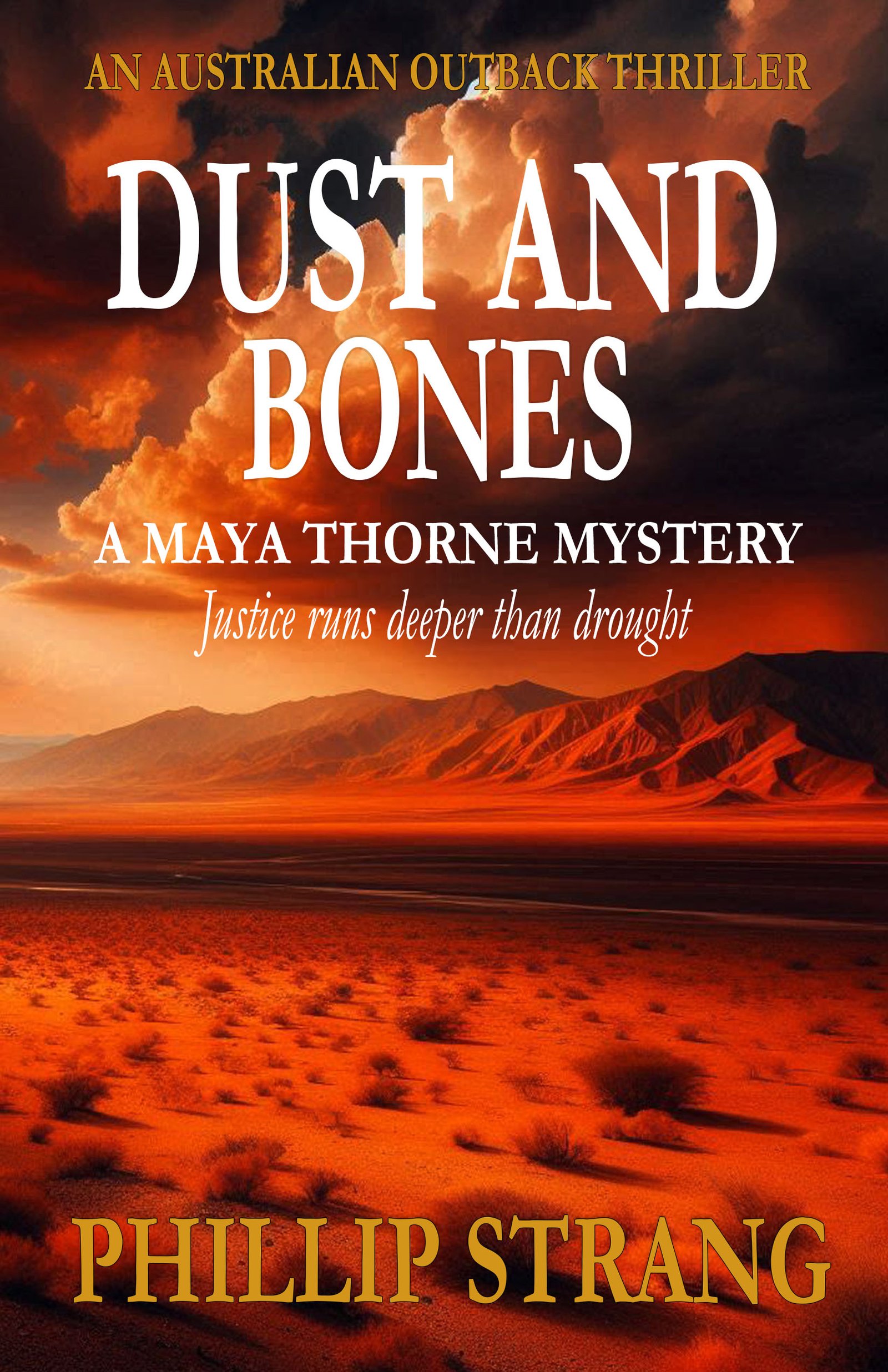
A MAYA THORNE MYSTERY
Get Dust and Bones Free
Justice runs deeper than drought.
Red dust. Shallow graves. A detective who hunts killers where the law runs thin and the nearest help is two hundred miles away.
Send Me the BookYou'll also receive occasional new release emails. Unsubscribe anytime. No spam, ever.
As an Amazon Associate, Phillip Strang earns from qualifying purchases. This page contains affiliate links — buying through them costs you nothing extra.