
Australian Crime Fiction Settings: Regional Diversity presents writers with a storytelling advantage that few other genres or geographies can match. The continent’s vast landscapes, isolated communities, and stark contrasts between urban sophistication and rural rawness create natural dramatic tension that elevates crime narratives beyond simple procedural formulas.
Across eighteen series and more than 150 novels, I’ve discovered that Australian settings don’t just provide backdrop—they become active participants in the crime itself, shaping both the nature of criminal acts and the methods required to solve them.
The Outback as Character and Catalyst
The Australian outback functions as more than scenery in crime fiction. It’s an environment that strips away urban conveniences, forcing both criminals and investigators to operate under fundamentally different rules. In my Maya Thorne series, the isolation of small mining towns creates perfect conditions for crimes that would be impossible in metropolitan areas. Bodies can disappear for decades. Witnesses vanish into the vastness. Traditional forensic approaches fail when the nearest lab is eight hundred kilometers away.
The outback’s harsh environment also shapes character psychology in ways that urban settings cannot. People who choose to live in isolation often carry secrets, and communities that depend on each other for survival develop complex codes of silence. These aren’t romantic notions—they’re practical realities that create authentic conflict for crime writers willing to engage with them seriously.
Urban Complexity Versus Regional Authenticity
Sydney and Melbourne offer sophisticated urban crime opportunities, but Australia’s regional cities provide something more valuable: authentic community dynamics where everyone knows everyone else’s business, yet crucial information still gets buried. Unlike the anonymity of major metropolitan areas, regional Australian settings force investigators to navigate personal relationships, family histories, and local politics that stretch back generations.
The key craft principle here is understanding that smaller communities don’t mean simpler crimes. They mean more complex motivations and more intricate cover-ups. When I develop regional Australian crime scenarios, I focus on how geographic isolation intensifies personal conflicts rather than diminishing them. The same domestic dispute that might result in a restraining order in Brisbane becomes a multi-generational vendetta in a town of three thousand people where both families have lived for sixty years.
Leveraging Australian Crime Fiction Settings: Regional Diversity in Plot Construction
Smart crime writers use Australia’s geographic diversity to create plot constraints that generate genuine tension. The monsoon season in the Northern Territory doesn’t just affect weather—it determines when crimes can be committed, how evidence degrades, and which investigative techniques remain viable. The bushfire season transforms entire regions into potential crime scenes where arson becomes indistinguishable from natural disaster.
I’ve learned to build these environmental factors into plot structure from the opening chapter. In tropical Queensland settings, the wet season creates natural deadlines: solve the case before the roads flood and witnesses become unreachable. In South Australian wine country, harvest season brings temporary workers, seasonal tensions, and opportunities for crimes that depend on specific agricultural timing.
This approach works because it grounds fantastical crime scenarios in recognizable Australian realities. Readers understand instinctively that certain crimes become possible or impossible based on geographic and seasonal factors, making even elaborate plots feel authentic.
Common Pitfalls in Regional Australian Crime Writing
The biggest mistake writers make with Australian regional settings is treating them as exotic curiosities rather than lived environments. Dropping urban characters into outback settings and expecting the landscape to do the dramatic work leads to superficial crime stories that read like tourism brochures with bodies.
Another frequent error is assuming that rural isolation automatically creates suspense. Isolation without purpose becomes tedious. The remoteness must serve the crime’s logic—either enabling it, complicating its investigation, or intensifying its consequences for the community involved. Simply placing a murder in Alice Springs instead of Adelaide doesn’t automatically improve the story unless the Alice Springs setting provides plot elements that Adelaide couldn’t.
Writers also tend to romanticize or demonize regional Australia rather than presenting it with the same complexity they’d apply to urban settings. Small towns aren’t inherently more virtuous or more corrupt than cities—they’re different systems with different pressures, opportunities, and constraints. The best police procedural novels understand that investigating crime in Broken Hill requires different skills than investigating crime in Melbourne, but both environments contain equally sophisticated criminals and equally dedicated investigators.
Practical Techniques for Regional Authenticity
When I’m developing regional Australian crime settings, I focus on economic realities first. What industries support this community? How do people actually make money? What happens when those economic foundations shift? Mining boom towns, agricultural regions facing drought, and coastal communities dealing with tourism pressures all generate different types of crime and different investigative challenges.
The second critical element is understanding communication patterns in regional areas. Information travels differently in communities where everyone shops at the same store, drinks at the same pub, and sends their children to the same school. Gossip becomes intelligence, rumors become evidence, and family relationships become investigative obstacles or assets depending on how skillfully the detective navigates local social structures.
Finally, I pay attention to seasonal rhythms that urban crime writers often ignore. Regional Australian life follows agricultural cycles, tourist seasons, and weather patterns that create predictable periods of tension and opportunity. Character-driven narratives become more compelling when personal conflicts align with these natural cycles, creating pressure cooker situations where crimes become inevitable rather than coincidental.
Conclusion
Australian regional diversity offers crime writers natural advantages that require respect rather than exploitation. The key is treating geographic setting as plot infrastructure rather than decorative background, allowing landscape and community to drive story logic instead of simply providing atmospheric color.
About Phillip Strang
Phillip Strang is an Australian crime and thriller novelist. Across eighteen series and more than 150 novels, his work spans London police procedurals (DCI Isaac Cook), UK investigations (DI Tremayne), Australian outback crime (Maya Thorne), FBI thrillers (Alex Harlan), Scottish Highland mysteries (DI Sarah Lynch), and espionage (Steve Case). Learn more about Phillip or browse his complete catalogue on Amazon.
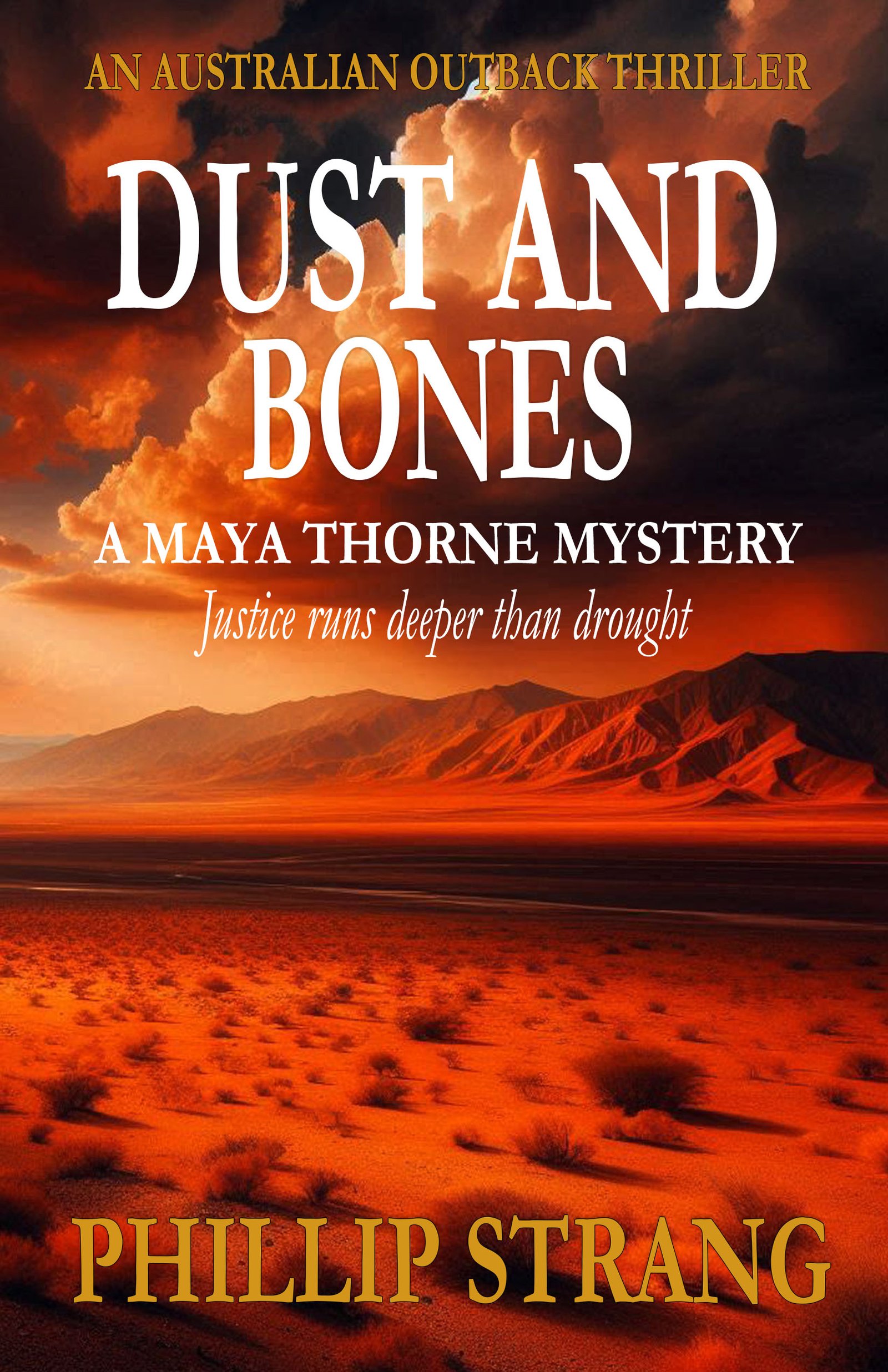
A MAYA THORNE MYSTERY
Get Dust and Bones Free
Justice runs deeper than drought.
Red dust. Shallow graves. A detective who hunts killers where the law runs thin and the nearest help is two hundred miles away.
Send Me the BookYou'll also receive occasional new release emails. Unsubscribe anytime. No spam, ever.
As an Amazon Associate, Phillip Strang earns from qualifying purchases. This page contains affiliate links — buying through them costs you nothing extra.