
Coastal Australia Crime Fiction demands more than postcard descriptions of beaches and fishing villages. The coast isn’t just scenery—it’s a character that shapes how crimes unfold, how investigations proceed, and how communities protect their secrets.
Across eighteen series and more than 150 novels, I’ve learned that successful coastal crime writing hinges on understanding how proximity to the ocean fundamentally alters human behavior. The coast creates isolation, transience, and an economy built on secrets—perfect conditions for crime fiction.
The Ocean as Investigative Obstacle
Coastal settings present unique challenges for your detective characters. Tides destroy evidence. Storm seasons shut down investigations for days. Tourist populations swell and disappear, creating alibis that evaporate with the season. When I developed my Maya Thorne series, I realized that outback crimes and coastal crimes share this quality: the environment actively works against the investigation.
Your coastal detective needs skills urban investigators never develop. They must understand tidal patterns, weather windows, and the seasonal rhythms that dictate when witnesses are available. A murder committed during cyclone season plays differently than one during tourist season. The ocean doesn’t pause for police tape—it continues its work of washing away clues with mechanical indifference.
Build these environmental factors into your plot structure. Don’t add them as atmospheric detail. Make them central to how the crime unfolds and how your detective must adapt their methods. The best coastal crime stories use the setting as an active antagonist, not passive backdrop.
Transient Populations and Shifting Alibis
Coastal communities live in constant flux. Seasonal workers, tourists, boat crews, and grey nomads create populations that shift monthly. This transience offers rich possibilities for crime writers willing to dig deeper than surface tourism.
Your suspect pool changes with the seasons. The person who committed a crime in March may be working three states away by June. Witnesses disappear not because they’re hiding, but because their work visa expired or the fishing season ended. This creates natural urgency in your plotting—your detective races not just against evidence degradation but against human dispersal.
I’ve found that the most compelling coastal mysteries exploit this population instability. Characters appear legitimate because they’ve been in town for months, but their presence is actually calculated around seasonal blind spots. The marina worker who’s helpful and established may have planned their crime around the exact week when the permanent residents are outnumbered three-to-one by transients who won’t remember faces clearly.
Economic Undercurrents in Coastal Australia Crime Fiction
Coastal economies run on boom-bust cycles that create desperation and opportunity in equal measure. Tourism, fishing, and seasonal agriculture dominate, but the real money often flows through less visible channels. Understanding these economic pressures is essential for authentic coastal crime writing.
Your coastal criminals aren’t just motivated by personal vendetta—they’re responding to economic realities. The charter boat operator facing bankruptcy when fish stocks crash. The motel owner whose seasonal bookings determine whether they keep their property. The commercial fisherman watching regulations destroy their livelihood while recreational fishers face no restrictions.
These aren’t background details—they’re motive generators. The most believable coastal crimes grow from economic pressure combined with seasonal opportunity. When writing police procedural novels, I’ve learned that financial motive becomes more complex in coastal settings because the money sources are seasonal, unpredictable, and often quasi-legal to begin with.
Avoiding Coastal Crime Fiction Clichés
Too many writers approach coastal settings with tourism brochure mentality. They focus on scenic beauty while missing the gritty realities that create authentic crime fiction. Avoid the quaint fishing village stereotype where everyone knows everyone and outsiders are immediately suspect.
Real coastal communities are economically complex and socially stratified. The wealthy retirees in clifftop houses live completely different lives from the seasonal workers in caravan parks. These class divisions create tension and opportunity that’s far more interesting than generic small-town suspicion of strangers.
Don’t make the ocean your body disposal method unless you understand tidal patterns, decomposition rates, and marine scavenging. Readers notice when writers treat the ocean as a convenient plot device. Similarly, avoid the cliché of storms arriving at dramatically convenient moments. Weather patterns follow seasonal logic, not narrative convenience.
The ‘isolated coastal town’ trope ignores modern reality. Most Australian coastal settlements are connected by highways, mobile networks, and regular transport. Your isolation must be situational, not geographical. Create isolation through timing, weather events, or social circumstances rather than pretending your coastal town exists in communication darkness.
Writing Coastal Atmosphere That Serves Story
Effective coastal atmosphere emerges from specific details that advance your plot. The salt corrosion that destroys evidence but preserves others differently. The way sea fog creates visibility windows that affect witness reliability. The distinct sounds of different types of boats that help establish timelines.
I approach coastal settings by identifying which environmental factors will impact my specific story, then researching those elements thoroughly. If tidal timing matters to my plot, I learn the actual tidal patterns for my fictional location. If my crime involves boats, I understand exactly how those vessels operate in the conditions I’m describing.
When developing the investigative approach in my action thriller novels, I’ve found that coastal settings demand different pacing rhythms. The ocean’s constant presence creates a meditative quality that works against frenetic action sequences. Instead, tension builds through environmental pressure—approaching storms, changing tides, seasonal deadlines.
Your coastal descriptions should feel lived-in rather than observed. Focus on details that residents notice: the way wind direction affects mood, which beaches are safe during which seasons, how tourism changes local behavior patterns. These details create authenticity while serving your plot needs.
Conclusion
Coastal Australia Crime Fiction succeeds when writers treat the ocean as an active story element rather than scenic backdrop. The coast offers unique opportunities for isolation, motive, and investigative challenges, but only when writers understand the practical realities of coastal life beyond tourist experience.
About Phillip Strang
Phillip Strang is an Australian crime and thriller novelist. Across eighteen series and more than 150 novels, his work spans London police procedurals (DCI Isaac Cook), UK investigations (DI Tremayne), Australian outback crime (Maya Thorne), FBI thrillers (Alex Harlan), Scottish Highland mysteries (DI Sarah Lynch), and espionage (Steve Case). Learn more about Phillip or browse his complete catalogue on Amazon.
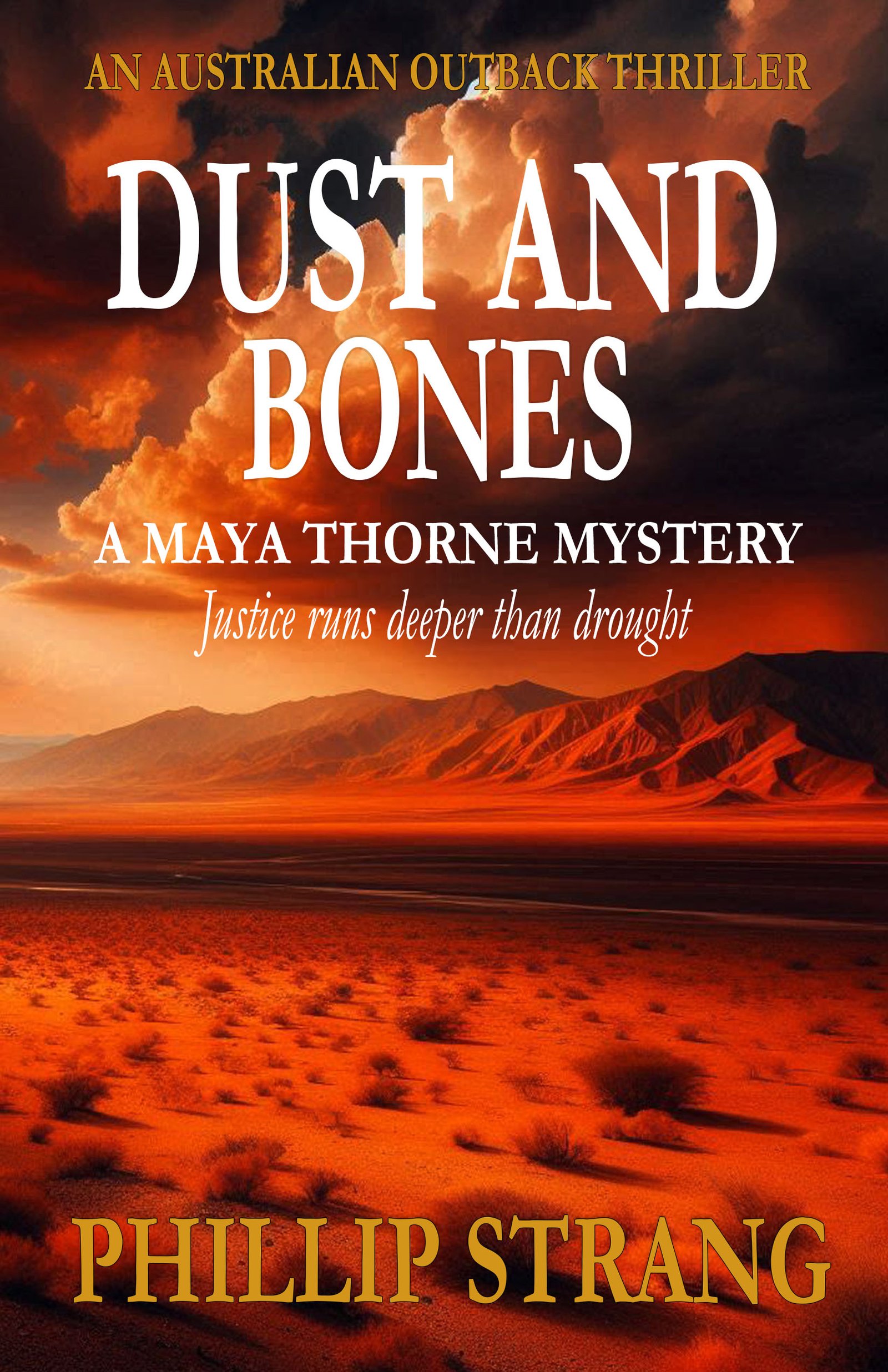
A MAYA THORNE MYSTERY
Get Dust and Bones Free
Justice runs deeper than drought.
Red dust. Shallow graves. A detective who hunts killers where the law runs thin and the nearest help is two hundred miles away.
Send Me the BookYou'll also receive occasional new release emails. Unsubscribe anytime. No spam, ever.
As an Amazon Associate, Phillip Strang earns from qualifying purchases. This page contains affiliate links — buying through them costs you nothing extra.