
Cornwall Crime Fiction: Coastal Mystery Settings present writers with an immediate advantage that landlocked locations simply cannot match. The county’s dramatic coastline offers isolated coves, treacherous cliffs, and communities cut off by geography—natural elements that create tension before you’ve written a single line of dialogue.
Across eighteen series and more than 150 novels, I have found that coastal settings function differently than urban environments, demanding specific techniques to harness their full potential. Cornwall’s particular geography creates opportunities for both atmospheric storytelling and practical plot mechanics that crime writers consistently underutilize.
The Isolation Factor in Cornwall Crime Fiction: Coastal Mystery Settings
Cornwall’s coastal communities exist in a state of natural isolation that crime writers can exploit immediately. Unlike urban settings where backup arrives in minutes, Cornish coastal villages often sit at the end of single-track roads, accessible only during certain tides, or connected by paths that become impassable in storms. This geographical reality creates immediate stakes.
When I developed the DI Sarah Lynch series set in the Scottish Highlands, I learned that isolated communities operate by different rules. The same principle applies to Cornwall’s coastal settlements—when the road washes out or the bridge becomes impassable, your detective cannot simply call for reinforcements. Your killer knows this too.
The key technique here involves using isolation as both plot driver and character pressure. Cornish coastal settings naturally limit your cast of characters while raising the stakes for everyone trapped within the geographical boundaries you’ve established.
Weather as Active Plot Element
Cornwall’s coastal weather patterns create opportunities for plot advancement that crime writers often treat as mere atmosphere. Fog banks rolling in from the Atlantic, sudden squalls that cut visibility to zero, and the twice-daily transformation of accessible beaches into tidal death traps—these aren’t background details but active story mechanics.
Weather in coastal crime fiction should function as another character in your story. The approaching storm that will cut off the village for three days creates a deadline. The fog that allows your killer to move unseen also prevents your detective from spotting crucial evidence. The spring tide that reveals the body also threatens to wash away forensic traces.
I learned this technique while writing rural investigations, where weather often determines what actions characters can and cannot take. Cornish coastal settings amplify this effect because the weather comes from multiple directions—off the sea, down from the moors, and up from the valleys where ancient mine shafts create their own microclimate effects.
The Maritime Community Dynamic
Cornwall’s coastal communities maintain social structures that differ fundamentally from both urban and inland rural settings. Fishing families, seasonal tourism workers, wealthy second-home owners, and artists seeking inspiration create a complex social hierarchy that shifts with the seasons. This demographic layering provides ready-made conflict for crime writers willing to dig beneath the surface.
The technique involves understanding that coastal communities have two distinct seasons—the public summer face presented to tourists and the private winter reality when locals deal with economic uncertainty and social tensions. Your crime can exploit this seasonal transformation, using the contrast between summer abundance and winter desperation as motivation.
Maritime communities also maintain different relationship dynamics around risk and death. Commercial fishing remains one of Britain’s most dangerous occupations, and coastal communities accept levels of risk that inland populations find unthinkable. This cultural backdrop allows crime writers to explore themes of calculated risk versus reckless behavior in ways that feel organic to the setting.
Avoiding the Postcard Trap
The most common mistake writers make with Cornish coastal settings involves treating the landscape as scenic backdrop rather than functional story element. Pretty harbor descriptions and sunset scenes over the Atlantic create atmosphere but don’t advance plot. Effective crime writers use Cornwall’s coastal features as active components of their investigation.
Another frequent error involves misunderstanding tidal mechanics and coastal access. Writers who don’t research tide tables create implausible scenarios where characters access locations that would be underwater or reach crime scenes via routes that don’t exist. Cornish readers notice these mistakes immediately because their daily lives revolve around tidal timing.
The third major pitfall involves oversimplifying the local economy. Modern Cornwall depends on complex interactions between tourism, fishing, agriculture, renewable energy, and technology sectors. Writers who reduce this to simple fishing villages versus wealthy outsiders miss opportunities for contemporary plot development that reflects actual Cornish economic tensions. Much like the best police procedural novels ground their investigations in realistic social dynamics, Cornish crime fiction needs economic authenticity to achieve credibility.
My Approach to Coastal Crime Writing
When I approach coastal settings, I begin with tide tables and weather patterns rather than character sketches. Understanding when your fictional location is accessible, what the visibility will be, and how weather affects local behavior determines what crimes are possible and how investigations proceed.
I research local maritime history to understand how communities developed around specific geographical advantages. Cornwall’s coastal settlements exist where they are for reasons—protected harbors, freshwater access, defensive positions, or mining opportunities. These historical factors continue influencing community dynamics and provide logical foundations for contemporary conflicts.
I also spend considerable time understanding seasonal population fluctuations and how they affect social dynamics. A crime committed in February involves different suspects and different investigative challenges than the same crime in August. The technique involves matching your plot requirements to the seasonal characteristics that best support your story needs. This approach has proven valuable across multiple series, from urban investigations like DCI Isaac Cook to rural settings, where seasonal changes dramatically affect both crime patterns and investigative procedures.
Conclusion
Cornwall’s coastal settings offer crime writers natural advantages in isolation, weather dynamics, and community structure that require specific techniques to fully exploit. The landscape itself becomes a character in your story when you understand how geography shapes both criminal opportunity and investigative limitations. Writers who master these coastal mechanics create stories where setting and plot function as integrated elements rather than separate components.
About Phillip Strang
Phillip Strang is an Australian crime and thriller novelist. Across eighteen series and more than 150 novels, his work spans London police procedurals (DCI Isaac Cook), UK investigations (DI Tremayne), Australian outback crime (Maya Thorne), FBI thrillers (Alex Harlan), Scottish Highland mysteries (DI Sarah Lynch), and espionage (Steve Case). Learn more about Phillip or browse his complete catalogue on Amazon.
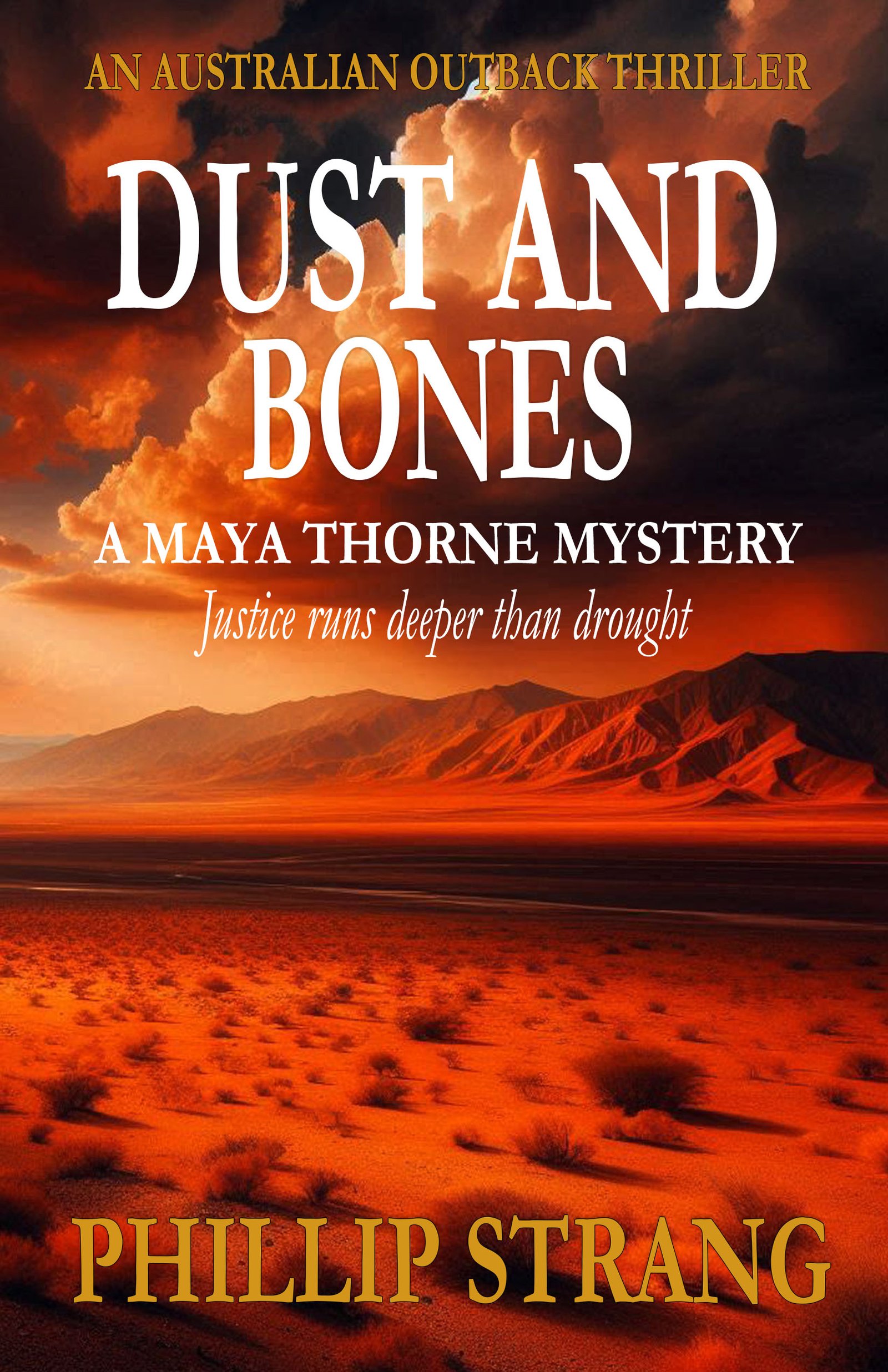
A MAYA THORNE MYSTERY
Get Dust and Bones Free
Justice runs deeper than drought.
Red dust. Shallow graves. A detective who hunts killers where the law runs thin and the nearest help is two hundred miles away.
Send Me the BookYou'll also receive occasional new release emails. Unsubscribe anytime. No spam, ever.
As an Amazon Associate, Phillip Strang earns from qualifying purchases. This page contains affiliate links — buying through them costs you nothing extra.