
Yorkshire Crime Settings seduce writers with their ready-made atmosphere—brooding moors, industrial decay, isolated villages—but this seductive landscape becomes a crutch that weakens your actual storytelling. Too many authors mistake atmospheric description for genuine tension, letting Yorkshire’s inherent drama do the heavy lifting while their plots grow flabby and their characters fade into the background like morning mist over the Dales.
Across eighteen series and more than 150 novels, I’ve learned that powerful settings serve the story, never dominate it. Yorkshire presents particular challenges because its dramatic potential can overwhelm beginning writers, and even experienced authors sometimes forget that readers connect with characters first, landscape second.
Yorkshire’s Deceptive Simplicity
The county appears to offer everything a crime writer needs: economic desperation in post-industrial towns, geographical isolation in rural areas, and a cultural backdrop rich with class tension and historical grievance. This abundance creates a false confidence. Writers assume they can drop a murder into Whitby or set a kidnapping on the North York Moors and let the setting generate the mood. The result reads like a travel brochure with corpses.
Effective Yorkshire settings require surgical precision. When I developed locations for my DI Tremayne series, I researched not just the physical geography but the economic pressures, local politics, and social hierarchies that would realistically produce the crimes I needed. Yorkshire’s beauty masks serious social issues—unemployment, rural poverty, generational conflict—that provide genuine motivation for criminal behavior.
The Moor Trap
Every crime writer discovers the Yorkshire moors eventually, and most handle them badly. The temptation to use vast, empty landscapes for body dumps or dramatic confrontations proves irresistible, but these scenes often read as clichéd because the writer relies on the setting’s inherent menace rather than building specific, character-driven tension.
Effective moor scenes require intimate knowledge of the terrain and weather patterns. Visibility changes by the hour. Ground conditions vary dramatically between seasons. Local knowledge becomes crucial for both criminals and investigators. These details matter because they affect how crimes unfold and how they’re solved. Generic atmospheric writing produces forgettable scenes, while specific geographical knowledge creates authentic procedural tension.
Urban Yorkshire Reality
Yorkshire’s cities offer crime writers complex social dynamics that rural settings can’t match, but urban Yorkshire requires different research than London or Manchester. Leeds, Sheffield, and Bradford each have distinct criminal ecosystems shaped by their industrial histories and current economic conditions. These aren’t generic urban environments—they’re specific places with particular problems.
Sheffield’s steel industry collapse created different criminal opportunities than Bradford’s textile decline. Understanding these economic shifts helps writers create believable criminal enterprises and realistic police responses. The best police procedural novels ground their investigations in actual social conditions, not atmospheric generalizations.
How I Actually Approach Yorkshire Crime Settings
When developing Yorkshire locations, I start with crime requirements first, setting second. What specific criminal activity does my plot require? What geographical features, population density, and economic conditions would realistically support this crime? Only then do I research actual Yorkshire locations that match these requirements.
I avoid tourism websites and focus on local newspapers, council records, and police reports. These sources reveal the unsexy realities that make settings authentic: housing shortages, transport problems, local political conflicts. This research often changes my plot because real constraints force better storytelling than fictional conveniences.
For rural crimes, I study Ordnance Survey maps and weather data. For urban crimes, I research demographics, employment statistics, and local criminal justice resources. This groundwork prevents the lazy assumptions that weaken character-driven novels when writers prioritize atmosphere over authenticity.
Common Yorkshire Setting Mistakes
The most frequent error involves treating Yorkshire as a monolithic environment. Writers describe ‘Yorkshire weather’ or ‘Yorkshire people’ as though the county’s three ridings share identical characteristics. This laziness immediately signals amateur work to readers familiar with the region’s actual diversity.
Another persistent mistake involves overusing dialect and regional speech patterns. Heavy Yorkshire dialect slows reading pace and often reads as caricature rather than authentic voice. Subtle word choices and speech rhythms prove more effective than phonetic spelling that forces readers to decode every conversation.
Weather description becomes problematic when writers use Yorkshire’s climate as a constant mood generator. Perpetual drizzle and grey skies grow monotonous quickly. Seasonal variation and specific weather events create more interesting story possibilities than generic atmospheric dampness.
Transportation logistics frequently reveal poor research. Yorkshire’s geography creates real constraints on character movement, especially in rural areas. Writers who ignore these practical limitations produce plots that locals will immediately recognize as unrealistic.
Making Yorkshire Settings Work for Readers Everywhere
The ultimate test of any regional setting involves accessibility to non-local readers. Yorkshire Crime Settings must feel authentic to Yorkshire residents while remaining comprehensible to readers worldwide. This balance requires careful selection of which regional details to emphasize and which to minimize.
Universal human experiences translate across geographical boundaries better than local customs or historical references. Economic pressure, family conflict, and social ambition affect people everywhere, even when their specific manifestations vary by location. Focus on these common elements while using Yorkshire’s particular characteristics to add flavor rather than confusion.
Physical descriptions should serve story function first, atmosphere second. Don’t describe Yorkshire landscapes because they’re beautiful—describe them because they affect character decisions or plot development. This approach keeps your story moving while building authentic sense of place.
Conclusion
Yorkshire offers crime writers tremendous opportunities, but only when approached with discipline and specific research rather than romantic assumptions. The county’s dramatic potential requires careful handling to avoid cliché and maintain story momentum.
About Phillip Strang
Phillip Strang is an Australian crime and thriller novelist. Across eighteen series and more than 150 novels, his work spans London police procedurals (DCI Isaac Cook), UK investigations (DI Tremayne), Australian outback crime (Maya Thorne), FBI thrillers (Alex Harlan), Scottish Highland mysteries (DI Sarah Lynch), and espionage (Steve Case). Learn more about Phillip or browse his complete catalogue on Amazon.
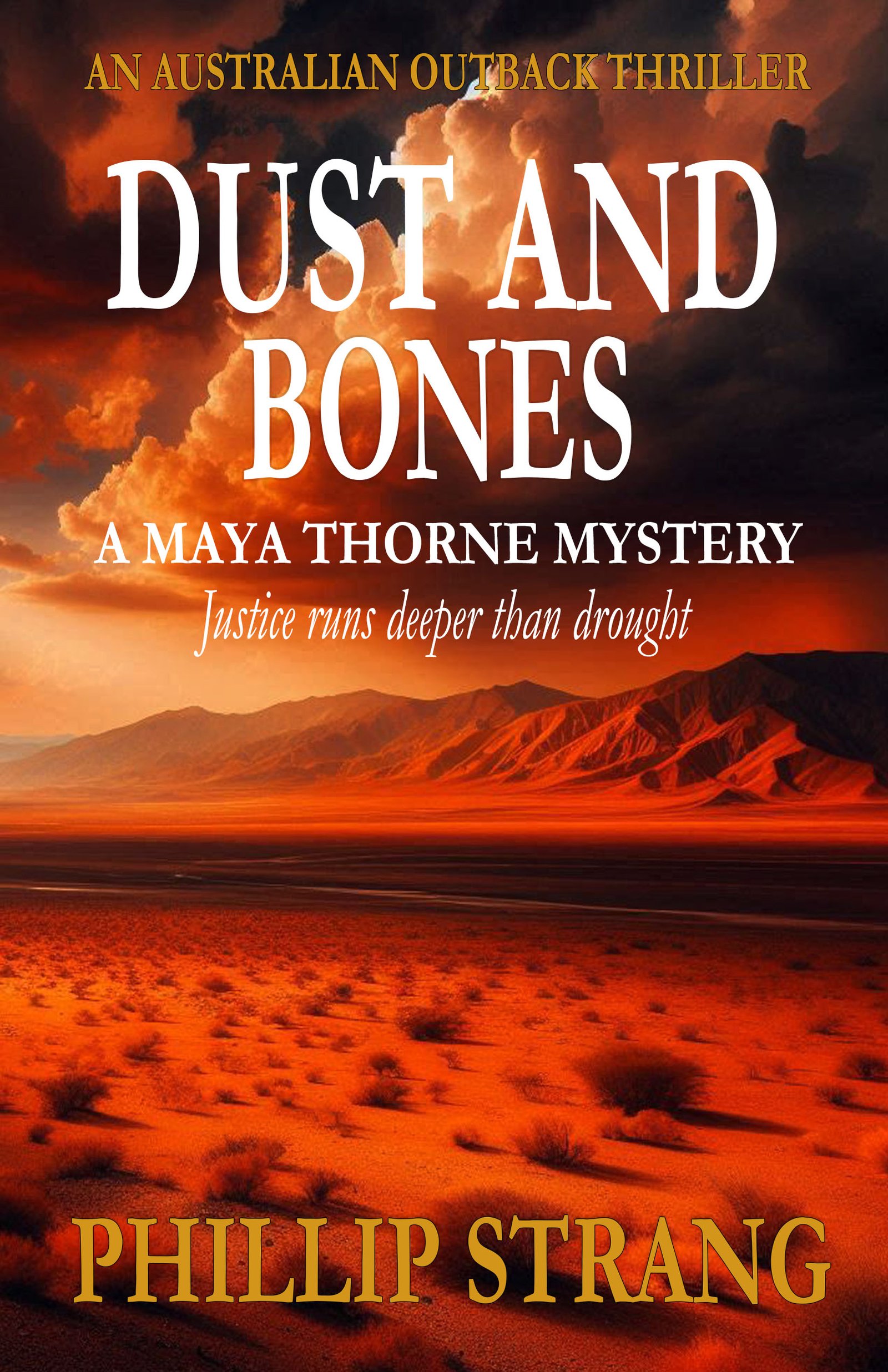
A MAYA THORNE MYSTERY
Get Dust and Bones Free
Justice runs deeper than drought.
Red dust. Shallow graves. A detective who hunts killers where the law runs thin and the nearest help is two hundred miles away.
Send Me the BookYou'll also receive occasional new release emails. Unsubscribe anytime. No spam, ever.
As an Amazon Associate, Phillip Strang earns from qualifying purchases. This page contains affiliate links — buying through them costs you nothing extra.