
Welsh Crime Fiction Settings present writers with a landscape that demands respect and understanding rather than superficial appropriation. The temptation to rely on tired stereotypes of mining communities and sheep-dotted valleys undermines the sophisticated narrative potential that Wales offers crime writers willing to dig deeper.
Across eighteen series and more than 150 novels, I have found that successful regional crime fiction depends on treating the setting as an active participant in the story rather than mere scenery. Wales, with its complex industrial heritage, stark geographical contrasts, and distinct cultural identity, offers crime writers opportunities that extend far beyond the predictable tropes.
Understanding Wales Beyond the Tourist Brochure
The most effective Welsh crime fiction emerges when writers move past the postcard imagery of Snowdonia and Pembrokeshire coast to explore the tensions between traditional Wales and modern reality. Cardiff’s financial district operates with the same ruthless efficiency as any major city, while former industrial towns carry the weight of economic transformation that creates perfect conditions for contemporary crime narratives.
I have observed that the strongest Welsh settings acknowledge the country’s linguistic complexity without fetishizing it. Welsh place names and occasional dialogue serve the story when they enhance authenticity, but become obstacles when they exist merely to establish location. The key lies in understanding how language reflects character motivation and social dynamics rather than using it as atmospheric decoration.
Industrial Heritage as Criminal Landscape
Wales’ industrial past provides crime writers with ready-made infrastructure for complex plotting. Abandoned mines create natural hiding places, while derelict steelworks offer isolated confrontation venues that carry emotional weight beyond their practical function. The mistake many writers make involves treating these locations as generic abandoned buildings rather than understanding their specific cultural significance.
When I developed locations for my DI Tremayne series, I learned that effective industrial settings require research into how these places functioned when operational. Understanding the social hierarchies of mining communities, the shift patterns of steelworkers, or the economic networks that sustained these industries provides the foundation for believable contemporary crime scenarios.
Former company towns retain social structures that influence criminal activity decades after the industries departed. Family loyalties, economic desperation, and resistance to outside authority create conditions where traditional policing methods struggle, offering crime writers natural conflict scenarios without relying on contrived circumstances.
Crafting Authentic Welsh Crime Fiction Settings
Effective Welsh settings balance geographical realism with narrative necessity. Writers cannot simply relocate a London-based plot to Rhondda Valley and expect the story to work. The isolation of Welsh communities affects everything from police response times to witness cooperation, requiring plot adjustments that acknowledge these practical realities.
Weather plays a more active role in Welsh crime fiction than in urban settings. Mountain mists obscure evidence, flooding rivers wash away clues, and winter conditions isolate suspects and investigators alike. I have found that police procedural novels gain authenticity when environmental factors influence investigative timelines rather than existing as mere atmospheric details.
The relationship between Welsh communities and English authority creates natural tension that crime writers can exploit without resorting to heavy-handed political commentary. Local knowledge versus outside expertise, traditional methods versus modern technology, and community loyalty versus legal obligation provide conflict sources that emerge organically from the setting rather than requiring artificial injection.
Common Pitfalls in Welsh Crime Writing
The most damaging mistake involves treating Wales as a quaint backdrop for metropolitan crime stories. Dropping London criminals into Cardiff nightclubs without acknowledging local criminal hierarchies creates narratives that feel transplanted rather than rooted. Welsh criminal networks operate differently than their English counterparts, influenced by geographical constraints and community relationships that affect everything from drug distribution to money laundering.
Overemphasizing Celtic mythology and ancient history often signals amateur approach to Welsh settings. While historical elements can enhance contemporary crime narratives, they must serve the story rather than dominate it. Modern Wales faces real issues including economic inequality, drug trafficking, and organized crime that provide sufficient material without requiring supernatural or historical embellishment.
Language representation frequently reveals shallow research. Scattering Welsh phrases throughout dialogue without understanding their contextual appropriateness creates artificial flavor that experienced readers recognize immediately. Similarly, making all Welsh characters hostile to English visitors oversimplifies complex cultural relationships and reduces characters to stereotypical representations.
Character accents present particular challenges. Written Welsh dialogue that relies on phonetic spelling often appears condescending rather than authentic. Professional actors can convey accent through performance, but written fiction requires subtler approaches through word choice, sentence structure, and cultural references rather than attempting to recreate pronunciation on the page.
My Approach to Regional Authenticity
When developing Welsh locations, I prioritize understanding economic realities over romantic imagery. How do people earn money in this community? What industries support local employment? Where do young people go when they leave, and why do some stay? These practical considerations shape character motivation more effectively than focusing on landscape description or historical significance.
I research local newspaper archives to understand recurring crime patterns, community concerns, and police challenges specific to different Welsh regions. Cardiff faces urban crime issues similar to other major cities, while Anglesey deals with rural isolation and seasonal tourism pressures. Understanding these distinctions prevents the mistake of treating Wales as homogeneous.
Location scouting, even through virtual means, reveals details that enhance authenticity. Google Street View cannot replace physical visits, but it provides visual confirmation of architectural styles, road conditions, and geographical relationships between locations. I have found that character driven novels benefit when settings feel lived-in rather than researched.
Local dialect and cultural practices require careful handling. Rather than attempting to recreate specific accents in dialogue, I focus on incorporating Welsh cultural attitudes toward authority, family obligations, and community responsibility. These deeper cultural elements influence character behavior more meaningfully than surface-level linguistic features.
Conclusion
Welsh Crime Fiction Settings reward writers who approach them with respect for cultural complexity rather than relying on superficial stereotypes. The landscape offers natural dramatic opportunities, but only when writers understand the social and economic realities that shape contemporary Welsh communities.
About Phillip Strang
Phillip Strang is an Australian crime and thriller novelist. Across eighteen series and more than 150 novels, his work spans London police procedurals (DCI Isaac Cook), UK investigations (DI Tremayne), Australian outback crime (Maya Thorne), FBI thrillers (Alex Harlan), Scottish Highland mysteries (DI Sarah Lynch), and espionage (Steve Case). Learn more about Phillip or browse his complete catalogue on Amazon.
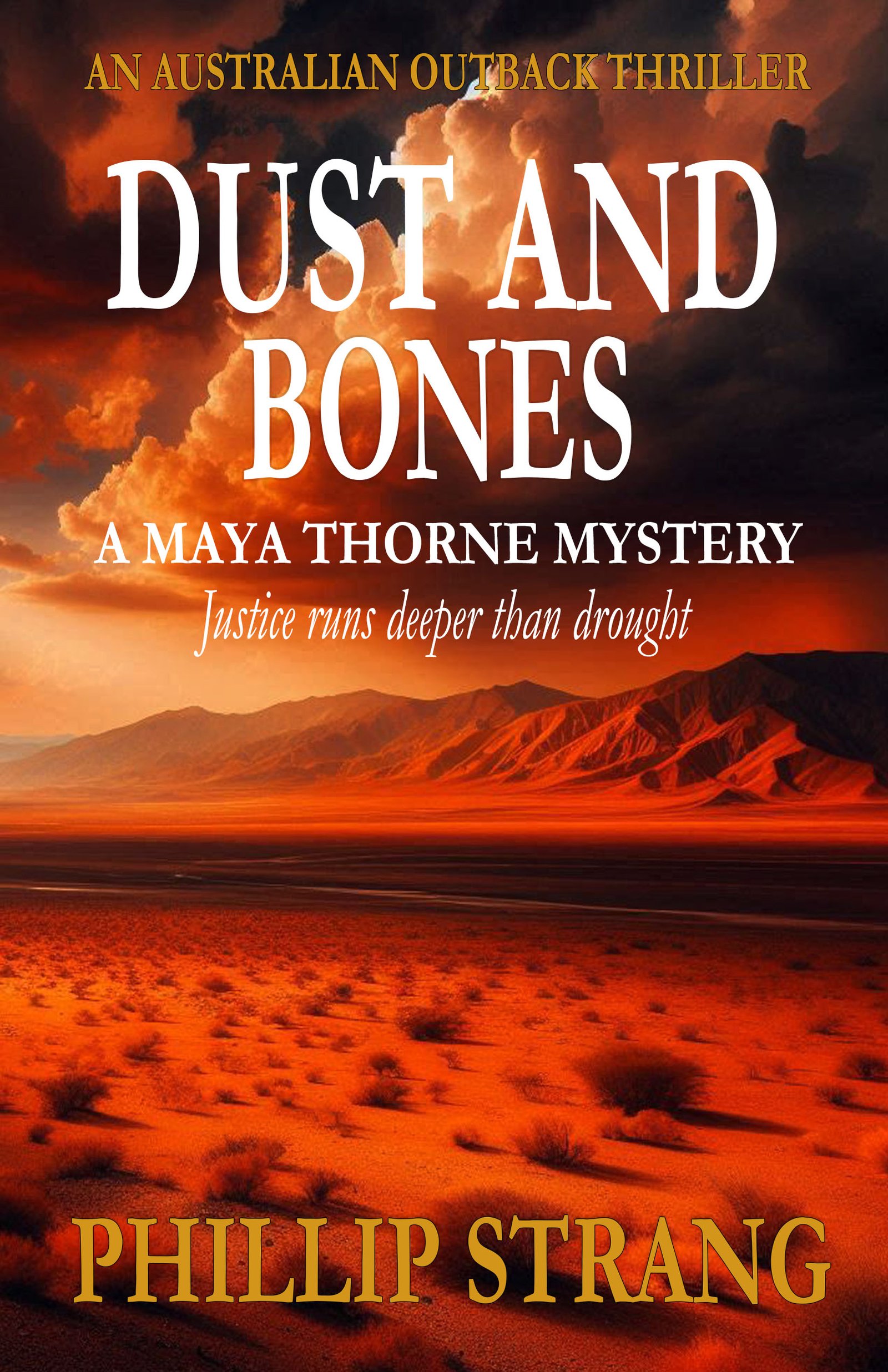
A MAYA THORNE MYSTERY
Get Dust and Bones Free
Justice runs deeper than drought.
Red dust. Shallow graves. A detective who hunts killers where the law runs thin and the nearest help is two hundred miles away.
Send Me the BookYou'll also receive occasional new release emails. Unsubscribe anytime. No spam, ever.
As an Amazon Associate, Phillip Strang earns from qualifying purchases. This page contains affiliate links — buying through them costs you nothing extra.