
New Zealand Crime Settings present a fascinating paradox for crime writers. The country’s reputation for tranquillity and natural beauty creates an immediate tension when violence intrudes, yet that same isolation can make every threat feel amplified and every escape route precarious.
Across eighteen series and more than 150 novels, I have found that the most effective crime settings are those where geography actively shapes both the crime and its investigation. New Zealand offers this in abundance, but only if you understand how to wield its unique characteristics as narrative weapons rather than mere backdrop.
The Geography of Menace in New Zealand Settings
New Zealand’s isolation works differently than Australia’s vast outback, which I explore extensively in my Maya Thorne series. Where Australia threatens through scale and emptiness, New Zealand menaces through containment. You are trapped not by distance but by water, mountains, and the finite nature of island geography.
This containment creates opportunities that mainland settings cannot provide. Your killer cannot simply disappear into an anonymous city or cross a border. Every ferry departure, every flight, becomes a checkpoint. When I construct plots in isolated settings, I always map the genuine escape routes first—not to help my criminals, but to understand the pressure points where desperation peaks.
The key is recognizing that New Zealand’s beauty is not a contrast to crime but a crucible for it. Remote bach locations, isolated tramping tracks, and weather-cut communities create natural locked-room scenarios. The scenic helicopter ride becomes a death trap when the pilot has ulterior motives. The celebrated walking track becomes a hunting ground where screams carry no further than the nearest tree.
Cultural Tensions That Drive Plot
New Zealand’s bi-cultural foundation provides crime writers with built-in conflict, but this requires delicate handling. The tension between Māori and Pākehā perspectives, between traditional land connections and modern development, between rural communities and urban interference—these are not exotic flavourings to sprinkle into your plot. They are fundamental forces that can drive entire narratives.
Land disputes create motives that run generations deep. Resource extraction conflicts pit environmental concerns against economic necessity. The clash between traditional justice concepts and Western legal systems opens questions about what constitutes true resolution. These tensions work because they are specific to place and impossible to transplant elsewhere.
However, approach this with research and respect, not stereotype. The cultural dynamics must serve the story, not the other way around. Avoid the trap of making culture the mystery itself—instead, let cultural understanding become essential to solving mysteries rooted in human greed, revenge, and desperation.
How I Approach New Zealand Crime Settings
When developing any isolated setting, I start with the infrastructure that connects it to the outside world and identify where those connections are most vulnerable. For New Zealand locations, this means understanding ferry schedules, flight patterns, communication networks, and how weather impacts all three.
I then establish the community dynamics—not just who lives there, but how they survive economically and socially. Tourist-dependent communities have different pressure points than farming areas or fishing towns. Seasonal employment, population fluctuations, and the insider-outsider dynamics all create natural story tensions.
Weather becomes a character in New Zealand crime fiction more than most settings. The sudden storms that cut communications, the fog that grounds flights, the flooding that closes roads—these are not convenient plot devices but predictable elements of life that smart criminals might exploit and investigators must navigate. Unlike the best police procedural novels set in major cities, rural New Zealand investigations face constant logistical challenges that urban detectives rarely encounter.
Common Mistakes Writers Make with New Zealand Crime Settings
The biggest error is treating New Zealand as interchangeable with other English-speaking countries. Writers often import British procedural methods wholesale, ignoring how small population sizes and community connections change investigation dynamics. In a town of 3,000 people, the detective likely knows the victim, several suspects, and half the potential witnesses personally. This familiarity complicates everything in ways that demand acknowledgment.
Another frequent mistake is overplaying the tourist angle. Yes, New Zealand attracts international visitors, but making every crime revolve around tourism creates a limited perspective. The real tensions often exist between different groups of locals—old families versus newcomers, traditional industries versus tourism, conservation versus development.
Writers also tend to underestimate the sophistication of New Zealand law enforcement while overestimating the isolation. Modern communications mean that even remote areas can access specialist resources, but response times and jurisdiction complexities create different operational challenges than those found in best action thriller novels set in major metropolitan areas.
Making New Zealand Crime Settings Authentic
Authenticity in New Zealand crime fiction comes from understanding that small communities operate differently than large ones. Information travels through unofficial channels. Everyone knows everyone’s business, but proving it legally is another matter entirely. The local constable might be related to half the town, creating conflicts of interest that urban departments avoid through scale.
Focus on the practical realities of investigation in remote areas. Evidence collection becomes complicated when the nearest forensics lab is a day’s travel away. Witness protection is virtually impossible in communities where hiding is impossible. The casual firearms access in rural areas changes threat assessments compared to the urban settings I use in my DCI Isaac Cook series.
Most importantly, recognize that New Zealand’s small population means crimes often have wider social impacts than similar offences in larger countries. A murder doesn’t just affect the victim’s family—it ripples through schools, sports clubs, businesses, and social networks in ways that create ongoing story complications.
Conclusion
New Zealand Crime Settings work best when writers understand that isolation creates intensity, not just inconvenience. The country’s geography, culture, and community structures provide natural story frameworks that support rather than simply decorate your crime narrative. Use them as integral story elements, not as exotic wallpaper, and they will reward you with plots that could exist nowhere else.
About Phillip Strang
Phillip Strang is an Australian crime and thriller novelist. Across eighteen series and more than 150 novels, his work spans London police procedurals (DCI Isaac Cook), UK investigations (DI Tremayne), Australian outback crime (Maya Thorne), FBI thrillers (Alex Harlan), Scottish Highland mysteries (DI Sarah Lynch), and espionage (Steve Case). Learn more about Phillip or browse his complete catalogue on Amazon.
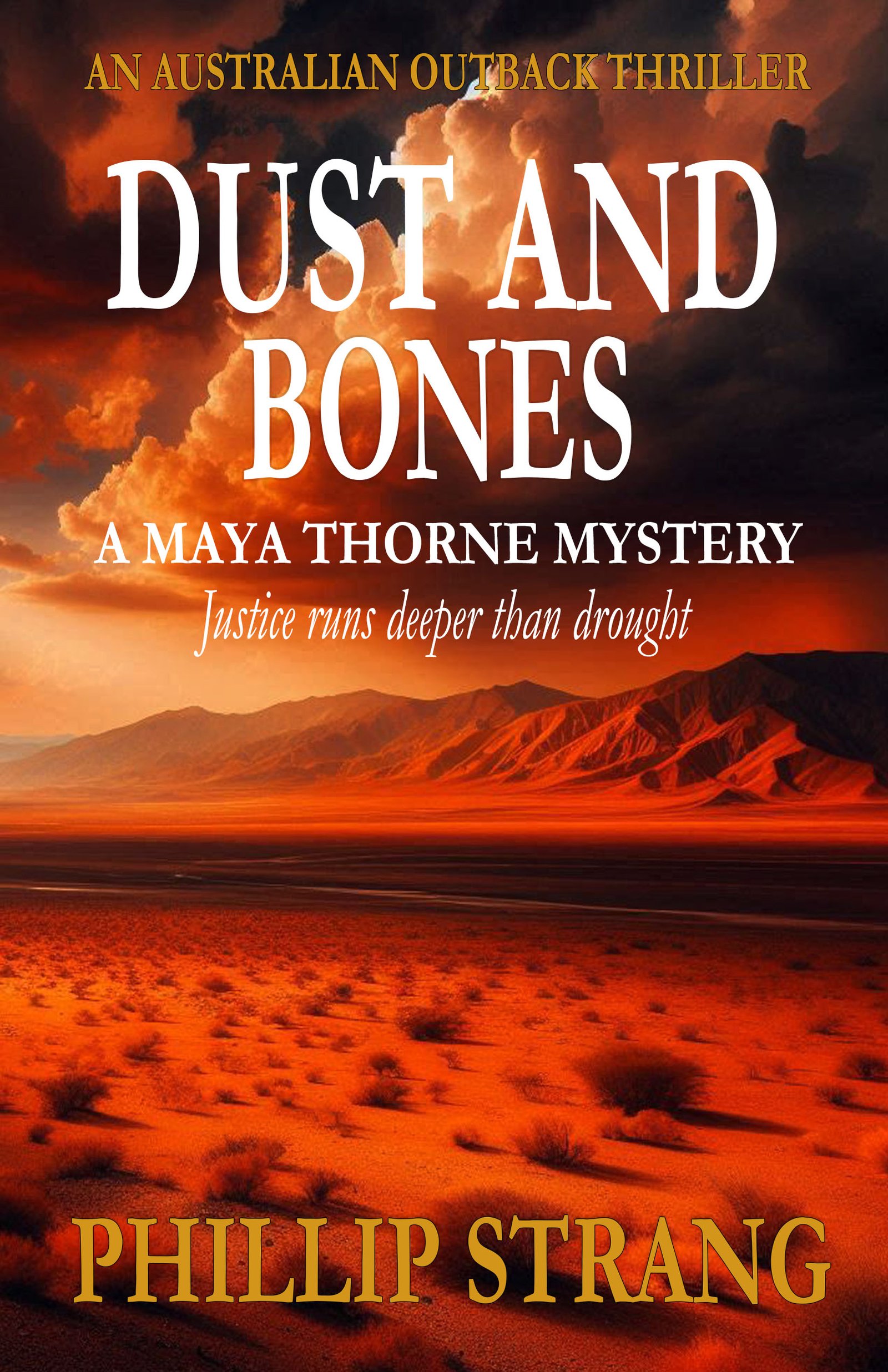
A MAYA THORNE MYSTERY
Get Dust and Bones Free
Justice runs deeper than drought.
Red dust. Shallow graves. A detective who hunts killers where the law runs thin and the nearest help is two hundred miles away.
Send Me the BookYou'll also receive occasional new release emails. Unsubscribe anytime. No spam, ever.
As an Amazon Associate, Phillip Strang earns from qualifying purchases. This page contains affiliate links — buying through them costs you nothing extra.