
Writing Small Town Crime Fiction requires a fundamentally different approach from urban procedurals or metropolitan thrillers. The intimacy of small communities creates unique opportunities for character development and plot construction that simply don’t exist in larger settings. Yet many authors underestimate the technical challenges of making these contained worlds feel authentic and compelling rather than claustrophobic or contrived.
Across eighteen series and more than 150 novels, I’ve found that small town settings offer some of the richest territory for crime fiction, but only when you understand how to leverage their specific advantages. The mechanics of building tension in a place where everyone knows everyone requires precision in both character work and plotting that goes well beyond simply transplanting a big city mystery to rural coordinates.
The Architecture of Small Town Secrets
Small towns operate on layered networks of relationships that stretch back generations. Unlike urban settings where anonymity is possible, every character in a small town crime story carries multiple connections to every other character. This isn’t just background flavour—it’s the structural foundation of your plot. When I developed the Maya Thorne series in the Australian outback, I spent considerable time mapping not just current relationships between townspeople, but their family histories, business dealings, and old grievances. The crime itself often becomes secondary to the web of connections it exposes.
The key is understanding that in small town crime fiction, motivation rarely exists in isolation. The murderer isn’t just angry at the victim—they’re angry at what the victim represents, or what their family did twenty years ago, or how their success exposed someone else’s failure. Every secret connects to three other secrets. Every lie supports a dozen other lies. This interconnectedness isn’t a complication to manage; it’s your primary storytelling tool.
Building Authentic Community Dynamics
Real small towns have their own rhythms, hierarchies, and unspoken rules that newcomers take years to understand. Your fictional small town needs these same intricate social structures. The mistake I see consistently is authors creating small towns that feel like collections of individuals rather than genuine communities with their own cultures and customs.
Consider how information flows in your town. Who are the gossip conduits? Where do people gather to exchange news? What are the unofficial power structures that exist alongside or beneath the official ones? In small towns, the bank manager might hold more real influence than the mayor, or the woman who runs the local café might know more secrets than the police chief. These dynamics aren’t just atmospheric details—they determine how your investigation unfolds and who your detective can trust for reliable information.
Character Depth Through Constrained Geography
Small town settings force characters into repeated interactions with people they might prefer to avoid. This constraint becomes a powerful tool for character development and conflict generation. Your detective can’t simply interview a suspect and move on—they’ll encounter that same person at the grocery store, at their child’s school event, or at the town’s annual festival. These ongoing encounters create opportunities for character development that span beyond the immediate investigation.
In my DI Sarah Lynch series set in the Scottish Highlands, the geographical isolation means Lynch must navigate not just professional relationships but personal ones with the same small pool of residents. A witness in one case becomes a neighbour she sees daily, creating layers of complexity that wouldn’t exist in anonymous urban settings. This forced intimacy raises the stakes for every interaction and every decision your detective makes.
Common Pitfalls in Writing Small Town Crime Fiction
The most frequent error is treating the small town as merely a backdrop rather than an active element in your story. I’ve read manuscripts where the setting could be swapped for any other location without affecting the plot—a clear sign the author hasn’t understood how to integrate setting with story. Another common mistake is the character driven approach that creates eccentric locals who feel more like cartoon characters than real people. Quirky for the sake of quirky kills authenticity faster than any other single element.
Many authors also fall into the trap of making their small towns too insular. Real small communities have connections to the outside world—through business, family, or migration patterns. Completely closed systems feel artificial and limit your plotting options. Even the most remote communities have residents who travel, visitors who arrive, and economic or social connections that stretch beyond town boundaries. These external connections often provide the catalyst for crimes that disrupt the local equilibrium.
My Working Method for Small Town Authenticity
I start every small town crime story by creating what I call a relationship map. This isn’t just a character list—it’s a detailed diagram showing family connections, business relationships, romantic histories, and ongoing disputes. I also establish the town’s economic foundation. What keeps this community alive? Is it farming, tourism, mining, or something else? The economic reality shapes everything from character motivations to the types of crimes that feel organic to the setting.
I then identify the town’s pressure points—the unresolved tensions that exist beneath the surface calm. These might be generational conflicts, economic disputes, or social changes that threaten traditional ways of life. When I developed the settings for various series, from the Australian outback towns in Maya Thorne to the Highland communities in DI Sarah Lynch, I spent time understanding what forces were pulling each community apart and what forces were holding it together. The crime in your story should connect to these existing fault lines, not create entirely new ones.
Finally, I establish the information networks. In small towns, information spreads through predictable channels, but it also gets filtered, distorted, and sometimes deliberately suppressed along the way. Understanding how news travels—and how secrets are kept—provides the architecture for how your investigation unfolds. Unlike urban police procedurals where forensics and databases drive the investigation, small town crime fiction relies heavily on human intelligence and community knowledge.
Conclusion
Small town crime fiction succeeds when the setting becomes inseparable from the story, when the community’s specific dynamics drive both the crime and its solution. The intimacy of these settings offers unique opportunities for complex character work and intricate plotting, but only when you respect the technical demands of building authentic small communities on the page.
About Phillip Strang
Phillip Strang is an Australian crime and thriller novelist. Across eighteen series and more than 150 novels, his work spans London police procedurals (DCI Isaac Cook), UK investigations (DI Tremayne), Australian outback crime (Maya Thorne), FBI thrillers (Alex Harlan), Scottish Highland mysteries (DI Sarah Lynch), and espionage (Steve Case). Learn more about Phillip or browse his complete catalogue on Amazon.
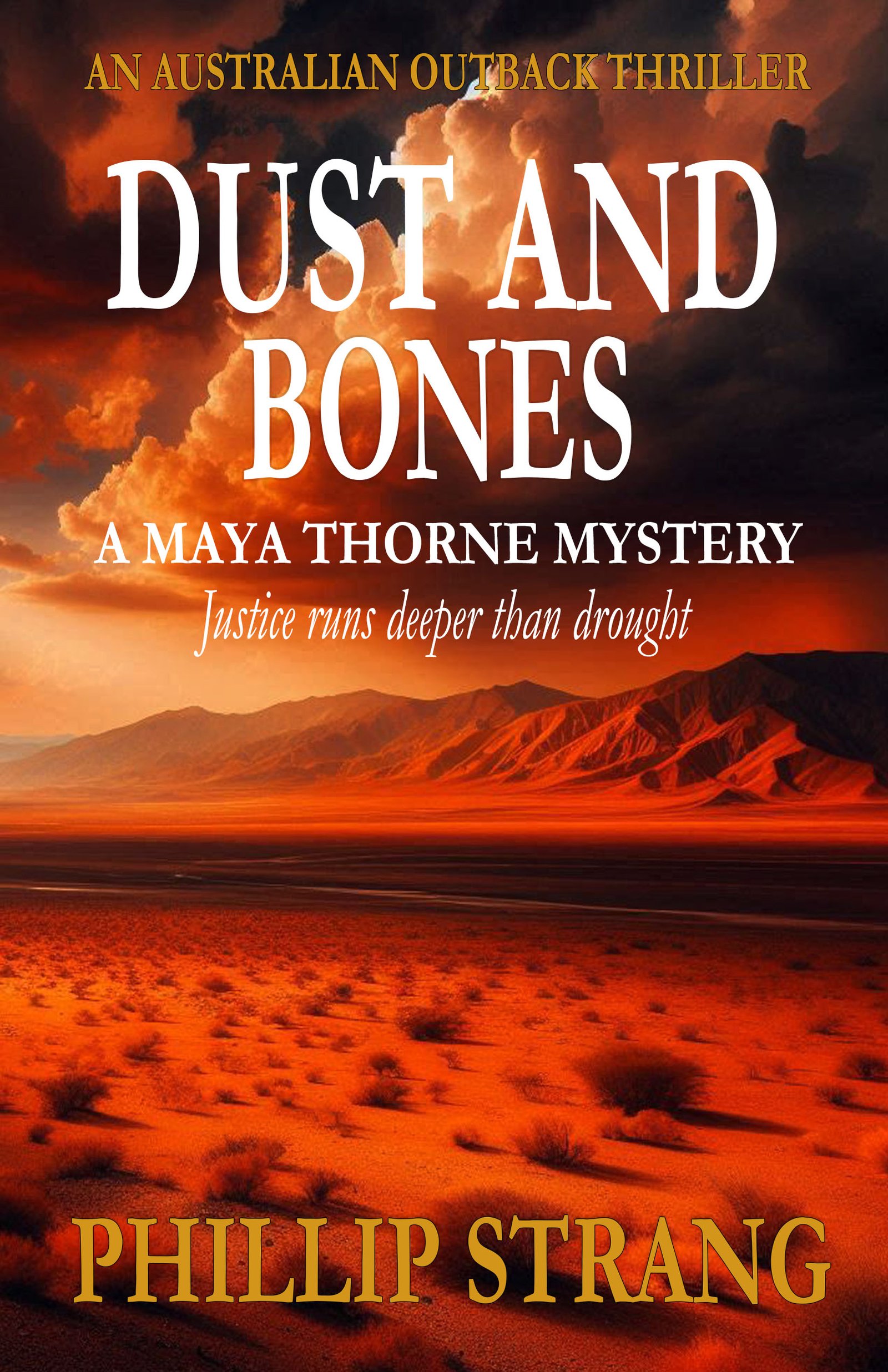
A MAYA THORNE MYSTERY
Get Dust and Bones Free
Justice runs deeper than drought.
Red dust. Shallow graves. A detective who hunts killers where the law runs thin and the nearest help is two hundred miles away.
Send Me the BookYou'll also receive occasional new release emails. Unsubscribe anytime. No spam, ever.
As an Amazon Associate, Phillip Strang earns from qualifying purchases. This page contains affiliate links — buying through them costs you nothing extra.