
Atmospheric Noir: Setting for Mood is not a stylistic flourish you add once the plot is working — it is the architecture the story breathes inside. Get it wrong and your murder investigation feels like a tax return with corpses. Get it right and the reader feels the damp on their collar before anyone dies.
Across eighteen series and more than 150 novels, I have found that the single most consistent difference between crime fiction that lingers and crime fiction that is forgotten by Tuesday is whether the setting does active work — not decorative work, not background work, but structural, emotional, pressurising work that makes the story impossible to imagine anywhere else.
Setting Is Not Description — It Is Argument
Writers beginning in the genre tend to think of setting as the opening paragraph where you tell the reader it is raining and the streets are narrow. That is set dressing. What atmospheric noir demands is something more committed: a conviction that where your story takes place is inseparable from what your story means.
Think about what a city actually argues with its geography. A story set in London’s outer boroughs — where the gleaming financial centre is visible but economically unreachable — already has a political posture before a single character speaks. The skyline itself creates pressure. When I built the DCI Isaac Cook series, I was deliberate about placing Isaac in a London that tourism ignores: the housing estates, the areas of concentrated poverty, the streets where social failure accumulates quietly. That geography is not flavour. It is argument. It tells the reader what kind of justice is available and to whom.
Setting in atmospheric noir needs to take a position. The Edinburgh of a certain school of Scottish crime fiction positions class and Calvinist guilt as permanent features of the weather. Los Angeles noir, in its classic form, uses the sunshine as irony — the brightness makes the corruption more visible precisely because it has nowhere to hide. Every setting in noir is making a claim about power, about who the city belongs to, and your prose needs to know that claim intimately.
The Mechanics of Atmospheric Noir: Setting for Mood
Once you accept that setting is argument rather than decoration, the craft question becomes technical: how do you actually build mood from place without stopping the story to lecture the reader about it?
The answer is compression and specificity. The specific detail that carries emotional weight does more in six words than a paragraph of atmospheric generalisation. Not the street was dirty but the particular quality of that dirt — the takeaway containers accumulating against the shuttered newsagent, the broken glass that nobody has bothered to sweep because nobody expects anyone to sweep it. Specificity signals to the reader that the author has been there, has paid attention, and therefore can be trusted. That trust is what makes mood possible. You cannot manufacture dread in a setting you have described vaguely.
For the DI Sarah Lynch series, set in the Scottish Highlands, I had to resist the postcard. The Highlands carry enormous romantic freight in English-language fiction — the mist, the heather, the melancholy grandeur. All of that is available, and all of it is a trap if you let it substitute for observation. What makes the setting work for noir is not the beauty but what the beauty conceals and what happens when isolation becomes a structural feature of crime: no witnesses, no quick forensics, no casual CCTV. The remoteness is not picturesque in those books — it is adversarial. It actively works against Lynch and shapes what she can and cannot know.
Mood also accumulates through repetition of motif rather than sustained description. Return to the same image — a recurring street corner, a specific quality of light, a sound the protagonist registers each time — and you train the reader’s nervous system to anticipate. That anticipation is mood.
How I Actually Build a Setting Before I Write a Word of Plot
My working process starts with geography before it starts with crime. Before I know who dies, I know where the story lives and what that place costs its inhabitants. I ask myself what the dominant mood of this geography is, and then I ask what crime could grow naturally from it rather than being transplanted into it.
With Maya Thorne, set in the Australian outback, the landscape is not neutral. The outback has specific qualities that are relevant to crime fiction quite apart from any romantic notion of the bush: it is genuinely isolating in ways that urban settings cannot replicate, it has a relationship with Indigenous history that makes certain kinds of violence carry layered meaning, and its sheer scale creates a particular relationship between the investigator and the evidence. Maya cannot saturate a search area the way a city detective can. Distance is a character in those books.
I keep a setting file for each series — not a style guide, but a document of specific sensory details that belong to that world and that I return to regularly. Not to repeat them verbatim but to stay calibrated. When you are fifty books into a series, it is easy to let the setting become assumed rather than active. The file is a reminder that the reader is not living inside the world the way I am after years of writing it. They need the setting rebuilt on every page, lightly but constantly.
For writers interested in the broader noir tradition and its genre contexts, it is worth studying the best noir crime thriller novels not as a reading list but as an atlas — mapping how different writers solve the same atmospheric problem in different geographies. Equally, anyone writing crime in a procedural mode will find that the question of setting intersects constantly with the mechanics of investigation, and studying police procedural novels reveals how much the best practitioners use institutional geography — the station, the interview room, the forensics lab — as atmospheric tools rather than merely functional spaces.
What Goes Wrong and Why
The most common failure is what I call the weather report: the writer opens each chapter with atmospheric description and then stops. The mood pools at the chapter head and drains away the moment the dialogue begins. Setting has to stay alive through the action, not just frame it. If your characters are walking through a fog-bound harbour and the fog disappears the moment they start talking to each other, you have told the reader the atmosphere was cosmetic.
The second failure is importing atmosphere from a different story’s geography. A writer who has read extensively in Edinburgh noir and decides to set their book in, say, Birmingham, but writes Birmingham as if it were Edinburgh, produces a setting with no roots. The specific class dynamics, the particular architecture of post-industrial English cities, the sound of a West Midlands accent — these are not interchangeable with Scottish urban textures, and readers who know Birmingham will feel the falseness immediately. Those who do not know Birmingham will feel an unplaceable wrongness, a sense that the setting is a costume rather than a body.
The third mistake — and this is common among writers who have absorbed the style without the substance of noir — is confusing darkness with mood. Relentless grimness is not atmospheric. It is numbing. Noir at its most effective uses contrast: a moment of mundane warmth inside the oppressive setting makes the oppression more precise. The bowl of soup that tastes good. The joke that lands. Mood requires pressure and release, not a continuous wall of grey.
Genre-aware writers will find that character-driven fiction handles this contrast instinctively — character and setting create mood through friction, not through the setting simply announcing itself.
Conclusion
Setting in atmospheric noir is not where your story happens. It is why your story happens the way it does, to the people it happens to, with the stakes it carries. Every geographical choice is a thematic choice, and the writer who understands that will build dread, pressure, and resonance from the street up.
About Phillip Strang
Phillip Strang is an Australian crime and thriller novelist. Across eighteen series and more than 150 novels, his work spans London police procedurals (DCI Isaac Cook), UK investigations (DI Tremayne), Australian outback crime (Maya Thorne), FBI thrillers (Alex Harlan), Scottish Highland mysteries (DI Sarah Lynch), and espionage (Steve Case). Learn more about Phillip or browse his complete catalogue on Amazon.
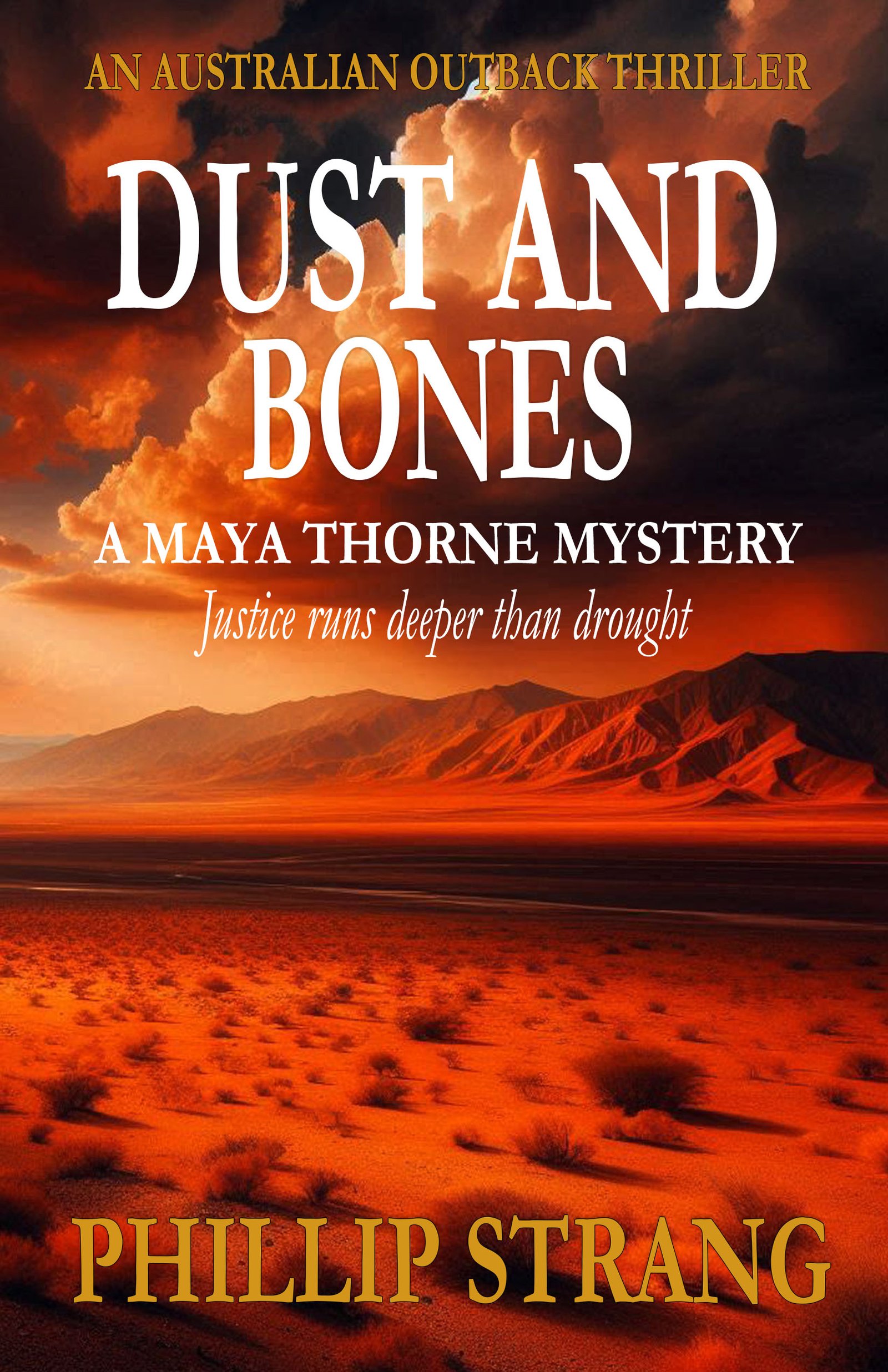
A MAYA THORNE MYSTERY
Get Dust and Bones Free
Justice runs deeper than drought.
Red dust. Shallow graves. A detective who hunts killers where the law runs thin and the nearest help is two hundred miles away.
Send Me the BookYou'll also receive occasional new release emails. Unsubscribe anytime. No spam, ever.
As an Amazon Associate, Phillip Strang earns from qualifying purchases. This page contains affiliate links — buying through them costs you nothing extra.