
The Australian outback presents crime writers with a paradox: it’s simultaneously the most isolating and most psychologically revealing setting you can choose. When your characters are hundreds of kilometres from the nearest neighbour, every decision becomes magnified, every secret more dangerous, and every motivation stripped to its essential core.
Across eighteen series and more than 150 novels, I’ve found that the outback doesn’t just provide backdrop—it becomes an active participant in your crime narrative. Through my Maya Thorne series, I’ve learned that this landscape demands respect from both characters and writers, punishing those who treat it as mere scenery with unconvincing plots and shallow character development.
The Geography of Guilt
The outback’s vastness creates natural pressure cookers for crime fiction. Unlike urban settings where characters can disappear into crowds, the outback strips away anonymity. Everyone knows everyone, or thinks they do. This creates fertile ground for secrets that fester across generations. When I developed the town dynamics in my Maya Thorne investigations, I discovered that isolation breeds its own kind of complicity—people overlook crimes not from urban indifference, but from the desperate need to maintain community cohesion when you’re the only human settlement for hundreds of kilometres.
The physical environment itself becomes investigative terrain. Tire tracks in red dirt last for months. Bones bleach white under the relentless sun. Water sources become natural gathering points where evidence accumulates. Smart crime writers use these environmental factors not as convenient plot devices, but as logical extensions of how crimes would actually unfold in such conditions. The landscape remembers everything, even when people choose to forget.
Character Isolation and Psychological Depth
Outback crime fiction succeeds or fails on character psychology, because the setting strips away social pretenses. Your detective can’t blend into the background—they’re immediately marked as outsider or insider, with all the complications that brings. In developing Maya Thorne, I made her a former city cop who chose the outback, giving her the investigative skills while forcing her to navigate community loyalties that don’t exist in anonymous urban cases.
The isolation factor intensifies every character interaction. When your nearest backup is three hours away, when mobile coverage is sporadic, when the local pub is the only social venue within driving distance, character relationships become life-and-death matters. This creates natural tension that character-driven crime fiction can exploit. Your antagonist isn’t just someone to avoid—they’re someone you might need to survive alongside if things go wrong.
Outback characters develop different moral frameworks from their urban counterparts. They’re more likely to take justice into their own hands, more tolerant of violence when it serves community protection, more suspicious of outside authority. This isn’t stereotyping—it’s environmental adaptation that creates authentic conflict when outside investigators arrive.
How I Actually Approach Outback Crime Writing
My process begins with the water sources. In genuine outback country, everything revolves around water—settlements, travel routes, even body disposal. I map the water before I plot the crime, because that’s how the landscape actually works. This isn’t romanticising the setting; it’s understanding its practical constraints.
I spend considerable time establishing the social ecosystem before introducing the crime. Who owns what land? Which families have feuds stretching back decades? How does the community handle problems without calling outside authorities? These aren’t just background details—they’re the framework within which your crime occurs and gets investigated. When Maya arrives at a new case, she’s not just solving a murder; she’s navigating a community that’s already decided how they want the problem handled.
The weather becomes a character in its own right. Outback weather doesn’t just create atmosphere—it dictates investigation timelines. Evidence degrades faster in extreme heat. Flash floods can wash away crime scenes entirely. Drought years create community tensions that influence who becomes suspects. I calendar the seasons and weather patterns before writing, because they determine what’s possible and when.
Common Mistakes That Kill Authenticity
The biggest error I see is treating the outback as interchangeable with any remote setting. Writers drop urban crime plots into outback settings without adjusting for how communities actually function. Your serial killer stalking strangers makes no sense when everyone knows everyone. Your anonymous witness protection doesn’t work when newcomers are noticed immediately and discussed endlessly.
Many writers romanticise the harshness while missing its practical implications. Yes, the landscape is unforgiving, but that creates specific survival behaviors that affect how people respond to crime. Outback residents don’t call police first when there’s trouble—they handle it themselves because they have to. This isn’t lawlessness; it’s environmental adaptation that creates different investigative dynamics.
Another frequent mistake is making the setting too exotic. The outback isn’t populated by crocodile wrestlers and mystical wanderers. Real outback communities include teachers, mechanics, shop owners, truck drivers—ordinary people adapted to extraordinary geography. When writers focus too heavily on the exotic elements, they miss the authentic human dynamics that make police procedural investigations compelling.
The communication isolation gets handled badly too often. Writers either ignore modern technology entirely or have it work perfectly when convenient. Reality is more complex—mobile towers create coverage pockets, satellite internet is expensive and limited, but many communities are more connected than outsiders assume. Getting this wrong destroys credibility with readers who understand how remote communities actually function.
Environmental Storytelling Techniques
The outback landscape tells stories through physical evidence that urban settings can’t match. Animal tracks, vegetation patterns, erosion marks, water staining—all these become investigative tools when you understand what they reveal. I research the specific ecology of each setting, not for nature documentary descriptions, but for forensic possibilities.
Seasonal patterns create natural investigation rhythms. Tourist seasons bring outsiders and new complications. Mustering seasons scatter the population and limit witness availability. Wet seasons can cut off access entirely. These aren’t obstacles to work around—they’re story structures that create authentic pacing and complications. When I’m plotting a Maya Thorne investigation, the calendar determines investigative possibilities as much as character motivations do.
The Aboriginal connection to country provides layers of information that go beyond standard forensic techniques, but this must be handled with genuine respect and research rather than mystical stereotyping. Traditional knowledge about the land, its history, and its patterns offers investigative angles that exist nowhere else, but only when portrayed authentically rather than as magical solutions.
Conclusion
The Australian outback succeeds as a crime fiction setting because it forces authenticity from both characters and writers. The environment won’t support lazy plotting or shallow character development—the isolation and harshness expose every weakness in your storytelling craft. When handled with genuine understanding rather than exotic stereotyping, it provides crime writers with uniquely compelling investigative and psychological territory that enhances rather than merely decorates your narrative.
About Phillip Strang
Phillip Strang is an Australian crime and thriller novelist. Across eighteen series and more than 150 novels, his work spans London police procedurals (DCI Isaac Cook), UK investigations (DI Tremayne), Australian outback crime (Maya Thorne), FBI thrillers (Alex Harlan), Scottish Highland mysteries (DI Sarah Lynch), and espionage (Steve Case). Learn more about Phillip or browse his complete catalogue on Amazon.
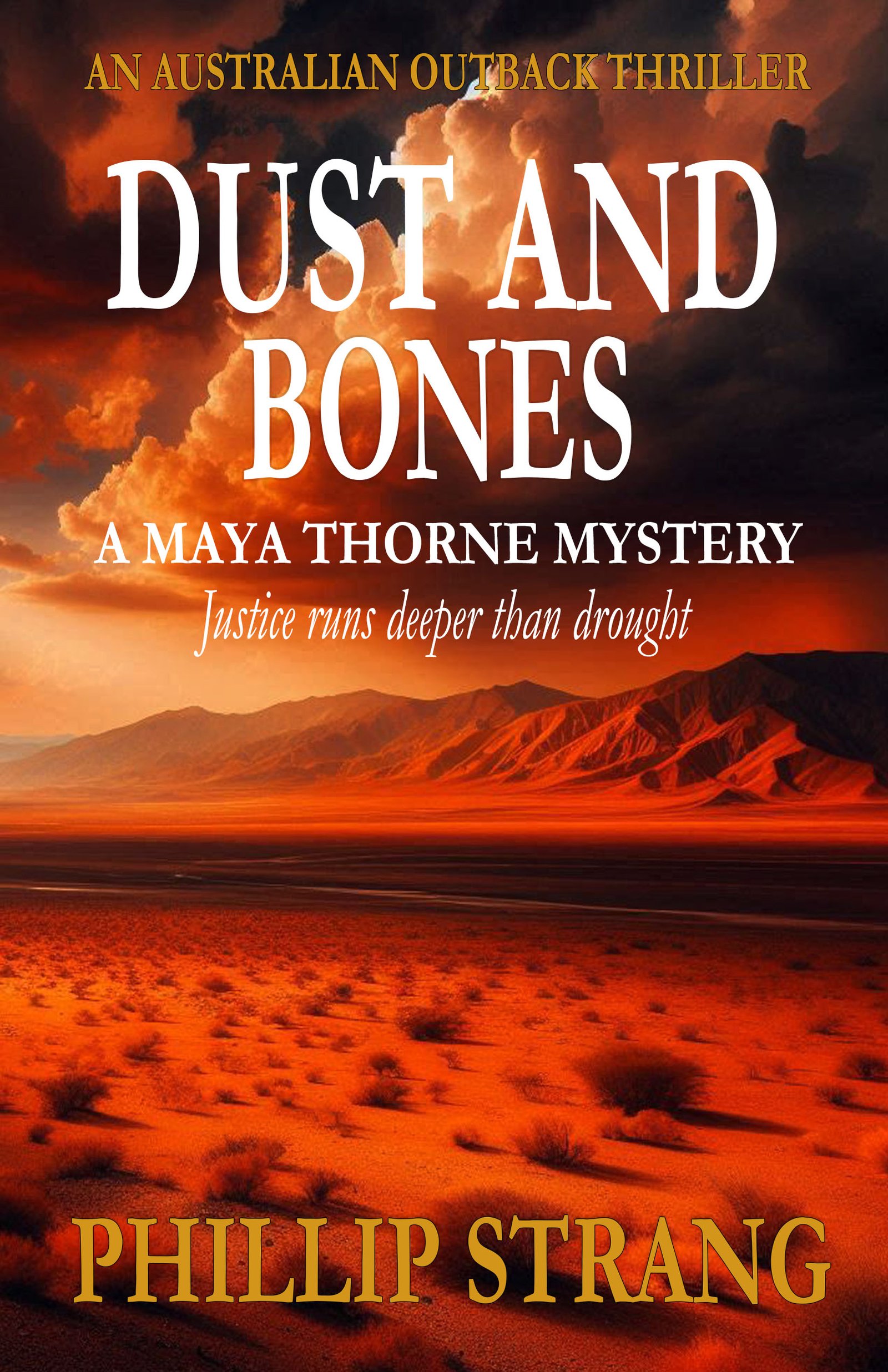
A MAYA THORNE MYSTERY
Get Dust and Bones Free
Justice runs deeper than drought.
Red dust. Shallow graves. A detective who hunts killers where the law runs thin and the nearest help is two hundred miles away.
Send Me the BookYou'll also receive occasional new release emails. Unsubscribe anytime. No spam, ever.
As an Amazon Associate, Phillip Strang earns from qualifying purchases. This page contains affiliate links — buying through them costs you nothing extra.