
Australian Rural Crime Settings present storytelling opportunities that no urban environment can replicate. The isolation, the unforgiving landscape, and the unique social dynamics of small outback communities create natural pressure cookers for crime fiction.
Across eighteen series and more than 150 novels I have found that rural Australian settings force both characters and readers into uncomfortable intimacy. There’s nowhere to hide when the nearest neighbour is fifty kilometres away and the local constable knows everyone’s business going back three generations.
The Geography of Fear
Rural Australia doesn’t just provide backdrop—it becomes a character that actively shapes your plot. The tyranny of distance means help isn’t coming quickly, if at all. A broken-down vehicle becomes a death sentence. A bushfire can trap your protagonist with the killer. These aren’t convenient plot devices; they’re the daily realities that rural Australians navigate.
When I developed the Maya Thorne series, I deliberately chose settings where the landscape itself would amplify tension. A murder in the middle of nowhere means the killer is likely someone the victim knew intimately. The investigating officer can’t fade into anonymity—they’re part of the community fabric, with all the complications that brings.
The heat becomes oppressive in ways that London fog or New York rain never could. Dust storms blind everyone equally. Water scarcity makes every creek bed a potential crime scene and every bore a possible grave. These environmental factors aren’t window dressing—they’re plot drivers that elevate tension organically.
Small Town Secrets and Social Dynamics
Rural communities operate on different social rules than cities. Everyone knows everyone, but that familiarity breeds both protection and resentment. The local publican might be the town’s informal counsellor, banker, and intelligence network all rolled into one. The postmaster reads between the lines of every delivery. The district nurse knows which families are struggling with more than medical problems.
These interconnected relationships create natural suspects with believable motives. The land dispute that’s simmered for decades. The affair that everyone pretends not to know about. The family business that’s been propped up by questionable dealings. In small towns, secrets don’t stay buried—they ferment.
I’ve learned to exploit the claustrophobic nature of rural social networks. When your detective is investigating people they’ve known since childhood, objectivity becomes complicated. When the prime suspect is the person who saved your protagonist’s life during the last drought, the emotional stakes escalate beyond simple justice.
How I Actually Approach Australian Rural Crime Settings
I start with the specific geography and work outward. Not just ‘somewhere in the outback’ but a particular type of country with its own challenges. Mining territory brings different dynamics than pastoral land or wheat country. Each has distinct social structures, economic pressures, and environmental hazards.
The key is understanding that rural Australia isn’t just empty space between cities. It’s communities with their own cultures, hierarchies, and unwritten rules. The grazier’s daughter who went to university in Sydney and came back carries different social weight than the mechanic who’s never left the district. These distinctions matter when you’re building believable suspects and witnesses.
Weather and season become plot elements. Mustering season means different people in different places. Drought changes everything—social dynamics, economic pressures, even which roads are passable. I plan crimes around these natural rhythms because rural people live by them.
Transport logistics shape everything. How does your detective reach the crime scene? Who discovered the body and why were they there? In cities, people might stumble across crime scenes. In the bush, someone finding a body usually has a specific reason for being in that exact spot, and that reason often connects to motive.
Avoiding the Clichéd Outback Thriller
The biggest mistake is treating rural Australia as a generic wasteland populated by stereotypes. The gruff farmer who speaks in monosyllables. The eccentric hermit who knows all the secrets. The corrupt cop who’s gone native. These characters exist because they’re easy, not because they’re accurate.
Real rural communities are sophisticated social networks. The local mechanic might have an engineering degree. The pub owner could be running a complex business empire. The station hand might speak three languages. Rural doesn’t mean unsophisticated, and isolation doesn’t mean ignorance.
Another trap is making the landscape too exotic. Yes, Australia has unique dangers—snakes, spiders, crocodiles in the north. But rural crime succeeds on human motivations, not wildlife theatrics. A victim killed by a convenient snake bite isn’t crime fiction—it’s adventure writing. Focus on how the environment amplifies human conflicts rather than replacing them.
Technology presents particular challenges. Mobile coverage is patchy, internet can be unreliable, but it’s not the 1950s. Rural people adapt technology to their needs in creative ways. Satellite phones, two-way radios, GPS tracking for livestock—these tools can drive plot as effectively as they can complicate it. Don’t ignore modern reality for the sake of convenient isolation.
The ‘fish out of water’ city detective story has been done to death. If you’re going to use an outsider investigator, give them a compelling reason to be there beyond simple assignment. Personal connection, specialized knowledge, or involuntary circumstances work better than routine police procedure.
Mastering Rural Australian Crime Settings
Successful Australian Rural Crime Settings depend on understanding that isolation amplifies everything—fear, desperation, loyalty, and hatred. The environment doesn’t just provide atmosphere; it shapes character behaviour and plot possibilities in ways that urban settings cannot.
The secret is recognizing that rural Australia offers crime writers a unique combination of intimate community knowledge and vast, unforgiving landscape. When you balance these elements correctly, the setting becomes an active participant in your story rather than mere backdrop.
Conclusion
Australian rural settings offer crime writers unmatched opportunities for psychological pressure and environmental tension. Master the balance between landscape and community, avoid the stereotypes, and let the unique character of the Australian outback drive your plot forward.
About Phillip Strang
Phillip Strang is an Australian crime and thriller novelist. Across eighteen series and more than 150 novels, his work spans London police procedurals (DCI Isaac Cook), UK investigations (DI Tremayne), Australian outback crime (Maya Thorne), FBI thrillers (Alex Harlan), Scottish Highland mysteries (DI Sarah Lynch), and espionage (Steve Case). Learn more about Phillip or browse his complete catalogue on Amazon.
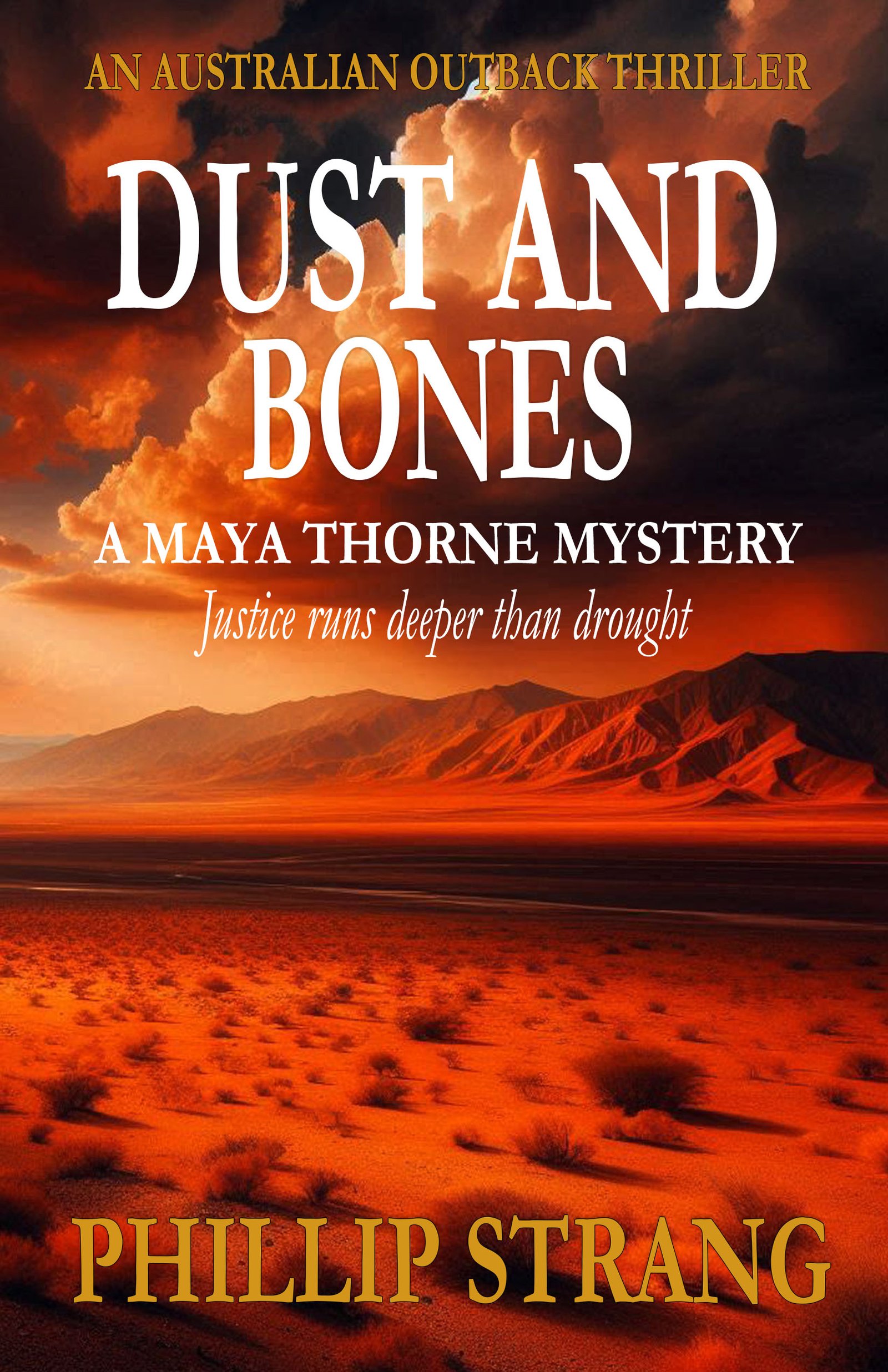
A MAYA THORNE MYSTERY
Get Dust and Bones Free
Justice runs deeper than drought.
Red dust. Shallow graves. A detective who hunts killers where the law runs thin and the nearest help is two hundred miles away.
Send Me the BookYou'll also receive occasional new release emails. Unsubscribe anytime. No spam, ever.
As an Amazon Associate, Phillip Strang earns from qualifying purchases. This page contains affiliate links — buying through them costs you nothing extra.