
Author branding for crime writers becomes exponentially more complex when you’re juggling multiple series across different subgenres and geographical settings. The challenge isn’t just maintaining consistent quality—it’s creating distinct brand positions for each series while ensuring they all contribute to a cohesive authorial identity. Most crime writers struggle with this balance, either creating series that blur together indistinguishably or fragmenting their brand so severely that readers can’t follow them from one project to the next.
Across eighteen series and more than 150 novels, I’ve found that successful author branding in crime fiction requires treating each series as a separate product line within your overall brand architecture. This isn’t about slapping different covers on the same formulaic approach—it’s about developing genuinely distinct voices, settings, and investigative methodologies that appeal to different reader segments while maintaining the underlying craft standards that define your work.
Establishing Series-Specific Brand Pillars
Each crime series needs its own brand identity built around four core pillars: setting authenticity, protagonist psychology, investigative methodology, and thematic focus. When I developed DCI Isaac Cook, the brand pillars were London’s urban complexity, a methodical detective with personal demons, traditional police procedure, and themes of institutional corruption. Compare this to Maya Thorne, where the pillars are outback isolation, an intuitive investigator with cultural connections, unconventional detection methods, and themes of community secrets.
The key is ensuring these pillars don’t overlap significantly across your series portfolio. If you have two police procedural protagonists who both rely on intuitive leaps and operate in urban settings, you’ve created brand confusion. Readers won’t understand why they need both series, and you’ll be competing against yourself for the same audience segment. Each series should occupy a distinct position in the crime fiction landscape and appeal to readers seeking something specific that your other series don’t provide.
Setting becomes your most powerful differentiator, but only if you commit fully to its unique demands. Don’t treat location as mere backdrop—let it drive character development, plot mechanics, and even prose rhythm. The investigative challenges in Scottish Highlands terrain require different skills and create different tensions than London street crime or outback isolation. When readers pick up a DI Sarah Lynch novel, they’re buying into Highland atmosphere as much as they’re buying into crime solving.
Voice Differentiation Without Losing Authorial DNA
The most sophisticated aspect of multi-series branding is developing distinct narrative voices while maintaining recognizable authorial DNA. This isn’t about adopting completely different writing styles—it’s about adjusting tone, pacing, and perspective to serve each series’ unique brand position. Your underlying craft approach, your ear for dialogue authenticity, your ability to construct plot mechanics—these core competencies should remain consistent across all series.
I approach voice differentiation through three technical adjustments: sentence structure variation, dialogue patterns specific to each protagonist, and POV limitations that create different reader experiences. DI Tremayne operates with shorter, more direct sentences that reflect his pragmatic approach, while Steve Case requires more complex sentence structures to handle the layered deceptions inherent in espionage work. The dialogue patterns follow similar logic—Tremayne speaks in clipped, purposeful exchanges, while Case uses more sophisticated verbal maneuvering.
POV limitations create the most significant voice differentiation. Some protagonists work best with tight third-person limitation, others require multiple POV characters to serve the investigative complexity. These aren’t arbitrary choices—they emerge from each series’ brand requirements and the specific types of crimes being investigated. The voice serves the brand position, not the other way around.
My Working Approach to Multi-Series Brand Management
Managing eighteen series requires systematic brand discipline rather than creative inspiration. I maintain detailed brand documents for each series that define not just character backgrounds and setting details, but the specific reader promises each series makes. What type of crime complexity can readers expect? What investigative satisfaction will they receive? What emotional journey will the protagonist take them through?
Before starting any new book, I review the relevant brand document to recalibrate my approach. This isn’t about stifling creativity—it’s about channeling creative energy in directions that strengthen rather than dilute the series brand. If an interesting plot development doesn’t serve the series’ established brand position, I either modify it until it does or save it for a series where it fits naturally.
I also track reader feedback patterns across series to identify when brand positioning is working and when it’s creating confusion. If readers consistently compare two of my series or express confusion about their differences, that signals brand overlap that needs correction. The goal is for readers to have clear expectations when they pick up any series and to feel those expectations are consistently fulfilled. This approach has proven essential when working across different subgenres, from police procedurals to espionage thrillers.
Common Brand Dilution Mistakes to Avoid
The most destructive mistake crime writers make is treating series differentiation as a surface-level cosmetic exercise. Changing the protagonist’s name and location while maintaining identical investigative approaches, similar personality types, and equivalent supporting cast dynamics creates the illusion of variety without delivering genuine distinction. Readers recognize this immediately and feel cheated.
Another critical error is inconsistent brand delivery within established series. If your London police procedural suddenly adopts the pacing and tone of a psychological thriller, you’ve broken the reader contract your series brand established. Consistency doesn’t mean stagnation—characters can develop and situations can evolve—but the core brand promises must remain reliable. When readers invest in a series, they’re buying into a specific type of reading experience.
Cross-contamination between series brands is equally problematic. When similar supporting characters appear across multiple series, when protagonists employ identical investigation methods, or when thematic concerns blur together, you’re undermining the distinct positioning that justifies having multiple series. Each series should feel like it emerges from different creative impulses and serves different reader needs.
The subtlest mistake is failing to evolve series brands strategically over time. While consistency is crucial, blind adherence to original positioning can make long-running series feel stale. The key is evolutionary development that deepens the original brand promise rather than abandoning it. Character growth should make protagonists more distinctly themselves, not more generic.
Platform Integration and Reader Navigation
Multi-series authors must solve the practical problem of helping readers navigate their extensive catalogs without feeling overwhelmed. Your author platform should present each series as a distinct entry point while making connections between series clear for readers who want to explore your broader work. This requires treating your author brand as an umbrella that encompasses multiple product lines rather than a single unified offering.
I’ve found that readers prefer to discover one series thoroughly before exploring others, rather than sampling across multiple series simultaneously. This means each series must be capable of standing alone and providing complete reader satisfaction, while also serving as a gateway to your other work for readers who want more. The brand architecture should facilitate this natural progression rather than forcing readers to commit to everything at once.
Series presentation order matters significantly. Lead with your strongest, most distinctive series to establish clear expectations about your capabilities, then present other series in ways that highlight their unique value propositions. Don’t assume readers will automatically understand why you’ve written in multiple subgenres—make the case for each series’ distinct appeal and the specific reader needs it addresses.
Conclusion
Successful author branding across multiple crime series requires treating each series as a distinct product with its own market position, while maintaining the craft standards and authorial sensibilities that justify the shared byline. The complexity is substantial, but the payoff—in terms of reader loyalty, market coverage, and creative satisfaction—makes the systematic approach worthwhile for crime writers committed to building substantial, lasting careers.
About Phillip Strang
Phillip Strang is an Australian crime and thriller novelist. Across eighteen series and more than 150 novels, his work spans London police procedurals (DCI Isaac Cook), UK investigations (DI Tremayne), Australian outback crime (Maya Thorne), FBI thrillers (Alex Harlan), Scottish Highland mysteries (DI Sarah Lynch), and espionage (Steve Case). Learn more about Phillip or browse his complete catalogue on Amazon.
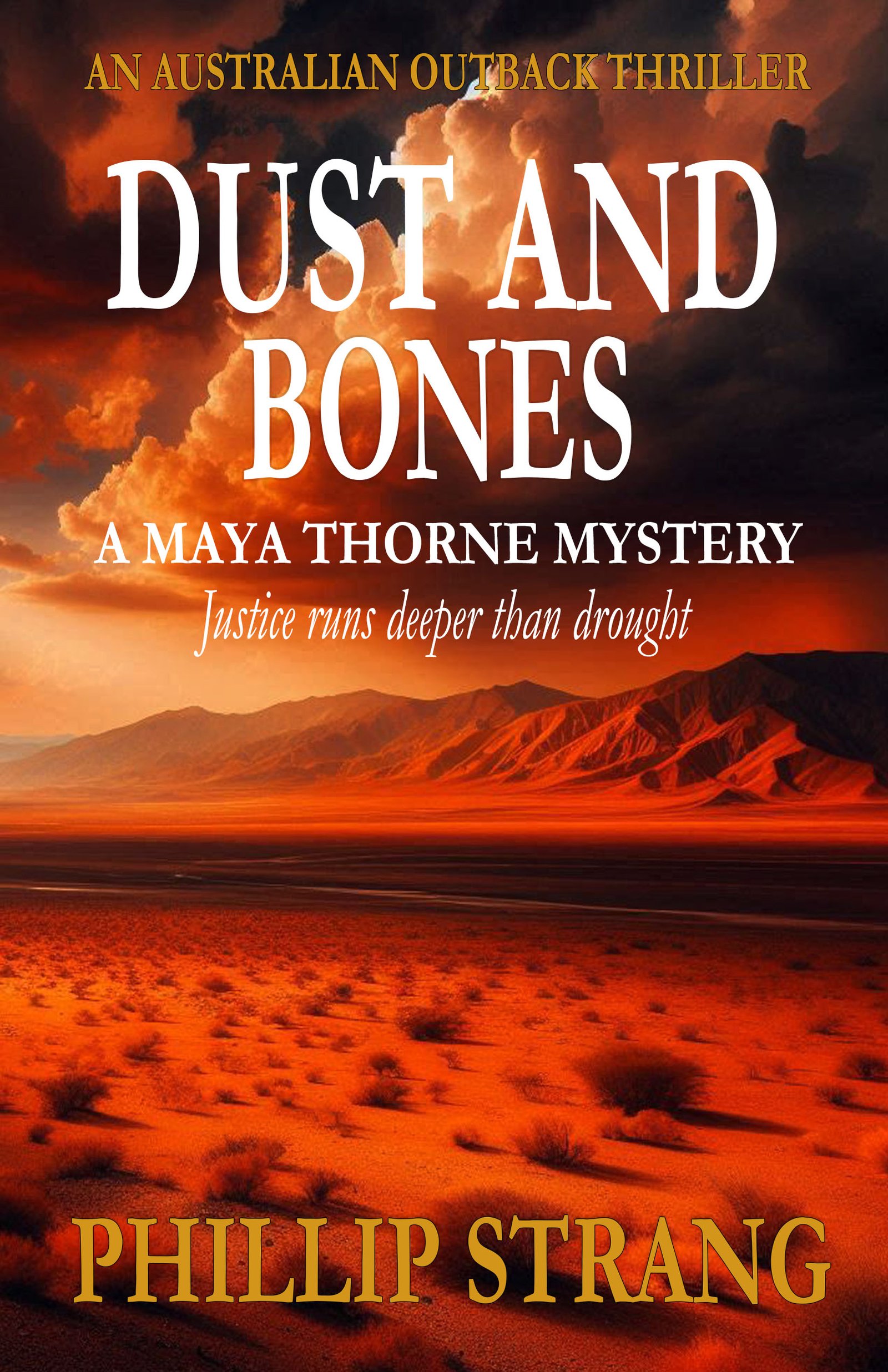
A MAYA THORNE MYSTERY
Get Dust and Bones Free
Justice runs deeper than drought.
Red dust. Shallow graves. A detective who hunts killers where the law runs thin and the nearest help is two hundred miles away.
Send Me the BookYou'll also receive occasional new release emails. Unsubscribe anytime. No spam, ever.
As an Amazon Associate, Phillip Strang earns from qualifying purchases. This page contains affiliate links — buying through them costs you nothing extra.