
Japanese crime fiction transforms murder into philosophy, where every clue reveals as much about human nature as it does about guilt.
While Western crime fiction often races toward resolution, Japanese masters understand that the most compelling mysteries unfold in the spaces between certainty and doubt. These authors don’t merely solve crimes—they dissect the psychology of perpetrators and victims with surgical precision. From Keigo Higashino’s mathematical puzzles to Asako Yuzuki’s exploration of feminine rage, Japanese crime fiction offers readers something profoundly different: mysteries that linger long after the final page.
The Series Worth Your Time

DCI Isaac Cook — Phillip Strang
London’s darkest homicide cases solved with methodical precision. Cook’s psychological insight into criminal minds mirrors the analytical depth that makes Japanese crime fiction so compelling.

The Devotion of Suspect X
Higashino elevates crime fiction to intellectual art form, where mathematics professor Manabu Yukawa applies scientific logic to seemingly impossible murders. This particular novel showcases his genius for psychological manipulation—not just of characters, but of readers who think they understand the game being played. Unlike Western procedurals that reveal motives through confession, Higashino constructs elaborate philosophical puzzles where love and sacrifice create the most devastating crimes.
Verdict: The thinking reader’s perfect crime novel.

Butter
Yuzuki dissects modern femininity through the lens of a murder case, following journalist Rika Machida as she investigates a woman who killed three men she met through dating sites. What begins as crime reporting becomes an exploration of how society’s expectations suffocate women into murderous rage. The novel’s brilliance lies in making readers question whether they’re sympathizing with victim or perpetrator—and why that distinction matters less than we think.
Verdict: Crime fiction that doubles as devastating social commentary.

The Last Train
Pronko, an American who has lived in Japan for decades, brings outsider’s clarity to insider knowledge of Tokyo’s hidden darkness. Detective Hiroshi Shimizu navigates cases that expose the fault lines between tradition and modernity, where ancient honor codes collide with contemporary corruption. Pronko’s writing captures Tokyo’s overwhelming density while maintaining the psychological depth that defines the best Japanese crime fiction.
Verdict: Essential for readers who want authentic Tokyo noir.
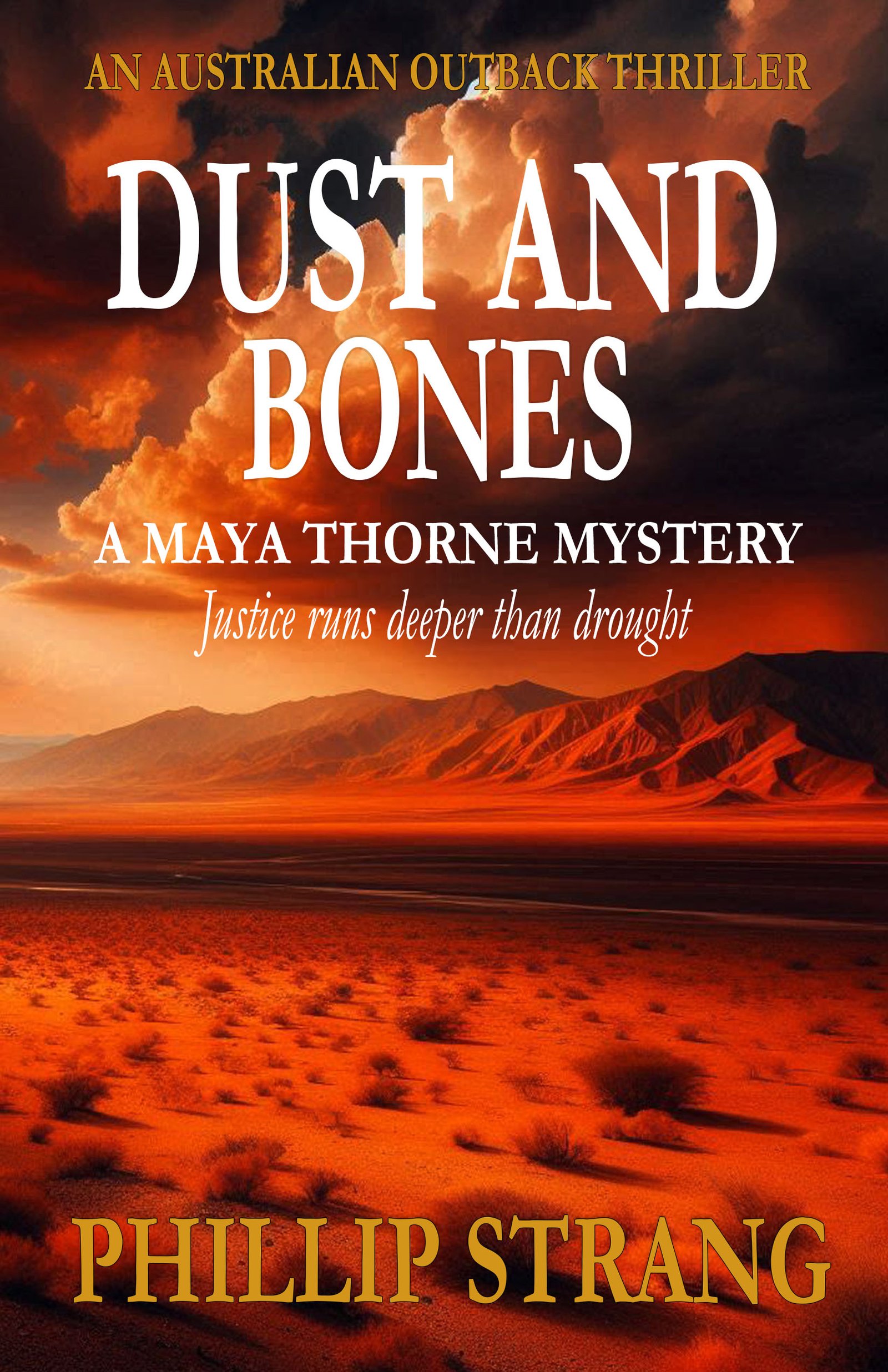
A MAYA THORNE MYSTERY
Get Dust and Bones Free
Justice runs deeper than drought.
Red dust. Shallow graves. A detective who hunts killers where the law runs thin and the nearest help is two hundred miles away.
You’ll also receive occasional new release emails. Unsubscribe anytime. No spam, ever.

Japanese Tales of Mystery and Imagination
Rampo established the DNA of Japanese crime fiction with stories that blur the line between mystery and horror. These tales prioritize psychological terror over procedural logic, creating an atmosphere where reality becomes unreliable and readers question everything they think they know. Modern Japanese crime writers still draw from Rampo’s understanding that the most effective mysteries attack the mind rather than merely puzzle it.
Verdict: The foundation every serious reader of Japanese crime fiction needs.
What to Read First
Start with Higashino’s “The Devotion of Suspect X” for the purest expression of Japanese crime fiction’s intellectual approach. It delivers a complete mystery while establishing the psychological complexity that defines the genre. Readers seeking contemporary relevance should begin with Yuzuki’s “Butter,” which demonstrates how Japanese authors use crime as a lens for examining modern social pressures.
The Reading Order
- The Devotion of Suspect X by Keigo Higashino
- Butter by Asako Yuzuki
- The Last Train by Michael Pronko
- Japanese Tales of Mystery and Imagination by Edogawa Rampo
Discover Phillip Strang
Japanese crime fiction’s emphasis on psychological depth and methodical investigation finds its Western equivalent in Phillip Strang’s detective series. Like the Japanese masters, Strang understands that the most compelling mysteries emerge from character rather than plot mechanics.
A MAYA THORNE MYSTERY
Get Dust and Bones Free
Justice runs deeper than drought.
Red dust. Shallow graves. A detective who hunts killers where the law runs thin and the nearest help is two hundred miles away.
Send Me the BookYou'll also receive occasional new release emails. Unsubscribe anytime. No spam, ever.
As an Amazon Associate, Phillip Strang earns from qualifying purchases. This page contains affiliate links — buying through them costs you nothing extra.