
The classic crime fiction canon isn’t just literary history—it’s a masterclass in technique that every working author should study with the same intensity they’d bring to dissecting a crime scene. These foundational works established the conventions we either follow or deliberately subvert, and understanding them means understanding why certain plot structures, character archetypes, and narrative devices continue to work decades after their creation.
Across eighteen series and more than 150 novels, I’ve found that the authors who understand their genre’s DNA—who’ve genuinely absorbed what came before—write with a confidence and authority that’s immediately recognizable. They know which rules to break because they understand why those rules existed in the first place.
The Architecture of Investigation
The classic canon teaches us that crime fiction is fundamentally about structure, and the best early practitioners were architectural geniuses. Agatha Christie didn’t just write puzzles; she engineered them with the precision of a Swiss watchmaker. Her plotting techniques—the careful placement of clues, the misdirection that plays fair with readers, the revelation that recontextualizes everything—remain the gold standard for mystery construction.
When I’m plotting a new DCI Isaac Cook investigation, I return constantly to Christie’s fundamental principle: every element must serve the solution, but nothing should feel artificially planted. The amateur sleuths and consulting detectives of the Golden Age showed us that investigation is about methodical observation and logical deduction, not just action and intuition. This matters enormously for contemporary crime writers because it establishes the intellectual framework that readers still expect, even in our grittier modern stories.
Character Types That Endure
The canon gives us the essential character archetypes that every crime writer needs to understand. The brilliant but flawed detective, the unreliable witness, the suspect with hidden depths—these aren’t clichés to be avoided but fundamental building blocks to be mastered and then refined.
Raymond Chandler’s hard-boiled detectives introduced moral ambiguity into what had been a relatively black-and-white genre. His protagonists weren’t puzzle-solvers; they were damaged individuals navigating corrupt systems, and this shift opened crime fiction to psychological complexity that we’re still exploring today. The noir tradition showed us that atmosphere could carry as much narrative weight as plot, that the setting could become a character in its own right.
Arthur Conan Doyle’s Sherlock Holmes established the template for the detective as outsider—brilliant but socially difficult, seeing what others miss but often blind to emotional nuance. This dynamic between exceptional ability and human limitation continues to drive successful police procedural novels today because it creates natural internal conflict.
How I Actually Use the Canon
I don’t read the classics for inspiration—I read them for technique. When I’m struggling with pacing in a thriller, I’ll reread a Hitchcock adaptation or a Graham Greene entertainment to see how masters handle tension without resorting to constant action. When I need to understand how to make exposition feel natural, I study how Dorothy Sayers integrates background information into dialogue and scene.
For my Maya Thorne series, I spent considerable time studying how classic crime writers handled remote settings. The isolated country house murder wasn’t just about convenience—it was about creating pressure. When you remove characters’ easy escape routes and outside help, you intensify every interaction. This principle applies whether you’re writing about the English countryside in the 1930s or the Australian outback today.
The canon also teaches practical lessons about series development. Christie’s Poirot and Marple books show how to maintain character consistency across multiple novels while still allowing for growth. Holmes demonstrates how a character’s quirks and methods can become signature elements that readers anticipate without becoming repetitive.
Technical Mastery from the Masters
The classic authors were forced to be technically excellent because they had fewer tools available. No forensics, limited communication technology, no databases—just observation, deduction, and human psychology. This constraint produced some of the finest plotting and characterization in the genre because everything had to serve the story.
John le Carré’s early work shows how espionage fiction can achieve literary depth without sacrificing suspense. His technique of revealing character through professional behavior, of making bureaucracy dramatic, influences how I approach the procedural elements in my own espionage thrillers. The best spy novels aren’t about gadgets and action sequences—they’re about loyalty, betrayal, and the psychological toll of deception.
The locked-room mysteries of John Dickson Carr demonstrate how constraints can drive creativity. When you set yourself seemingly impossible parameters, you’re forced to find ingenious solutions that surprise readers while still playing fair. This lesson applies to any subgenre: the tighter your restrictions, the more creative you must become.
Avoiding Canon Pitfalls
The biggest mistake contemporary crime writers make with the classics is surface-level imitation rather than deep understanding. Writing a brilliant detective with social quirks isn’t enough if you don’t understand why Holmes’s methods worked within Doyle’s narrative structure. Creating a locked-room scenario means nothing if you haven’t mastered the underlying principles of fair-play mystery construction.
Another common error is assuming that classic techniques are outdated. The basic psychology of suspense, the fundamental dynamics of investigation, the core appeal of puzzle-solving—these haven’t changed. What’s changed is context, technology, and social awareness, not human nature. Writers who dismiss Golden Age plotting as ‘unrealistic’ often produce modern crime fiction that’s dramatically inert because they’ve abandoned proven structural principles without replacing them with anything equally solid.
Some authors get trapped trying to modernize classic plots without understanding their essential mechanics. Simply updating a country house murder to a corporate retreat doesn’t work if you don’t grasp why isolation and limited suspects created effective dramatic pressure in the original.
Conclusion
The classic crime fiction canon isn’t museum material—it’s a working toolkit that every serious crime writer should master. These books teach fundamental techniques that remain as effective today as they were decades ago, and understanding them gives contemporary authors the foundation they need to innovate meaningfully rather than just differently.
About Phillip Strang
Phillip Strang is an Australian crime and thriller novelist. Across eighteen series and more than 150 novels, his work spans London police procedurals (DCI Isaac Cook), UK investigations (DI Tremayne), Australian outback crime (Maya Thorne), FBI thrillers (Alex Harlan), Scottish Highland mysteries (DI Sarah Lynch), and espionage (Steve Case). Learn more about Phillip or browse his complete catalogue on Amazon.
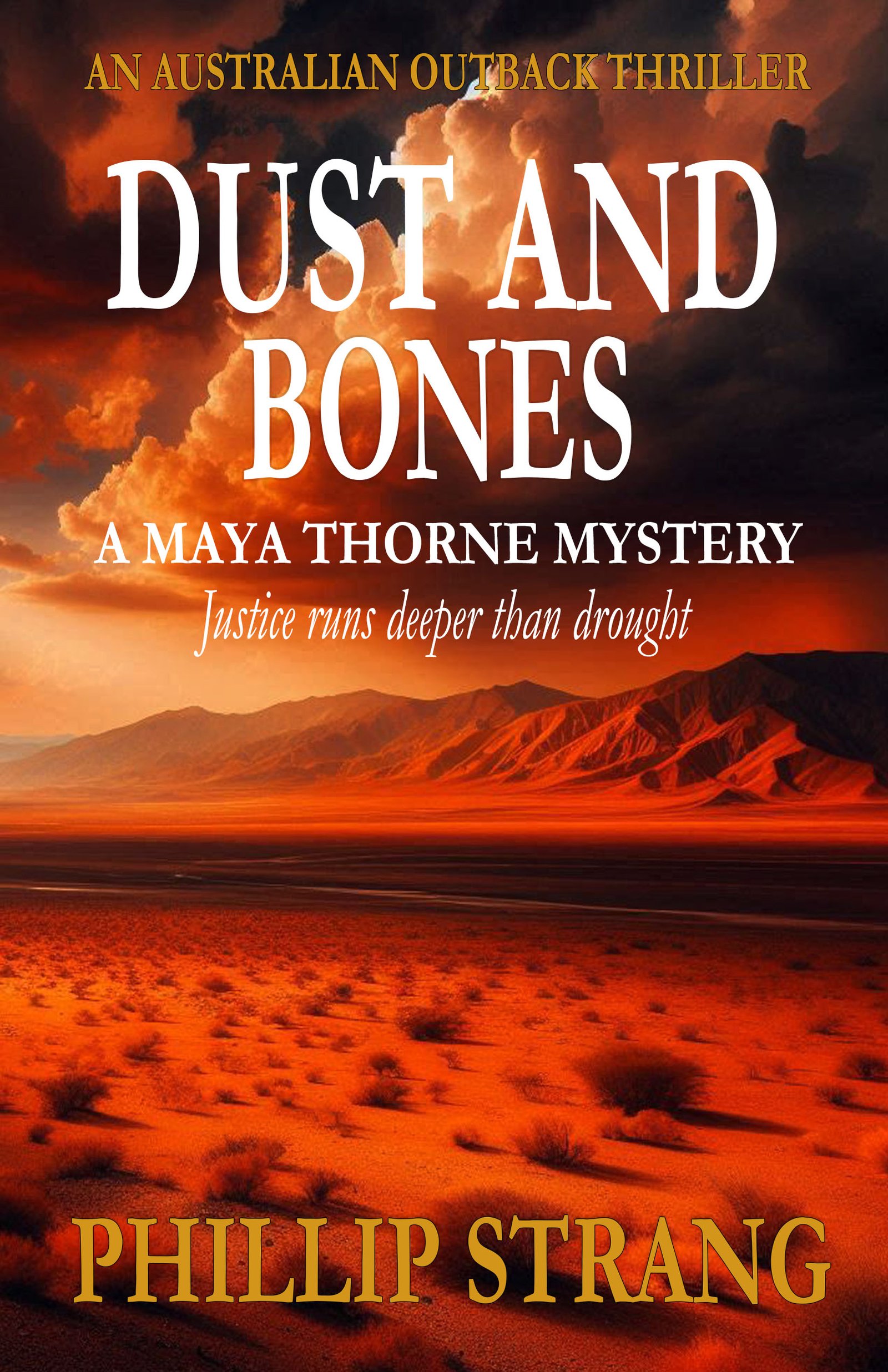
A MAYA THORNE MYSTERY
Get Dust and Bones Free
Justice runs deeper than drought.
Red dust. Shallow graves. A detective who hunts killers where the law runs thin and the nearest help is two hundred miles away.
Send Me the BookYou'll also receive occasional new release emails. Unsubscribe anytime. No spam, ever.
As an Amazon Associate, Phillip Strang earns from qualifying purchases. This page contains affiliate links — buying through them costs you nothing extra.