
Canadian Crime Fiction Settings present a unique challenge that too many authors resolve by defaulting to isolation and weather as narrative crutches. The vastness of the Canadian landscape offers extraordinary opportunities for tension and character development, yet writers consistently underestimate the sophistication required to make these settings work authentically in service of plot rather than as scenic backdrops.
The mistake begins with assuming that remote equals mysterious, and that harsh winters automatically generate suspense. Across eighteen series and more than 150 novels I have found that effective settings—whether urban London in my DCI Isaac Cook series or the Australian outback—must function as active elements in the story machinery, not passive geography that writers hope will create atmosphere through description alone.
The Isolation Trap
Canadian settings seduce writers into believing that geographic isolation automatically creates the closed-room dynamic that drives effective crime fiction. This represents lazy thinking. True isolation in crime fiction emerges from character circumstances and investigative constraints, not from placing characters in Nunavut during a blizzard. The most claustrophobic crime novels often unfold in crowded cities where characters remain psychologically isolated despite being surrounded by potential witnesses and allies.
When I developed the remote Scottish Highland settings for my DI Sarah Lynch series, the isolation had to serve specific narrative functions beyond atmosphere. Limited communication forces characters to rely on incomplete information, creating genuine uncertainty rather than artificial suspense. The remoteness affects investigation timelines, evidence preservation, and witness availability in ways that drive plot developments rather than merely providing scenic interludes between action sequences.
Urban Canadian Crime Fiction Settings
Montreal, Toronto, and Vancouver offer crime writers sophisticated urban environments that rival any international setting, yet authors consistently underutilize these cities’ unique characteristics. Montreal’s linguistic duality creates natural opportunities for miscommunication and cultural tension that can drive plot without relying on stereotypes. Toronto’s financial district provides corporate crime possibilities that extend beyond simple fraud into international money laundering and regulatory manipulation.
The key lies in understanding how Canadian urban environments differ functionally from their American or European counterparts. Banking regulations, law enforcement jurisdictions, and legal procedures create specific constraints and opportunities that informed writers can exploit. These differences matter more than superficial cultural markers or architectural descriptions. Effective police procedural novels demonstrate how procedural authenticity creates reader trust and narrative credibility.
Weather as Character Versus Weather as Decoration
Canadian weather becomes a cliché when writers use it as atmospheric decoration rather than as an active force affecting character decisions and plot progression. Snow doesn’t create suspense merely by existing—it creates suspense when it affects evidence preservation, travel possibilities, communication systems, or character comfort levels in ways that influence their choices and capabilities.
In my Maya Thorne series set in the Australian outback, extreme heat and isolation function as plot elements that constrain character options and create time pressure. The environment affects investigation methods, evidence quality, and character endurance in specific ways that advance the story. Canadian writers should approach winter conditions with similar specificity—understanding how cold affects forensics, how snow affects surveillance, how isolation affects backup availability.
Cultural Authenticity Without Stereotyping
The challenge with Canadian settings extends beyond geography into cultural representation that avoids both American assumptions and tourist-brochure clichés. Canadian politeness isn’t a character trait—it’s a communication style that affects how information gets shared, how conflicts get expressed, and how authority gets challenged. These cultural patterns influence investigation dynamics and character interactions in ways that skilled writers can exploit for plot development.
Writers must research beyond surface-level cultural markers into actual social structures, regional economic pressures, and historical grievances that create contemporary tensions. Rural-urban divides, resource extraction politics, and indigenous land rights provide sophisticated conflict possibilities that extend far beyond individual criminal acts into systemic issues that create multiple suspect pools and complex motives.
Research Methodology for Working Authors
Effective Canadian crime fiction requires research that goes beyond Google Images and travel websites. I approach unfamiliar settings by identifying specific professional contacts—law enforcement, legal professionals, local journalists—who can provide operational details that determine plot feasibility. Tourist information tells you what places look like; professional contacts tell you how they function under stress.
The research focuses on practical questions: How long do forensics take? What backup resources are available? How do jurisdictional boundaries affect investigations? Which communication systems work reliably? These operational details determine what plot developments are credible and what character choices are realistic. Settings that ignore these practical constraints feel artificial regardless of how beautifully they’re described. This attention to operational detail applies whether crafting action thriller novels or more methodical investigative stories.
Common Mistakes to Avoid
The most frequent error involves using Canadian settings as exotic backgrounds for plots that could unfold anywhere, treating geography as interchangeable scenery rather than as story infrastructure. Writers describe beautiful landscapes while ignoring how those landscapes affect character capabilities and plot possibilities. Another persistent mistake involves assuming that Canadian nice means Canadian simple, underestimating the complexity of Canadian social and political structures that can provide sophisticated criminal enterprises and investigative challenges.
Writers also consistently overestimate the impact of description and underestimate the importance of function. Readers care more about how settings affect story progression than about how settings look. A detailed description of a frozen lake matters less than understanding how that lake affects evidence disposal, body recovery, or escape route possibilities. Function drives engagement; description supports function but cannot replace it.
Conclusion
Canadian Crime Fiction Settings succeed when writers understand that geography serves story rather than substituting for story. The landscape provides opportunities and constraints that skilled authors can exploit for plot development, character pressure, and narrative tension that extends far beyond scenic description or cultural stereotypes.
About Phillip Strang
Phillip Strang is an Australian crime and thriller novelist. Across eighteen series and more than 150 novels, his work spans London police procedurals (DCI Isaac Cook), UK investigations (DI Tremayne), Australian outback crime (Maya Thorne), FBI thrillers (Alex Harlan), Scottish Highland mysteries (DI Sarah Lynch), and espionage (Steve Case). Learn more about Phillip or browse his complete catalogue on Amazon.
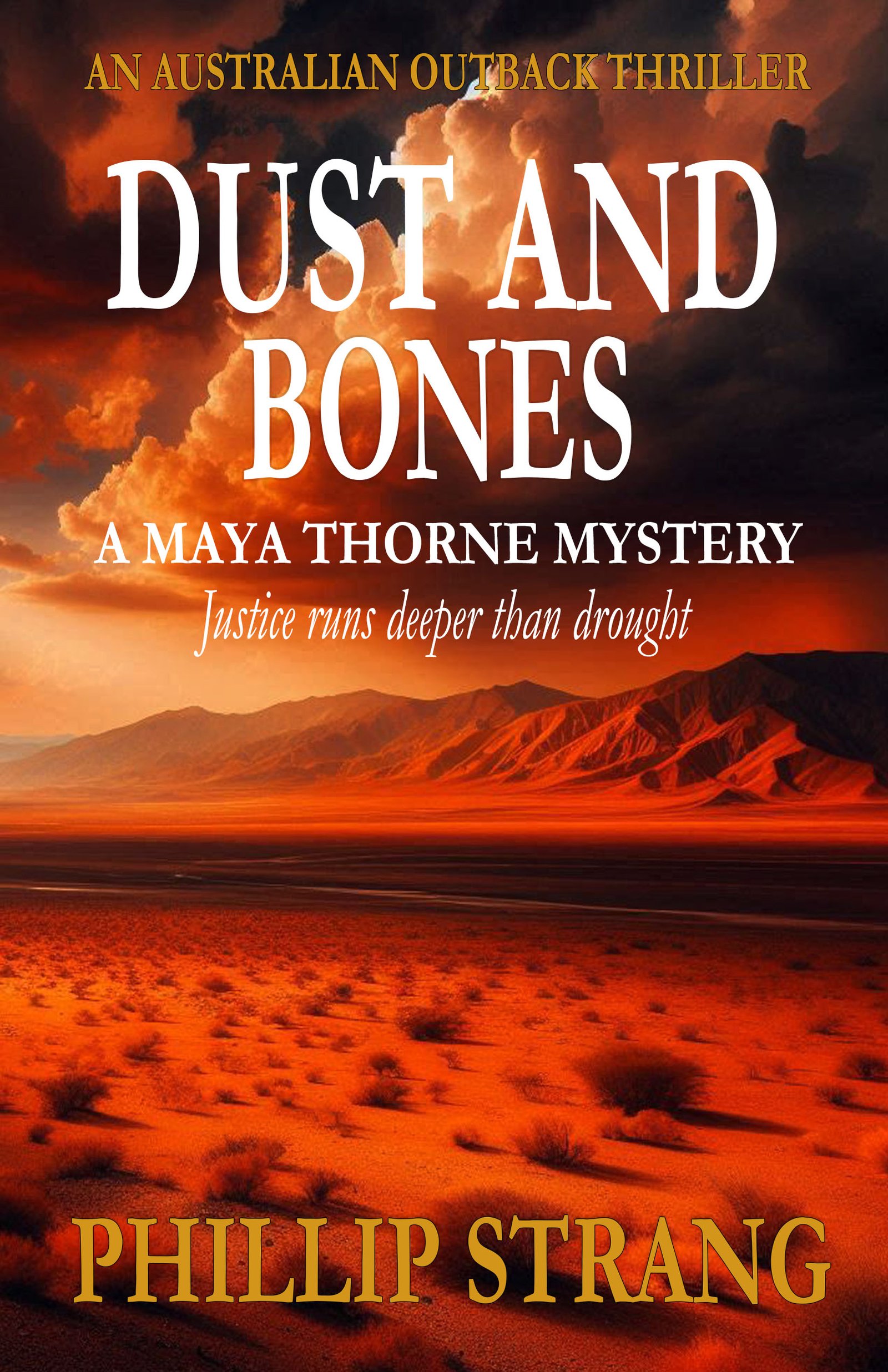
A MAYA THORNE MYSTERY
Get Dust and Bones Free
Justice runs deeper than drought.
Red dust. Shallow graves. A detective who hunts killers where the law runs thin and the nearest help is two hundred miles away.
Send Me the BookYou'll also receive occasional new release emails. Unsubscribe anytime. No spam, ever.
As an Amazon Associate, Phillip Strang earns from qualifying purchases. This page contains affiliate links — buying through them costs you nothing extra.